Winter Solstice Rituals: A 20 to 30 Minute Ceremony at Home
Explore winter solstice rituals at home with candle gazing, journaling, and a safe Yule log, plus historical context and a ready to follow evening ceremony.
On this page
Winter solstice rituals mark the shortest day and longest night, giving you a reason to pause, release the year and welcome returning light. You can start today with candle gazing, journalling, a safe Yule-log adaptation, breathwork and a small nature offering. Below you will find the steps, materials, safety notes and a ready-to-follow ceremony.
Key Takeaways
Participating in simple, intentional winter solstice rituals helps mark the return of light and foster reflection, renewal, and connection with seasonal traditions.
| Point | Details |
|---|---|
| Use simple rituals | Choose one or two rituals such as candle gazing or writing wishes to create meaningful solstice observances. |
| Incorporate natural symbols | Use evergreen decorations, Yule logs, and seasonal greenery to connect with traditional solstice symbols. |
| Set up a dedicated space | Create a meaningful ritual area in your home with candles, objects, and scents to deepen your practice. |
| Emphasize small, repeatable actions | Short daily or weekly rituals foster ongoing reflection and help you stay connected to seasonal change. |
| Wellinspirit offers guided collections | We provide curated ritual kits and ongoing content to help you easily participate in meaningful solstice practices. |
1. Ten winter solstice rituals you can start tonight
These ideas suit solo practice, couples, families and small groups. Pick two or three rather than all of them. Most are brief, and none needs special skills.
- Candle gazing meditation: sit comfortably, light one candle (or a battery tea light) and rest your eyes on the flame for a short while. Each time your mind wanders, return to the light. It suits anyone who finds silence hard, because your eyes have a job to do. Our guide to candle meditation covers flame gazing safely.
- The 13 wishes ritual: write wishes for the coming year on separate scraps of paper, then read them aloud and fold them. Traditionally, you keep or burn them, but a bowl of water or a sealed envelope works just as well.
- Letter to the year: write a short letter thanking the old year for what it taught you, naming what you are leaving behind. Our post on rituals for letting go offers practices that need no fire.
- Yule-log adaptation: use a small log with three holes drilled for tea lights, or a bundle of cinnamon sticks tied with twine. Name one thing you hope the returning sun will bring as you light it. Make it a symbolic log if you cannot burn one.
- Breathwork and guided meditation: try four slow breaths in, six out, for five minutes at dusk. Evening works well because the dark is part of the point.
- Nature walk and offering: walk at midday, when light is scarce, and leave a small natural offering such as a few oats, a bit of apple or a fallen pine cone placed where it fell. Take nothing living, and leave nothing plastic.
- Solstice wreath or crown: weave evergreen sprigs onto a wire ring or wear them as a crown. It is a good family project, and it takes a little while.
- Gratitude circle or family spiral: sit in a circle and pass a candle or stone. Each person names one thing they are grateful for from the year. For a spiral, lay out stones or greenery in a coil and walk it slowly towards a central light.
- Sensory additions: play seasonal music, diffuse a warming scent, or serve something spiced. Scent and sound help the body register that this evening is different.
- Short version: short on time? Our meditation rituals help you keep the habit alive on busy nights.
Pro Tip: Choose one ritual for the day and one for the evening. A midday walk plus a candlelit journal entry feels fuller than trying to squeeze everything in at once.
2. Why people observe the winter solstice
People have watched this turning point for thousands of years. At Newgrange in Ireland, a Neolithic passage tomb built around 3200 BCE, the entrance and roof-box are aligned so that midwinter sunrise illuminates the chamber. Researchers have asked whether that was accident or design, and the evidence points towards intention.
For farming communities, the day mattered because it signalled survival: the point when days would lengthen and spring would eventually return, as heritage writers on prehistoric Britain put it. Many modern customs grew from Yule, including evergreens, feasting and the Yule log.
Today, events at places like Stonehenge continue the tradition. BBC News reported crowds gathering for a sunrise focused on renewal and rebirth. Contemporary gatherings often include fire ceremonies, drumming and guided meditation, aimed at reflection, release and setting intentions.
3. What you need: materials, substitutions and safety
You do not need to buy much. Most of this is already in your home or on a nearby walk.
- A candle or battery tea light, plus a heatproof holder
- Pen and paper for wishes or letters
- A small ceramic dish for ashes, offerings or water
- Seasonal greenery such as pine, holly or ivy
- A warm blanket and a cushion
- An optional scent: lavender for calm, cinnamon or orange for warmth
If you rent, live with small children or share space with pets, battery candles give you the glow without the risk. For soft, low-wiring ambience, this handmade lighting guide for UK homes offers cosy ideas, including rechargeable options.
Midwinter daylight in the UK can be as short as 7 hours, 49 minutes and 41 seconds, which is why a few warm lights feel so welcome at home.
One firm safety rule: never leave a real flame unattended, keep it on a non-flammable surface away from curtains and greenery, and have water or an extinguisher within reach.
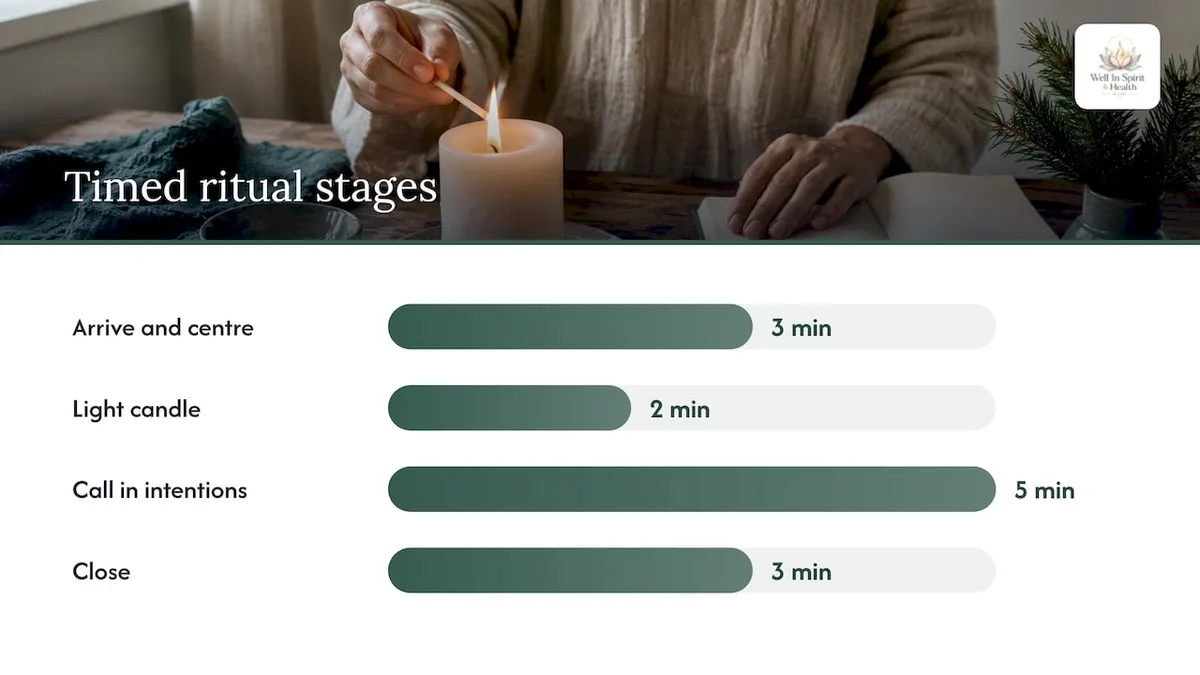
4. A 20 to 30 minute ritual for solo or small groups
This sequence puts several of the practices above into one evening. Set a simple centre first: a small table with a candle, a bowl, paper and a sprig of evergreen. Choose a one or two sentence intention, such as “I release the pace of this year and welcome rest.”
- Arrive and centre (3 minutes): sit comfortably and breathe in for four counts, out for six. Let the room go quiet.
- Light the candle (2 minutes): light it, or switch on your battery light, and say aloud, “I welcome the returning light.”
- Reflect and release: write what you are ready to let go of. Fold the paper and place it in the bowl.
- Call in intentions (5 minutes): read your intention aloud, then add one thing you are looking forward to in the lighter months.
- Close (3 minutes): blow out the candle, or switch off the light, and take three more slow breaths. Tear your paper up or leave it in water to dissolve.
With children, shorten each step, swap writing for drawing and replace flame with a torch passed from hand to hand.
Pro Tip: Set a timer for the whole ritual so nobody has to watch the clock, and put your phone in another room.
5. Aromatherapy blends for a solstice evening
Scent sets the mood faster than almost anything else. Think of these as ambience, not treatment: they are traditional pairings that smell right for the season, not medical advice.
- Calm and rest: lavender with a touch of cedarwood, for a slow, quiet evening of reflection.
- Warmth and gathering: sweet orange, cinnamon leaf and clove, for a family circle or feast.
- Returning light: frankincense and bergamot, which many people find bright and clean.
- Forest walk indoors: pine, fir and a little juniper, to bring the outdoors in.
Add a few drops to a diffuser, or use a unisex massage or bath oil after the ritual. If you use essential oils, dilute them, avoid them on broken skin and keep them away from pets and young children. Our essential oils collection and the Aromatherapy Essential Oil Set, The Top 12 make it easy to try a few scents without committing to full bottles.
Keep blends light. One or two oils usually smell clearer than five competing ones, and subtlety suits quiet reflection.
6. Crystals and gemstones traditionally linked to the solstice
Crystals do not change the astronomy, but many people enjoy holding something solid and beautiful during a ritual. These associations are traditional and symbolic rather than scientific.
- Clear quartz: often linked to light and clarity, and a popular centrepiece for a candlelit altar.
- Garnet: a deep red stone associated with warmth and the heart of winter.
- Citrine: its sunny yellow colour makes it a favourite for welcoming returning light.
- Black tourmaline or obsidian: used by many people for symbolic grounding and releasing what no longer serves them.
- Moonstone: linked to the long night and quiet reflection.
To use them, place one or two stones near your candle, hold one during the breathing step, and say your intention aloud. After the ritual, you can set them on a windowsill so they catch the first light of the morning. Cleansing is optional, and a gentle wipe with a soft cloth is plenty. Keep it simple, and let the choice come from what you like looking at.
7. Mindfulness and meditation for the longest night
The solstice offers a natural theme for meditation: darkness, stillness and the slow turning towards light. Try these short practices on their own or inside the longer ritual above.
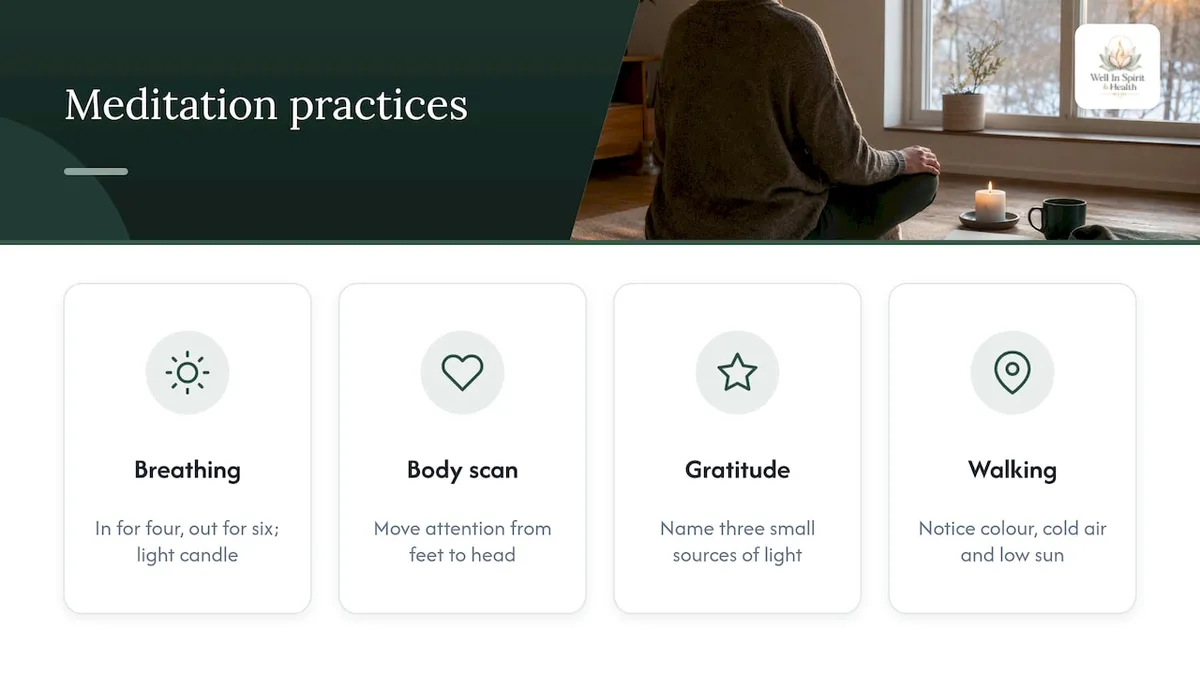
Dark-to-light breathing. Begin in a dimly lit room. Breathe in for four and out for six, imagining each exhale as a small step into the dark. When you feel settled, light your candle and let the room fill with a little warmth. Notice how the same room feels different.
Body scan for winter. Move your attention from your feet to your head, softening each area. Winter often brings tension, so give your shoulders and jaw extra time.
Gratitude for small light. Name three small sources of light in your life this year: a person, a habit, a moment. Say them silently or aloud.
Walking meditation. On your midday walk, slow your pace and notice colour, cold air on your face and the angle of the low sun.
If grief sits close to the season for you, try our short somatic meditations and rituals for grounding grief. For a very short practice, try an intention-setting ritual.
8. How to create a dedicated ritual space at home
A ritual space does not need a spare room. A shelf, a windowsill, a tray on a coffee table or a corner of the bedroom works well. What matters is that it feels set apart from everyday clutter.
Start by clearing the surface and wiping it down. Add a cloth in a seasonal colour, such as deep green, red or midnight blue. Place a candle or battery light at the centre, then add one or two meaningful objects: a stone, a photo, a sprig of evergreen, a small bowl for offerings.
Think about the senses. Soft lighting and a throw or cushion make the area inviting, while a diffuser or a small dish of cloves adds scent. Face a window if you can, so you notice the changing light as the evening goes on.
Keep it safe. Keep flames away from curtains, shelves and anything that can tip. Choose a spot out of reach of pets and children if you will use a real candle.
Finally, keep the space ready for a week or two after the solstice, so that you can sit there for a minute each day and notice the lengthening light.
9. Bringing pine, evergreen and holly into your rituals
Evergreens have been part of midwinter customs for centuries. Because they stay green when everything else looks bare, they are an easy symbol of continuity. Historical sources describe evergreen decoration as part of Yule customs, and Anglo-Saxon Yule at places like Sutton Hoo involved decoration and feasting.
Here are some simple ways to use them:
- Altar greenery: lay a few sprigs of pine or fir around your candle as a natural frame.
- Wreath or crown: weave ivy, holly or fir onto a ring, and hang it on the door or wear it for the ritual.
- Offering bowl: fill a dish with pine needles, cones and berries for a nature offering.
- Scent: crush a needle between your fingers, and breathe in the resin.
Be considerate. Gather only fallen branches or take small clippings from your own garden, and avoid protected areas. Holly berries and some other seasonal plants are toxic if swallowed, so keep them away from small children and pets. Never place cut greenery close to a naked flame, because dry needles ignite easily. If you use a real candle, keep greenery well back, or choose battery lights.
10. The meaning of light on the longest night
Light is the heart of the solstice. Archaeologists describe monuments like Newgrange and Knowth as aligned to solar and lunar events, likely helping communities build calendars and plan ritual life. Scholars also note that the sun’s apparent standstill gave people a visible event and cultural hook for ritual, even if the precision of alignments varied between sites.
In a spiritual sense, the solstice is often read as a promise: the dark is at its fullest, and from here the days begin to grow. Many people use that idea as a metaphor for their own lives, with the longest night standing in for a season of rest, grief or uncertainty, and the returning light for gentle hope.
You can embody this in small, physical ways:
- Light a candle before dawn, and watch the sky change.
- Carry a lantern or torch on your evening walk.
- Open the curtains at first light the next morning.
- Wear something bright, or place a yellow or gold object on your altar.
- Say aloud one thing you want to bring more light to in the coming year.
Contemporary events, including cacao ceremonies, fire rituals and drumming circles, echo the same idea: complete what is finished, then plan for what comes next. The Old Norse Yule log, kept burning for 12 days, expressed that hope in a very literal way.
Why small, repeatable rituals work for me
I keep coming back to one idea: a small ritual you actually do beats a grand one you never get round to. Seasons change whether we are ready or not, and a few quiet minutes with a candle gives that change somewhere to land. If starting feels hard, curated collections and guided meditations can take the guesswork out of it.
— Rob
Start your solstice practice with our ritual collections
We design our ritual collections so you can open a box and begin: guided steps, carefully chosen aromatherapy and a calm structure for the evening. Explore our Christmas and Yuletide rituals or browse the full rituals landing page to see what suits you. If you want ongoing guided content, explore our membership. Starting small is perfectly fine.

| Option | Best for | Where to start |
|---|---|---|
| The Snowfall Stillness Ritual | A quiet, reflective solstice evening | Christmas rituals |
| The Yuletide Magic Ritual | Family or group Yule celebrations | Christmas rituals |
| Essential oils | Building your own scent blends | Shop essential oils |
| Membership | Ongoing guided practice | Members’ library |
FAQ
Why is the winter solstice celebrated?
People celebrate the winter solstice because it marks the shortest day and the turning point when daylight begins to return. For early farming communities, it signalled survival and the promise of spring, as heritage experts on prehistoric Britain explain. Today, many people celebrate it as a moment for reflection and renewal.
What is the 13 wishes ritual for the winter solstice?
It is a simple practice in which you write wishes for the coming year on separate pieces of paper. You read them aloud, fold them and then keep them safe, place them in water or burn them if you can do so safely. It works well as a quiet solo ritual or a shared family activity.
What are some fun crafts to make during the winter solstice?
A foraged evergreen wreath or crown, a Yule log with tea light holders and a bundle of cinnamon sticks tied with twine are all popular. You can also make paper lanterns or string dried orange slices as a garland. Children usually enjoy the wreath and lantern most.
What are some pagan traditions for the winter solstice?
Common practices include decorating with evergreens, burning or lighting a Yule log, feasting and honouring ancestors. Historical sources link these customs to ancient Yule, which celebrated the return of the sun. Modern pagans often add fire ceremonies, drumming and gratitude circles.