Amethyst Crystal Meaning: What It Stands For and How to Use It
Discover the amethyst crystal meaning, from traditional links to calm, clarity and intuition, plus simple ways to use this purple stone at home in the UK.
On this page
In crystal lore, amethyst stands for calm, clarity and intuition. It is the purple stone people reach for when they want a quieter mind, a steadier evening or a gentle sense of protection. These are traditional associations, not medical facts, and they work best as a prompt for a small daily ritual at home.
This article explains where the meanings come from, what they are said to cover, and how to use an amethyst in a UK home without fuss. It is for anyone curious about the stone, and for anyone choosing a thoughtful gift for a person who loves crystals.
TL;DR
- Amethyst is traditionally linked with calm, clarity, intuition and spiritual protection.
- The name comes from an ancient Greek word usually translated as "not intoxicated", which is why old stories tie it to a clear head.
- It is associated with the crown and third eye chakras and with evening wind-down rituals.
- The simplest uses are a stone by the bed, in your pocket or beside you while you breathe slowly for five minutes.
- Amethyst is a comfort and a ritual cue, not a treatment, so see a GP if sleep or mood problems continue.
What amethyst is and where the meaning comes from
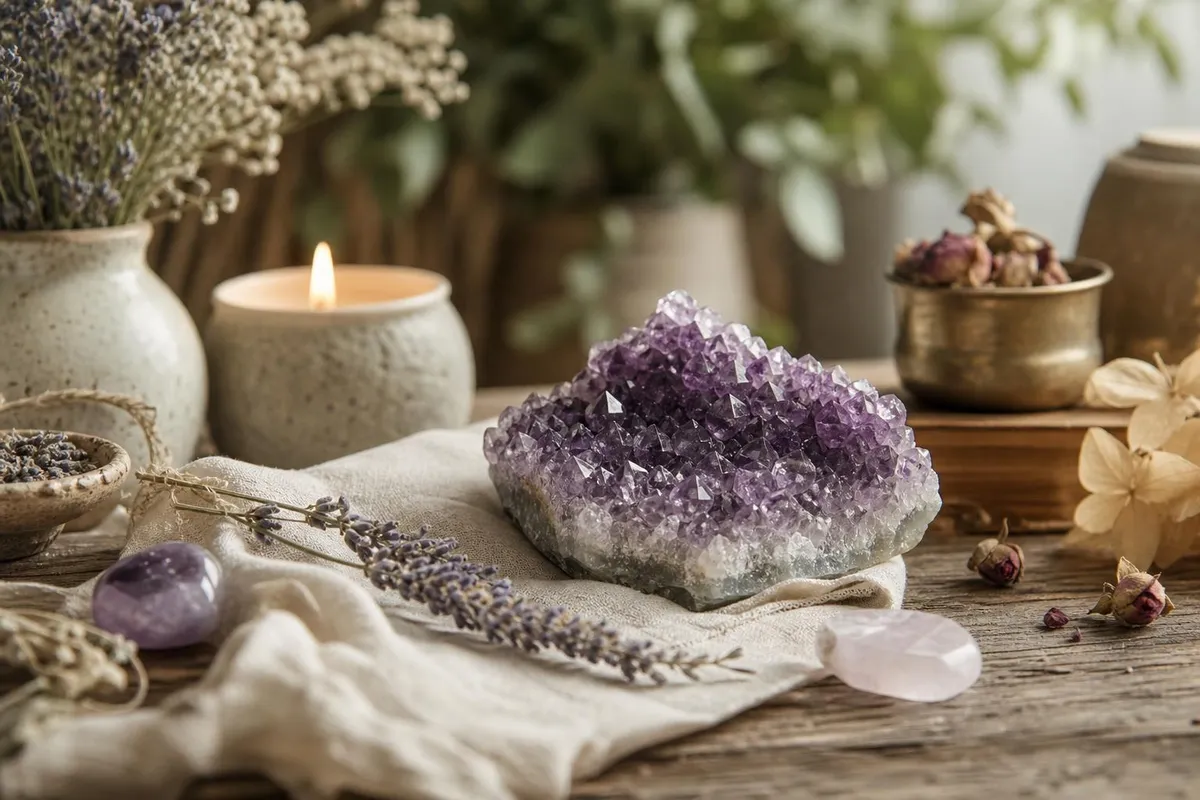
Amethyst is a purple variety of quartz. The colour runs from pale lilac to deep violet, and many stones show lighter bands or white points of quartz inside. Clusters and geodes are common shapes in shops, alongside tumbled pocket stones and smooth palm stones.
The meaning does not come from science. It comes from centuries of folklore, from the colour itself, and from the way people use the stone today. Purple has long been tied to royalty, ritual and quiet reflection, and amethyst inherited all of that.
That keeps expectations honest. You are not buying a device. You are choosing an object that carries a story and a mood, and that can anchor a habit.
If you are new to crystals, our plain guide to crystal meanings across 10 common stones puts amethyst alongside rose quartz, clear quartz and others, so you can see how they differ.
Pro Tip: Hold two or three stones before you buy and pick the one you keep looking at. A stone you enjoy seeing is a stone you will actually use.
The core meanings of amethyst
Ask crystal lovers and you will hear the same handful of ideas. They are consistent enough to treat as the stone's traditional meaning.
Calm
Amethyst is the classic stone of winding down. People place it on a desk, a bedside table or beside a candle to signal that the day is finished.
Clarity
The old "not intoxicated" story gives amethyst a reputation for a clear, sober mind. Many people keep one nearby when they are thinking something through, writing a list or making a decision.
Intuition
Amethyst is tied to inner knowing and to dreams. Tarot readers often keep one near their cards, and journallers rest one on the page before writing.
Protection
Some traditions treat amethyst as a gentle shield against stress and unwanted energy. If that is what draws you, our guide to crystals for protection and how to use them looks at other stones used in the same way.
None of this is a promise. Think of each meaning as an intention you set, with the stone as a reminder.
A short history of the stone
The word amethyst comes from the Greek amethystos, usually translated as "not intoxicated". Ancient stories linked the stone to a sober mind, and drinking cups were said to have been carved from it. Whether or not every tale is true, the association stuck.
For a long time amethyst was ranked among the most prized gems, valued for its deep purple and used in jewellery and religious objects. Later, large deposits made it far more available, and today it is one of the easiest crystals to buy.
That matters for how you shop. A stone no longer needs to be rare to be meaningful, and a small, honestly sourced piece can hold the same traditional meaning as a large display cluster.
The story is easy to remember, and a story is half of what makes a ritual stick. If you are giving amethyst as a present, a line about the Greek name on a gift card is a nice, true detail to include.
Amethyst, the crown chakra and the third eye
In chakra teaching, amethyst is linked to the crown chakra at the top of the head and the third eye between the brows. The crown is associated with stillness and a sense of connection. The third eye is associated with intuition and insight.
This is a spiritual framework rather than a scientific one. Many people simply enjoy it as a way to structure a meditation, moving attention slowly from one area to another.
Violet and indigo are the colours that go with these two points. If you like the colour side of the practice, our guide to chakra colours and what each of the seven means explains the full set and how to use them.
A simple way to try it:
- Sit or lie down somewhere comfortable.
- Rest a small amethyst on your forehead or hold it in your hand.
- Breathe in for four counts and out for six.
- Stay for five minutes, then write one line about how you feel.
The slow, unhurried pace gives the moment its calm. The stone gives it a shape and a beginning.
Amethyst for evenings and sleep rituals
Amethyst is most often chosen for the end of the day, when small rituals help most. A stone by the bed will not make you sleep, but it can cue the habit of switching off.
The NHS advises a regular sleep routine, a cool, dark, quiet bedroom and winding down before bed, all covered on its NHS sleep and tiredness pages. The Sleep Charity also offers practical, UK-based guidance at The Sleep Charity. Amethyst can sit alongside that advice as part of the routine.
A calm, repeatable sequence might look like this:
- Put your phone on charge outside the bedroom or across the room.
- Dim the lights and light a soy candle, then blow it out before you get into bed.
- Hold the amethyst for a minute and name one thing that went well.
- Place it on the bedside table and turn the light off.
Pro Tip: Keep the stone in the same spot every night. Repetition turns an ordinary object into a cue you start to recognise.
How to use amethyst at home
You do not need a special set-up. Pick the use that fits your day and keep it small.
In your pocket or bag
A tumbled stone is easy to carry. Touch it when you notice your shoulders creeping up, and take one slow breath.
On your desk
A small cluster beside your laptop works as a visual pause. Look at it between tasks and let your eyes rest on the colour.
In meditation
Hold a palm stone while you sit quietly. If you use guided audio, you can keep the stone in your lap and let the voice do the leading.
In a ritual space
Place amethyst with a candle, a journal or tarot cards on a tray or shelf. A tidy corner like this makes it easy to begin without any decisions.
As a gift
Amethyst suits someone who is tired, busy or newly interested in crystals. Pair it with a candle and a short note about why you chose it.
Whatever you choose, keep it low effort. A ritual you do for two minutes every night beats one you plan for an hour and skip.
Choosing and caring for your amethyst
Look for a stone with an even, appealing colour and no deep cracks. Natural variation is normal, so pale patches and visible quartz points are not flaws. Ask where it was sourced, and be wary of anything described as a miracle stone.
Amethyst is fairly hard, so it copes with everyday handling, but it can still chip if dropped. Keep clusters on a stable shelf away from the edge.
Care is simple:
- Keep it out of strong, direct sunlight, as the colour can fade over time.
- Dust it with a soft, dry cloth, or wipe with a barely damp one.
- Store tumbled stones in a small pouch so they do not scratch each other.
- Keep it away from steam and heat sources such as radiators.
Some people like to "cleanse" a stone by leaving it on a windowsill at night (out of direct sun), or resting it on a larger piece of selenite. These are personal rituals, and nobody has to do them. If it feels good, it is a nice pause. If not, skip it.
What amethyst cannot do
Amethyst is not a treatment. It does not cure or ease insomnia, anxiety or low mood, and no crystal does. It is a meaningful object and a prompt for slowing down, and that is enough to be worth having.
If you often cannot sleep, feel low for weeks or find worry taking over, speak to a GP. The NHS has guidance on looking after your mental wellbeing, and Mind lists ideas and support on its everyday living pages. The Mental Health Foundation also publishes practical information on looking after yourself.
The healthiest way to hold a crystal is lightly. Enjoy the colour, enjoy the story, and use it to anchor a habit you like, such as a regular bedtime, a screen-free half hour or a few slow breaths. The amethyst is there to remind you to keep it.
When customers ask us which crystal to start with, we often say amethyst, because it is easy to understand and easy to place in a routine. We also say plainly that it is a ritual aid, not a remedy. The people who enjoy their stones most are the ones who attach them to something small and regular, like a candle at nine o'clock or a note in a journal. Start with one stone, one habit and two minutes. You can always add more later.
- The Well In Spirit team
About Well In Spirit
If amethyst appeals as part of an evening routine, our Well In Spirit shop has a few ways to start. The Better Sleep Ritual is built around winding down, and The Sunday Reset suits a slower weekend. Both work well as gifts for her. You will also find crystals, soy wax candles and incense on their own, and a members' library of guided meditations if you would rather be talked through the quiet. It is a suggestion, not a requirement, and a single stone and a candle is a perfectly good beginning.
Frequently asked questions
What does amethyst mean spiritually?
Spiritually, amethyst is associated with calm, intuition, clarity and protection. It is linked to the crown and third eye chakras and is often used in meditation and evening rituals. These are traditional beliefs rather than proven effects, so treat them as a prompt for reflection.
Where should I put amethyst at home?
Popular spots are the bedside table, a desk or a ritual shelf with a candle and journal. Keep it out of direct sunlight, which can fade the colour. Choosing one fixed place helps the stone work as a cue, so you start to link it with slowing down.
Can amethyst help me sleep?
Amethyst cannot treat sleep problems, but many people enjoy it as part of a bedtime routine. The routine itself, such as dimming lights, putting your phone away and breathing slowly, is what supports rest. If poor sleep continues, speak to a GP or see NHS guidance.
Is amethyst a good gift?
Yes, particularly for someone who is stressed, tired or curious about crystals. It is affordable, attractive and easy to explain. Pair a small stone with a candle and a short note about why you chose it, and it becomes a thoughtful, personal present.
Sources
- Sleep and tiredness, NHS
- Every Mind Matters, NHS
- Tips for everyday living, Mind
- The Sleep Charity, The Sleep Charity
- Mental Health Foundation, Mental Health Foundation