Crystal Meanings: A Plain Guide to 10 Common Stones
Crystal meanings explained in plain English: what ten common stones are traditionally said to mean, how to choose one and how to use it at home.
On this page
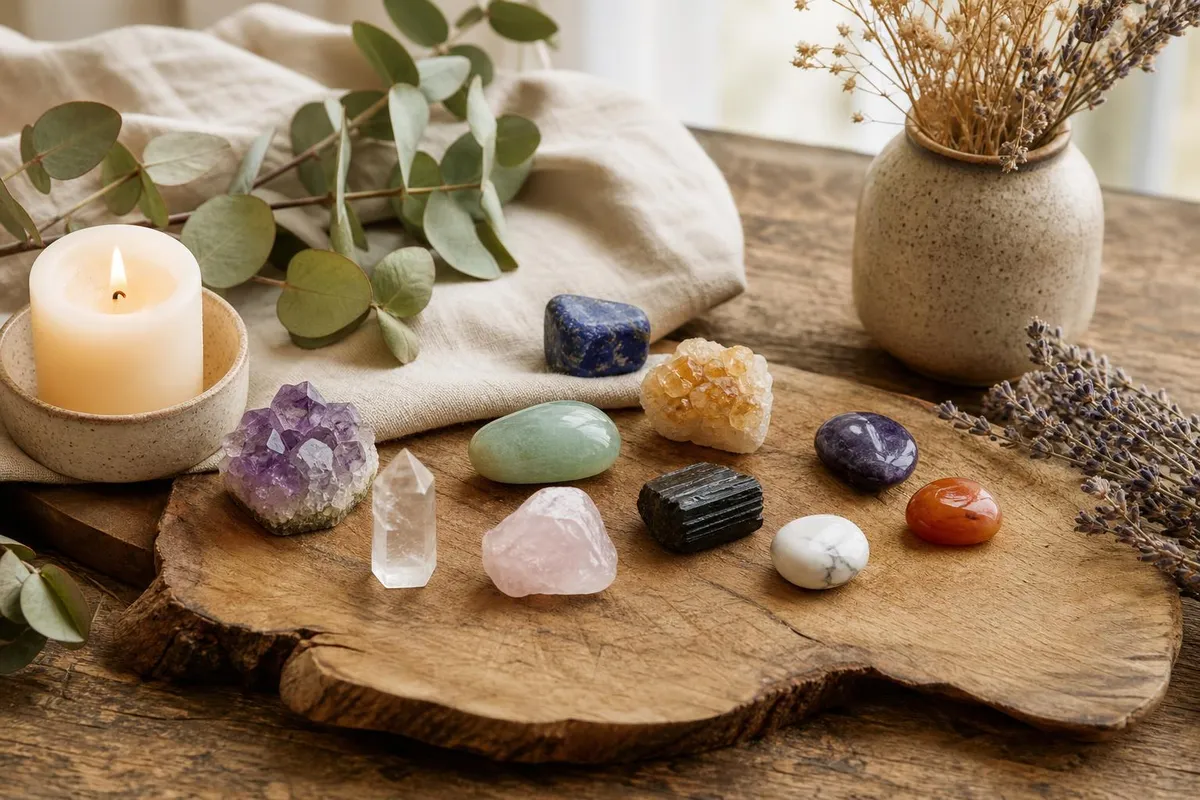
Crystal meanings are traditional associations, not medical facts. Amethyst is linked with calm, rose quartz with gentle self-love, citrine with cheer, black tourmaline with protection and clear quartz with clarity. They work best as prompts for a small ritual at home, and that is how we suggest you use them.
This guide covers ten common stones, where their meanings come from, how to choose one and how to use it in a UK home. It is for anyone starting a collection, and for anyone choosing a thoughtful gift for a friend who loves crystals.
TL;DR
- Crystal meanings come from folklore and modern spiritual practice, so treat them as intentions rather than treatments.
- Amethyst, moonstone and selenite are the usual picks for calm evenings.
- Rose quartz, citrine and carnelian are linked with warmth, joy and motivation.
- Black tourmaline, smoky quartz and labradorite are linked with protection and grounding.
- Choose by feel and purpose, keep care simple, and see a GP if symptoms persist.
What crystal meanings are, and what they are not
A crystal meaning is a symbolic association. People have attached stories to stones for centuries, and modern guides gather those stories into short lists: this stone for calm, that one for courage.
These meanings are not a medical system. A crystal does not treat, cure or prevent anything, and no stone replaces sleep, food, company or professional help. If low mood, anxiety or poor sleep persists, speak to your GP, and see the NHS Every Mind Matters pages for practical support.
So why bother? Because a small, chosen object can anchor a habit. Holding a smooth stone for two quiet minutes gives your hands something to do and your attention somewhere to rest. The meaning is the invitation. The ritual is what you actually do.
Where the meanings come from
Most meanings come from three places. Knowing them helps you hold the list loosely.
- Colour. Pink stones are linked with affection, yellow with sunshine and confidence, purple with calm and intuition, black with protection.
- Folklore. Amethyst has long been associated with clear-headedness, and moonstone with the moon and its cycles.
- Modern spiritual practice. Ideas such as chakras give each colour a place in the body. If that interests you, our chakra meditation for beginners guide shows how colour is used as a focus.
Sources disagree. One book says citrine is for money, another for joy. That is normal: there is no governing body for crystal meanings, so the best one is the one that gives you a useful prompt.
Stones for calm and evening wind-down
These are the stones most often placed on bedside tables and bath edges.
Amethyst
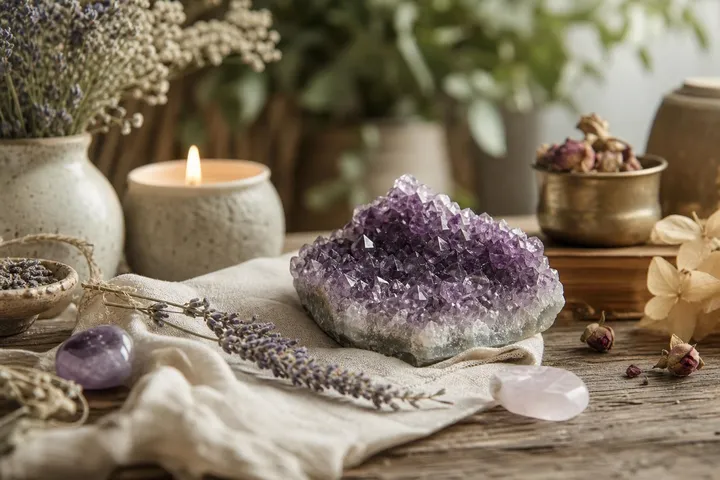
The classic calm stone. Purple, translucent and widely available as clusters or tumbled pieces. It is linked with a quiet mind, so it suits an evening ritual.
Moonstone
Milky with a soft shimmer. Associated with the moon, cycles and gentle intuition. Many people keep one near a journal.
Selenite
White, ribbed and glowing under lamplight. Traditionally linked with clarity and a fresh feeling in a room. It is soft and can be damaged by water, so keep it dry.
A calm evening still depends on the basics. The NHS sleep and tiredness pages cover regular bedtimes, a cool dark room and winding down, and The Sleep Charity offers further practical guidance. A stone can be the cue that starts the routine, not a replacement for it.
Pro Tip: Put your amethyst beside your phone charger, away from the bed. Picking it up at 10pm becomes your signal to put the screen down.
Stones for warmth, joy and motivation
Rose quartz
Soft pink and the best-known heart stone. It is linked with kindness, including towards yourself. A good first stone for a gift.
Citrine
Pale yellow to amber. Associated with optimism and bright mornings. Some citrine on sale is heat-treated amethyst, so expect a range of tones and ask the seller if it matters to you.
Carnelian
Warm orange-red. Linked with energy and getting started, which makes it a desk stone for a flat Monday.
These stones suit a morning ritual. Hold one while you drink your first tea and name one thing you plan to do that day. Keep it small and specific, such as "ring Mum" or "walk round the park". The stone simply reminds you.
For ideas on building rituals like this into daily life, our post on spiritual gifts for women shows how objects can fit a routine.
Stones for protection and grounding
Black tourmaline
Opaque, black and slightly rough. Associated with protection and a steady feeling. Often placed near a front door or kept in a bag.
Smoky quartz
Quartz in shades of grey-brown. Linked with grounding, and a gentler look than black tourmaline.
Labradorite
Grey with flashes of blue and gold. Associated with change and curiosity. Turn it in the light and the colours appear and vanish, which people like as a focus when thinking something through.
Clear quartz
The all-rounder. Traditionally said to amplify whatever intention you pair with it, which is why it is the usual starter stone. If you only buy one, make it this.
Pro Tip: Carry a small tumbled stone in a coat pocket on days you feel scattered. Rubbing it with your thumb on the bus or in a queue gives you a quiet moment to pause.
How to choose a crystal
Start with how you want your day to feel, not with a list. Then pick up a few stones and see what appeals.
- Name your purpose. Calmer evenings, a brighter morning, a feeling of safety at home.
- Pick the shape. Tumbled stones fit a pocket. Clusters and points suit a shelf. Spheres and palm stones are good for holding.
- Check the weight and feel. A stone you enjoy holding gets used.
- Ask about origin. A good seller can tell you what the stone is and whether it has been dyed or treated.
- Start with one to three. A tiny set you use beats a bowl you ignore.
Be wary of anything promising health results or guaranteed outcomes. Honest sellers describe meanings as traditions. Prices vary a great deal, and a higher price does not make a meaning stronger.
Using crystals at home and keeping them well
A simple routine is enough. Here are three that take under five minutes.
- Evening hold. Sit with an amethyst or moonstone and take ten slow breaths. For other small everyday habits, Mind's tips for everyday living are a useful read.
- Desk anchor. Keep citrine or clear quartz by your keyboard and touch it before a difficult task.
- Doorway stone. Place black tourmaline by the door and pause when you arrive home to leave the day outside.
Care basics
Dust with a soft cloth. Hard stones such as clear quartz can be rinsed briefly in cool water and dried, but selenite should stay dry, and softer stones such as labradorite are better wiped than soaked. Avoid making crystal waters: some stones contain minerals that are unsafe to drink, so keep stones out of anything you consume.
Keep small stones away from young children and pets. For cleansing, many people use moonlight, a windowsill or smoke from palo santo. These are symbolic steps, so choose what you enjoy.
Giving crystals as gifts
A crystal makes a lovely, low-pressure present because it is small, personal and does not expire. The trick is choosing a meaning that suits her life, not a stone that sounds impressive.
- A friend who struggles to switch off: amethyst, with a candle.
- A friend starting a new job: citrine or carnelian.
- A friend who has had a hard year: rose quartz, with a handwritten note.
- A friend new to crystals: clear quartz and a small card explaining the meaning.
Add a card with the meaning in your own words, and say it is a tradition she can take or leave. If she already follows a witchcraft path, our guide to witchcraft gifts explains what to buy and what to avoid. For wider reading on looking after wellbeing, the Mental Health Foundation has a range of guidance.
We have found that people rarely come back asking which stone is strongest. They come back to say they have started lighting a candle and holding their stone at the end of the day. In our experience, that is the real use of a crystal: it turns an intention into a habit. We would always suggest choosing the stone you are drawn to over the one a list recommends. Treat meanings as inspiration, buy from sellers who are honest about what the stones are, and look after your sleep and mood in the ordinary ways too.
- The Well In Spirit team
About Well In Spirit
At Well In Spirit we sell crystals alongside soy wax candles, incense and palo santo, so a stone can sit in a full evening ritual. If you are choosing for someone else, The Better Sleep Ritual and The Sunday Reset are our calmest boxes, and both suit a first crystal. You can browse everything on our gifts page. If you want to learn how to use a stone, the members' library has guided meditations that pair well with a quiet hold, but it is entirely optional.
Frequently asked questions
What is the best crystal for a beginner?
Clear quartz, amethyst and rose quartz are the usual starters. They are easy to find, affordable and have simple meanings: clarity, calm and kindness. Pick the one you are most drawn to, and begin with a small tumbled stone you can hold, carry or keep beside the bed.
Do crystals really work?
Crystal meanings are traditions and personal symbols, not proven treatments. Many people find that a chosen stone helps them pause and build a routine. If you are struggling with sleep, mood or anxiety that does not ease, speak to a GP or use NHS resources.
How many crystals should I have?
There is no right number. One to three is plenty when you are starting, because you will actually use them. Add more only when a particular stone appeals. A small collection kept where you will see it works better than a drawer full.
Can I put crystals in water?
Not always. Selenite is damaged by water, and some stones are soft or contain minerals that are unsafe to drink. Never make crystal water to drink. If you want to rinse a hard stone such as clear quartz, use cool water briefly and dry it. When unsure, wipe it with a cloth.
Sources
- Every Mind Matters, NHS
- Sleep and tiredness, NHS
- The Sleep Charity, The Sleep Charity
- Tips for everyday living, Mind
- Mental Health Foundation, Mental Health Foundation