Crystals for Protection: 7 Stones and How to Use Them
Discover seven crystals for protection, from black tourmaline to tiger's eye, with simple placement ideas and gentle care tips for a calmer home.
On this page
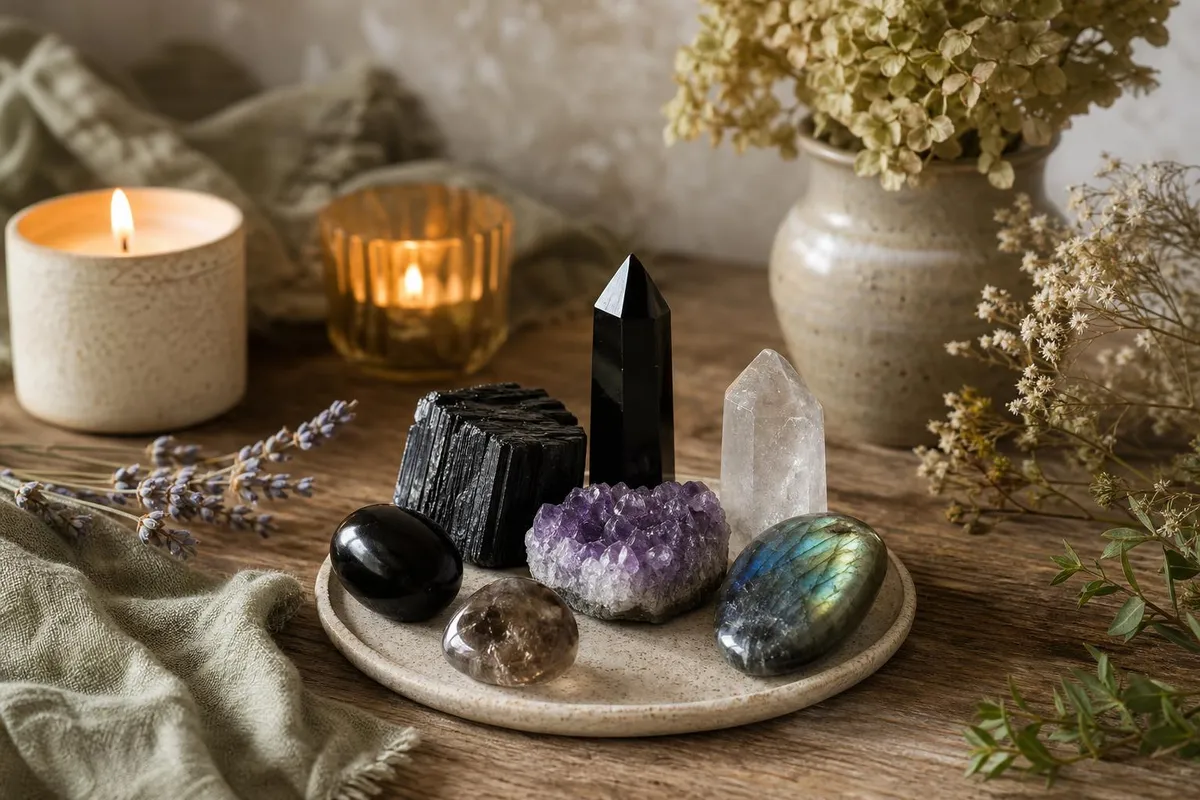
The crystals most often chosen for protection are black tourmaline, obsidian, smoky quartz, hematite, amethyst, labradorite and tiger's eye. People use them as symbolic comfort: a stone by the front door, in a pocket or on a bedside table that says "this is my space, and I feel steady here". They are not a medical or safety measure, but they can be a lovely focus for a daily ritual.
This guide explains what each stone is traditionally linked with, where to put it at home and how to look after it. It is written for anyone starting a small crystal collection, and for people choosing a thoughtful gift for a friend who loves ritual and a calmer home.
TL;DR
- Black tourmaline, obsidian and smoky quartz are the classic "protective" stones in crystal tradition.
- Protection here means a feeling of safety and boundaries, not a guarantee against anything.
- Place stones where you want to feel settled: by the door, on a desk or beside the bed.
- Keep care simple, and check whether a stone is safe near water before you cleanse it.
- If anxiety or worry stays with you, talk to a GP or use NHS support rather than relying on a stone.
What "protection" means with crystals
In crystal lore, a protective stone is one said to help you feel shielded, grounded and clear about your limits. There is no scientific evidence that crystals defend you from harm or illness. What they offer is a physical object that anchors an intention.
That anchor can matter. Small, repeated habits are a familiar part of looking after your mental wellbeing, and the NHS Every Mind Matters pages are full of simple everyday ideas. Holding a cool, heavy stone while you take five slow breaths is a ritual in the same spirit.
So think of protection as a mood you create at home. You choose the stone, say a quiet intention and place it somewhere you will see it. The stone does not do the work. The pause does.
If you are new to stones, our plain guide to crystal meanings covers ten common ones beyond this list. Here we stay with the stones most associated with boundaries and a settled home.
1 and 2: Black tourmaline and obsidian
Black tourmaline
Black tourmaline is the stone most people name first. It is opaque, dark and slightly ridged, often sold as a raw rod or a chunky piece. Tradition links it with keeping a space feeling clear and guarded.
A common ritual is to place one piece on either side of the front door, or one on the windowsill of a room that feels busy. Say a short sentence such as "this home is calm and mine" as you set it down.
Obsidian
Obsidian is volcanic glass, black and shiny. It is linked with honesty and cutting through muddled thinking, and often with shielding from other people's moods.
It makes a good desk stone. Keep a smooth tumbled piece next to your keyboard and hold it before a difficult call. It can chip or scratch, so keep it away from hard knocks and from small children who might put it in their mouths.
Pro Tip: Pair a black tourmaline by the door with a small obsidian in your bag. When you leave the house, touch the bag stone once and take one slow breath. It turns the stone into a habit rather than an ornament.
3 and 4: Smoky quartz and hematite
Smoky quartz
Smoky quartz is clear quartz in shades of grey and brown. It is gentler to look at than black stones, and tradition ties it to releasing tension and feeling grounded after a long day.
Put a point or a small cluster in the room where you unwind. After a draining day, hold it while you sit on the sofa and let your shoulders drop.
Hematite
Hematite is a heavy, silvery-grey stone, usually sold polished. It is linked with steadiness and focus, which is why it appears in so many pocket stones and bracelets.
Its weight is part of the appeal. Carry a tumbled piece and rub it between finger and thumb when you feel scattered. Hematite contains iron, so it can mark a surface and may rust if left wet. Keep it dry.
Both stones suit a short grounding practice. Our fast grounding rituals are trauma safe and easy to pair with a stone in your hand, for example feeling your feet on the floor while you hold hematite.
5 and 6: Amethyst and labradorite
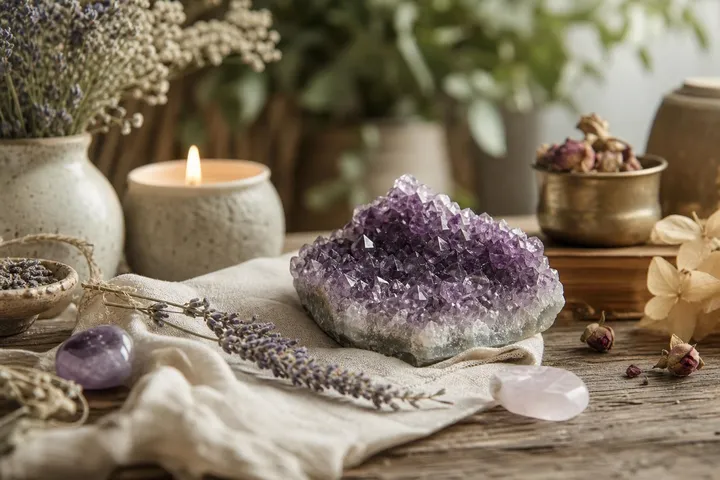
Amethyst
Amethyst is the purple quartz everyone recognises. In crystal tradition it stands for calm, clear thinking and a quiet mind, and it is a favourite for bedrooms.
A small piece on the bedside table can be part of a wind-down routine. It will not fix poor sleep, and The Sleep Charity has practical guidance on sleep habits. But a stone beside a dimmed lamp and a book can signal that the day is over.
Labradorite
Labradorite is grey with a flash of blue or green when it catches the light. It is associated with intuition and with feeling shielded while you stay open and curious, which suits people who absorb the feelings of those around them.
Keep a palm-sized piece on your journalling table. Turn it in the light, watch the flash and write down one boundary you want to hold this week.
Pro Tip: Choose one stone per intention. Amethyst by the bed for evenings, labradorite on the desk for work. A single clear job makes each stone easier to remember.
7: Tiger's eye, and where to place your stones
Tiger's eye is golden-brown with a silky shimmer. It is linked with courage and confidence, so it is a good pocket stone before something that makes you nervous, such as an interview or a family gathering.
Now for placement. There is no rulebook, but these spots work well in a UK home:
- By the front door: black tourmaline, one either side, or in a small dish on the hall shelf.
- On your desk: obsidian or hematite, within reach of your hand.
- Bedside table: amethyst or smoky quartz, next to a candle you snuff out before sleep.
- In your bag or coat pocket: a tumbled tiger's eye or hematite.
- Living room: a small bowl of mixed stones on the coffee table.
Keep them out of reach of pets and young children. Small tumbled stones are a swallowing risk.
Do not overdo it. Three or four stones in places you pass every day will be noticed more than twenty crammed on a shelf.
Cleansing and caring for your stones
Crystal "cleansing" is a symbolic reset: a way of marking a fresh start for the stone and for you. It is a ritual, not a scientific process, so keep it gentle and do it only when it feels right, for instance at the new moon or after a hard week.
Simple options:
- Leave the stone on a windowsill overnight, out of strong direct sun, which can fade amethyst and smoky quartz.
- Pass it through the smoke of a little palo santo or incense, with a window open.
- Place it on a dish of dry sea salt for a few hours, then brush it off.
- Hold it and breathe slowly, setting a fresh intention.
Check each stone before using water. Selenite dissolves, and hematite can rust, so wipe those with a dry cloth. Hold off on smoke if you or someone in your home finds it irritating. Our low sensory home cleansing ritual has smoke-free options for exactly that reason.
Pro Tip: Tie your cleansing to something you already do, such as the first Sunday of the month, and write the date on your calendar. A habit that is easy to remember is one you will keep.
Choosing stones and giving them as gifts
Buy stones you like the look and feel of. Colour, weight and texture matter more than any label. If a piece feels right in your hand, that is a good enough reason to take it home.
Ask where a stone comes from. Reputable sellers should be open about sourcing, and should not claim a stone treats or cures anything. If a listing promises that, walk away.
For a gift, a small stone with a handwritten note about why you chose it is lovely. A tumbled tiger's eye for a friend starting a new job says more than a generic card. For someone who has had a stressful year, a smoky quartz point and a candle make a small evening ritual.
Remember that rituals support how someone feels, and they sit alongside proper care. Mind offers practical ideas for everyday wellbeing, and the NHS mental health pages explain where to turn for help. If someone you love is struggling, a crystal is a kind gesture, not a substitute for a conversation or a GP appointment.
We rarely suggest buying a big set of stones at once. Starting with one stone and a clear reason for it works well, and you can add another when a real need appears. Crystals also sit best within an evening routine you already enjoy, with a candle, a cup of tea and ten quiet minutes. The stone is the reminder to stop and breathe, and that pause is worth more than any particular crystal.
- The Well In Spirit team
About Well In Spirit
If you would like to start with a ready-made ritual rather than picking everything yourself, Well In Spirit is a UK self-care gift shop selling crystals alongside candles, incense and palo santo. Take what fits your home and your budget, and leave the rest.
Frequently asked questions
Which crystal is the strongest for protection?
Crystal tradition does not rank stones by strength. Black tourmaline is the one most often named for protection, with obsidian and smoky quartz close behind. The best one is the stone you enjoy looking at and are happy to hold daily, because the ritual is what gives it meaning.
Can crystals really protect me?
There is no scientific evidence that crystals protect anyone from harm or illness. They are best seen as symbolic objects that help you set an intention and feel more settled. If you feel unsafe or very anxious, speak to a GP, or use the support listed on the NHS website.
Where should I put protection crystals at home?
Popular spots are beside the front door, on a desk, by the bed and in a bag or pocket. Choose places you see every day so the stone prompts a pause. Keep small tumbled stones away from pets and young children, who might swallow them.
How do I cleanse protection crystals safely?
Use a gentle method such as a night on a windowsill, a few hours on dry salt or a little smoke from palo santo with a window open. Check the stone first: selenite dissolves in water and hematite can rust. Smoke-free options are fine too.
Sources
- Every Mind Matters, NHS
- The Sleep Charity, The Sleep Charity
- Tips for everyday living, Mind
- Mental health, NHS