Chakra Colours: What Each of the Seven Means and How to Use Them
Discover what each of the seven chakra colours means, from red at the root to violet at the crown, and how to use them gently at home.
On this page
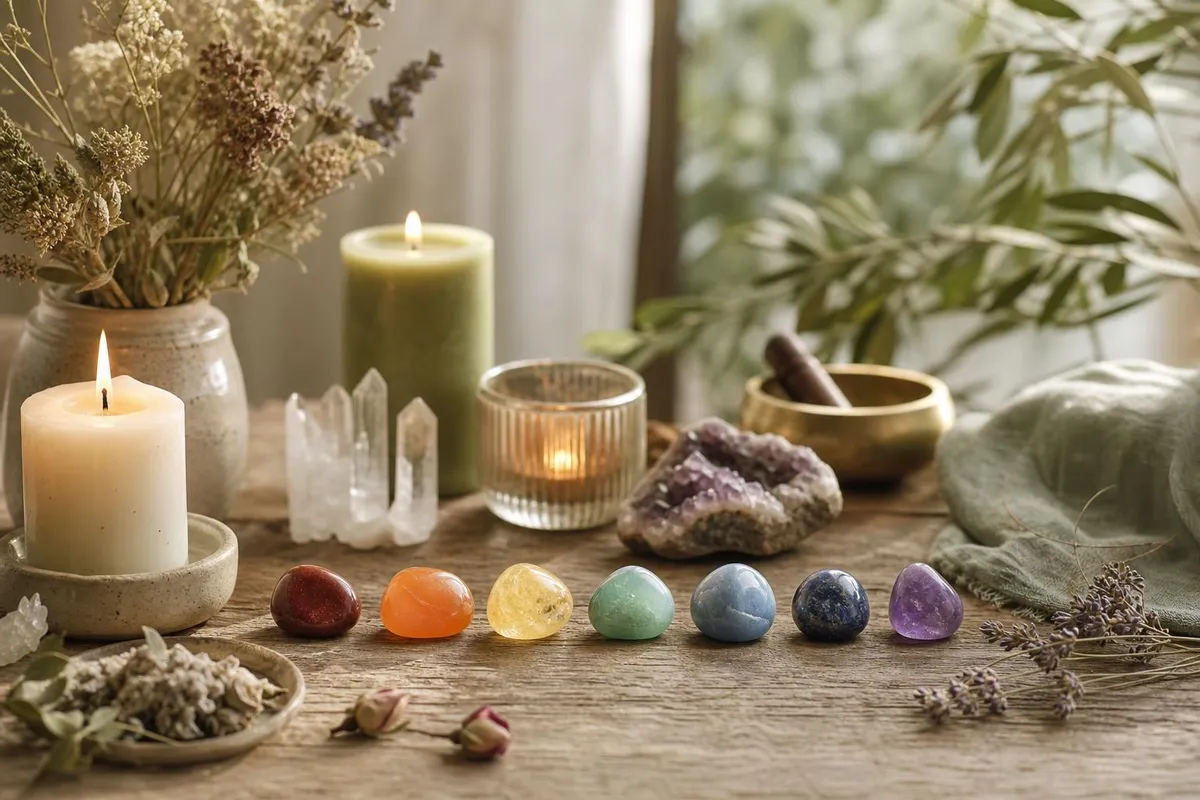
The seven chakra colours, from the base of the spine upwards, are red, orange, yellow, green, blue, indigo and violet (or white). Each colour is linked to one energy centre and to a theme: safety, creativity, confidence, love, voice, insight and connection.
This guide explains what each colour is said to stand for, where the rainbow system came from and how to use it gently at home with candles, clothes, crystals and a few quiet minutes. It is for anyone curious about chakras, and for people choosing a thoughtful gift for someone who is.
TL;DR
- The seven chakra colours run red, orange, yellow, green, blue, indigo and violet from the base of the spine to the crown of the head.
- Each colour is linked to a theme, not a medical effect, so treat it as a prompt for reflection.
- The rainbow colour scheme is a modern Western idea built on older Indian traditions.
- You can work with the colours through a candle, a crystal, a scarf or a short seated meditation.
- If low mood, poor sleep or worry hangs around, speak to your GP rather than relying on rituals alone.
What chakras are and why they have colours
The word chakra comes from Sanskrit and means wheel. In traditions that grew out of India, chakras are described as centres of energy running along the spine, from the base to the top of the head.
Chakras are a spiritual idea rather than a medical one, and they have not been shown to exist as physical structures. Many people still find the idea useful. It gives them seven simple themes to think about: feeling safe, enjoying life, standing up for themselves, loving, speaking, noticing and feeling connected.
Colour is the easy way in. A colour is quick to picture, easy to find in a room and pleasant to look at. When you imagine a warm red at the base of your spine, you give your attention somewhere definite, and that is most of what a short ritual needs.
You do not need to believe in energy centres to enjoy the practice. Plenty of people treat it as a gentle mindfulness exercise with a colourful framework.
The seven chakra colours at a glance
Here is the quick version, from the bottom of the body to the top. The Sanskrit names are in brackets.
- Red: root chakra (Muladhara), base of the spine. Theme: safety and stability.
- Orange: sacral chakra (Svadhisthana), lower belly. Theme: pleasure and creativity.
- Yellow: solar plexus (Manipura), above the navel. Theme: confidence and will.
- Green: heart chakra (Anahata), centre of the chest. Theme: love and compassion.
- Blue: throat chakra (Vishuddha), throat. Theme: honest expression.
- Indigo: third eye (Ajna), between the brows. Theme: intuition and insight.
- Violet or white: crown chakra (Sahasrara), top of the head. Theme: connection and meaning.
Some teachers use gold or white for the crown, and a few use pink for the heart. There is no single official palette. Pick the version that feels right to you and stay with it for a while.
Pro Tip: Write the seven colours on a small card and keep it in a book or on the fridge. Seeing the list each day makes the colours familiar, so you will not need to look anything up when you sit down for a ritual.
Red, orange and yellow: the lower three
The lower chakras are often described as the grounding ones. They are about the body, daily life and how you feel in your own skin.
Red: the root
Red is linked to home, routine and feeling steady. A ritual might be as plain as eating a proper breakfast, putting on thick socks and standing barefoot on the floor for a minute. A deep red candle can mark the moment, but keep the theme practical.
Orange: the sacral
Orange stands for enjoyment and creativity. Try a long bath with a sweet orange scent, or fifteen minutes with a sketchbook, a playlist or a new recipe. The point is pleasure without a goal.
Yellow: the solar plexus
Yellow is about confidence and follow-through. Many people use it when they are setting a goal or making a decision. If you like writing down hopes, our plain explanation of what manifestation means pairs well with a yellow candle and a notebook.
Green, blue, indigo and violet: the upper four
The upper chakras are more about connection, communication and perspective. The colours also get cooler as you rise, which many people find soothing in the evening.
Green: the heart
Green is for kindness, to others and to yourself. Write a note to a friend, water your houseplants or sit with a mug of green tea. A small green stone in the pocket works as a reminder.
Blue: the throat
Blue is about saying what you mean. If there is a conversation you have been putting off, jot down two or three plain sentences first. Singing in the kitchen counts too.
Indigo: the third eye
Indigo is the colour of dusk and of quiet noticing. Use it for journalling, a tarot or oracle card pull, or five minutes of looking out of the window without your phone.
Violet or white: the crown
Violet is linked to a sense of being part of something bigger. A walk under a wide sky or a few minutes of stillness at the end of the day suits it.
Where the rainbow colours really come from
Old Indian texts describe chakras as lotus flowers with different numbers of petals. They do not give the tidy red-to-violet rainbow that is now on many yoga mats and tea towels.
The rainbow scheme is generally understood to be a later Western arrangement, popularised through twentieth-century writing on yoga, theosophy and the New Age movement. It lines the chakras up with the colours of the visible spectrum, which makes it easy to remember.
That does not make it worthless. It means you can hold it lightly. If a teacher tells you the throat is turquoise or the heart is pink, they are not wrong, they are using a different map.
This view helps when you are shopping, too. A label that promises a colour will change your life is overselling. A label that says a colour can be a useful focus is closer to the truth.
Pro Tip: Choose one colour per week rather than all seven at once. Wear it, light a candle in it and notice how you feel by Sunday. A slow pace beats a rushed rainbow.
How to use chakra colours at home
A five-minute ritual is enough. You do not need special equipment, only a seat and a colour to focus on.
- Choose the colour that matches today's theme, or simply the one you are drawn to.
- Light a candle or hold an object in that colour. Make sure candles sit on a heatproof surface and never leave them burning unattended.
- Sit comfortably and breathe slowly for a minute.
- Picture the colour as a soft glow at its place in the body.
- Stay for three minutes, letting your attention return to the colour when it wanders.
- Finish with a longer breath out and write one line in a notebook.
This is close to the simple attention practice described in the NHS guide to mindfulness, which encourages paying attention to the present moment, including your thoughts, feelings and surroundings.
For a longer version that moves through all seven colours, try our chakra meditation for beginners. If mornings suit you better, a guided morning meditation can carry one colour through the day.
Matching colours with crystals and candles
Crystals and candles are the most popular way to bring chakra colours into a room. They are pretty, they are tactile and they give a ritual a clear start and finish.
Common pairings include:
- Red: red jasper or garnet.
- Orange: carnelian.
- Yellow: citrine.
- Green: green aventurine, or rose quartz for a pink heart.
- Blue: blue lace agate or sodalite.
- Indigo: amethyst or lapis lazuli.
- Violet or white: clear quartz or selenite.
These are traditional associations, not treatments. A stone will not change how your body works, but holding something cool and smooth can give your attention a place to rest. For the background on ten popular stones, see our plain guide to crystal meanings.
With candles, a single soy wax candle in a matching colour, or a neutral candle beside a coloured stone, is plenty. Put it out before you leave the room. Evening rituals also sit well within a calm wind-down routine, and the NHS sleep advice recommends a relaxing bedtime routine and a dark, quiet room.
When chakra work is not enough
Chakra colours can be a pleasant way to pause. They are not a way to manage a health problem, and it is worth being clear about that.
If you feel low for weeks, cannot sleep, feel constantly anxious or have physical symptoms that worry you, see your GP. Mind has clear information and ways to find help near you. The Mental Health Foundation also publishes practical guidance on everyday wellbeing.
It also helps to watch how a ritual makes you feel. If it feels calming to do, keep it. If you start to feel pressure to fix yourself or feel guilty when you skip a day, put it down and come back when it feels light again.
A good self-care ritual should feel like a small kindness, not another task on the list.
When we talk to customers about chakra colours, the ones who enjoy them most are not chasing a result. They pick a colour for the week, light a candle on a Sunday night and sit quietly for a few minutes. We think that is the right way round. The colour is a prompt to stop, and the pause is the point. If you are buying for someone, a single candle and a stone in their favourite colour often means more than a large set.
- The Well In Spirit team
About Well In Spirit
If you would like to try these colours at home, our Well In Spirit shop has soy wax candles, crystals, incense and oracle cards that suit a short colour ritual. You can browse everything in our gift collection, which includes gentle boxes for slowing down. None of it is essential, and a candle and five quiet minutes will do.
Frequently asked questions
What are the seven chakra colours in order?
From the base of the spine upwards, the order is red, orange, yellow, green, blue, indigo and violet. Some teachers use white or gold for the crown. Each colour is linked to a theme, from safety at the root to connection at the crown.
Which chakra colour should I start with?
Start with red, the root, if you like to work from the ground up, or choose the colour you feel drawn to. There is no wrong place to begin. Many people simply pick one colour a week and notice how it feels.
Do chakra colours have any scientific evidence behind them?
Chakras are a spiritual idea, and there is no scientific evidence that they exist as physical energy centres. The colours work best as a focus for attention and reflection. Treat them as a gentle ritual rather than a medical approach.
Can I use chakra colours without crystals?
Yes. You can use a scarf, a mug, a flower, a candle or just a colour you picture in your mind. Crystals are a pleasant extra for some people, but the practice works with whatever you already have at home.
Sources
- Mindfulness, NHS
- Sleep and tiredness, NHS
- Mind: mental health support and information, Mind
- Mental Health Foundation, Mental Health Foundation