Guided Morning Meditation: 1 to 15 Minutes, With Safety in Mind
Choose a guided morning meditation from one to fifteen minutes, with safety advice that considers trauma and curated sequences for your routine.
On this page
Pick a guided practice that fits the minutes you actually have this morning: one minute for a quick reset, five for a full energiser, ten or fifteen when you want a slower, fuller start. A 5-minute guided morning meditation works well as a default because it is long enough to shift your mood without crowding breakfast or the school run. For variety beyond a single track, a curated library of guided sequences, such as our own members’ library saves you the trouble of hunting for the right one each day.
Key Takeaways
Short, modular guided meditations of five to ten minutes are most effective for establishing a sustainable morning mindfulness routine.
| Point | Details |
|---|---|
| Attach to existing habits | Link your meditation to daily routines like waking, dressing, or making coffee to make it easier to stick with. |
| Start small and be consistent | Aim for five minutes daily, gradually increasing duration as the practice becomes automatic and routine. |
| Use a variety of anchors | Switch between breath, sensations, sounds, or visualisations to find what best calms your mind without frustration. |
| Incorporate a calming ritual | Pair your meditation with a shower, scent, or journaling to deepen its effects and reinforce the habit. |
| Well In Spirit offers curated sequences | Their library organizes guided practices by length and theme, providing variety and simplicity for daily use. |
Ready-to-use guided morning practices by length
The right practice depends on what your morning looks like, not on what sounds most impressive. These four structures cover almost every scenario, from a packed commute to a slow Sunday.
- Micro (1 minute): a three-part breathing space. Notice what’s going on in your body and mind, gather your attention onto the breath, then expand awareness outward to the whole body. This structure, commonly taught as a three-minute breathing space, compresses neatly into sixty seconds when time is tight.
- Short (5 minutes): open with a one-sentence intention for the day, settle into two minutes of breath awareness, spend a minute noticing body sensations, then close by restating your intention.
- Medium: add a brief body scan or a loving-kindness sequence after the breath anchor, which sets a warmer, more positive tone than breath work alone.
- Extended: combine breath awareness, a short visualisation of how you want the day to go, a spoken intention, and some gentle movement such as shoulder rolls or a neck stretch.
This modular shape, moving from intention to breath to body to closing, comes from standard MBSR exercise guidance, which suggests a body scan in the morning and notes that the same sequence stretches or shrinks depending on how many minutes you give it.
A few format notes make the difference between a practice you repeat and one you abandon:
- Use audio on a commute or whenever your eyes need to stay open, such as while making coffee, and consider following a beginner’s guide to better living-room sound to improve your listening experience.
- Use video when you want visual cues for posture or a guided visualisation.
- A slower voice pace with longer pauses suits a body scan; a slightly brisker pace suits a 1-minute energiser.
- Gentle background sounds (rain, soft instrumental tone) help some people settle, though a plain voice works just as well.
If you want a ready script rather than building your own, our five-minute meditation guide lays out six rituals you can follow directly, and our loving-kindness script gives a trauma-aware version of the 10-minute option above.
Pro Tip: Keep one short script memorised. On the mornings you don’t have time to press play, you can still talk yourself through it.
How to sit, anchor your attention, and handle a wandering mind
Technique matters less than people assume, but a few basics make a short guided practice noticeably more effective.
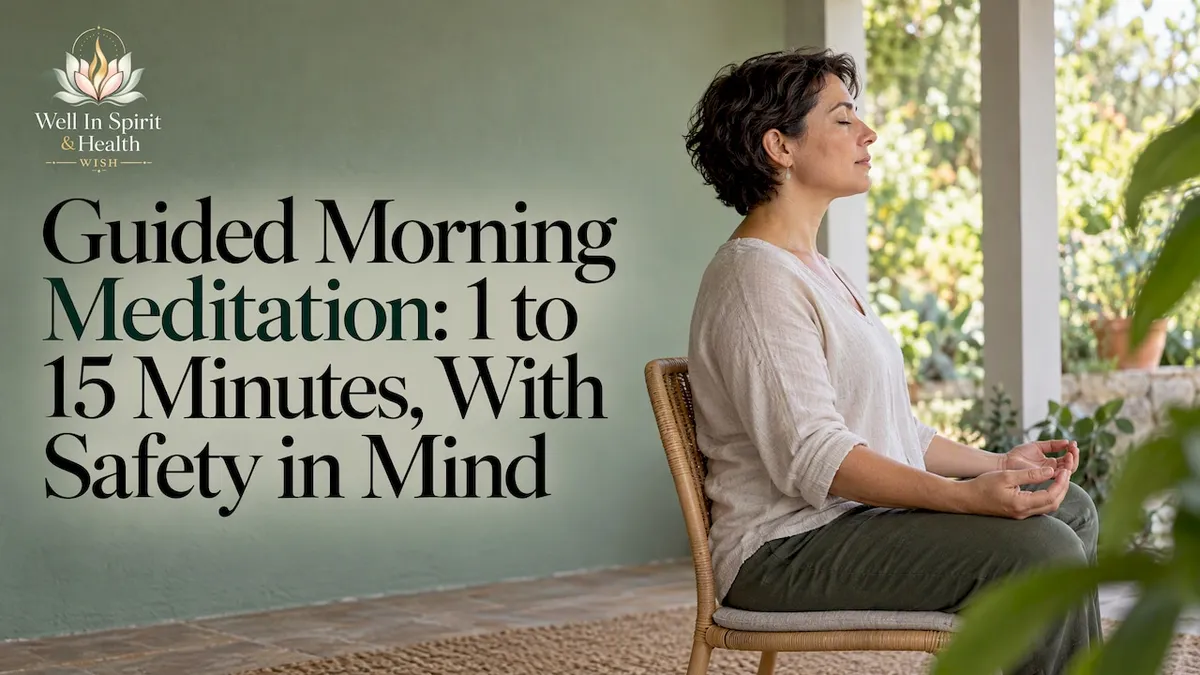
Posture comes first. Aim for what mindfulness teachers call “aware and awake”: a straight but relaxed back, shoulders dropped, hands resting easily. NHS Scotland’s sitting meditation guidance recommends this seated position specifically to reduce sleepiness, and suggests that if you are lying down, keeping your eyes open or shortening the practice helps when drowsiness creeps in.
You do not have to use the breath as your anchor. Options include:
- The breath: simple, portable, always available.
- Body sensations: useful if breath awareness feels too subtle or triggers anxious attention.
- Sounds in the room: a good option for people who find stillness uncomfortable.
- A visualisation, such as imagining the shape of the day ahead.
Choose whichever anchor you can return to without strain. If breath awareness makes you feel more aware of anxiety rather than less, switch to sound or sensation instead.
Pacing shapes how a guided track feels. A good guide leaves pauses long enough to actually follow the instruction, not just hear it, and shortens sentences into single breath cues during the active parts (“breathe in, breathe out”) rather than full paragraphs.
When your mind wanders, and it will, the instruction is always the same: notice, then gently bring attention back. NHS guidance on meditation for beginners frames this return of attention as the practice itself, not a failure of it. If you keep drifting toward sleep instead of wandering thoughts, that usually means your posture has slumped: straighten up, open your eyes slightly, or shorten the session for that day.
Pro Tip: If a particular anchor keeps producing frustration rather than calm, that’s a signal to switch anchors, not to try harder with the same one.
Building a morning habit that actually sticks
A single brilliant session matters far less than five quiet minutes repeated daily. NHS guidance notes that there is no strict rule on duration, and that consistency, short sessions returned to day after day, builds the benefit over time rather than any single long sit.
A workable routine usually follows the same pattern:
- Pick an anchor habit you already do every morning, such as the alarm going off, the kettle boiling, or getting dressed, and attach your meditation to it.
- Start smaller than feels impressive. Five minutes you actually complete beats twenty minutes you plan and skip.
- Increase gradually, adding a minute or two only once the shorter version feels automatic rather than effortful.
- Track it lightly. A streak counter, a single-sentence note in a journal, or a calendar tick is enough. The goal is visibility, not analysis.
The habit tends to fail at the planning stage, not the meditation stage. Deciding in advance exactly when and where you’ll sit, rather than hoping you’ll find a moment, removes the decision you’re most likely to skip when mornings get busy.
Keeping morning practice safe and trauma-sensitive
Guided meditation is widely recommended as a wellbeing approach, and mindfulness-based therapies are recognised by UK health bodies as potentially helpful for stress, anxiety and some less severe depressive symptoms. That recognition comes with a responsibility to practise thoughtfully, particularly for anyone new to it.
Durations given by UK health guidance range from just one minute to around twenty, which means there is no single correct length and no reason to push through a longer session before you’re ready for one.
A few principles keep a guided practice inclusive and safe:
- If you experience intense distress during or after meditation, prioritise speaking to a GP or mental health professional rather than pushing through with a new habit.
- Favour invitational language (“you might try…” rather than “you must”) so you always have the choice to opt out of an instruction.
- Keep your eyes open, use a shorter session, or switch to a sensory anchor like sound if a practice starts to feel overwhelming.
- Trauma-sensitive approaches specifically recommend offering optional anchors rather than one prescribed focus, a principle drawn from trauma-sensitive mindfulness guidance.
None of this is a reason to avoid guided practice. It is a reason to choose guides that build in choice, and to treat any guided track as a starting suggestion rather than a fixed instruction.
Where to find guided morning meditations worth your time
Plenty of guided audio and video exists; the trick is picking tracks that suit your morning rather than whatever ranks first in a search.
- Choose audio for anything eyes-closed, commuting, or lying in bed before getting up.
- Choose video when you want to see posture cues or follow a visualisation with visual prompts.
- Vet a guide by checking its length against your actual morning window, listening for invitational rather than commanding phrasing, and confirming it offers opt-outs for anchors or positions.
- Group tracks into playlists by intent, energising, centring, or intention-setting, so you can match your choice to your mood rather than scrolling each morning.
University chaplaincy and wellbeing services, such as Strathclyde’s recorded guided meditations, show that recorded tracks in the 13 to 18-minute range work well for flexible morning use, proof that longer guided sessions aren’t only for formal retreats.
For a single destination rather than scattered searching, our own members’ library groups guided sequences by length and theme, which removes the daily decision of which track to pick.
Pairing meditation with the rest of your morning ritual
A guided meditation rarely stands alone in a good morning. Pairing it with one or two other small rituals tends to deepen the effect rather than dilute it.
A warm shower or bath with a scented oil beforehand can settle the body before you sit, making the breath easier to notice. Lighting a candle or diffusing a calming scent while you meditate gives your senses something consistent to associate with the practice, which over time becomes its own cue to settle. Journaling a single sentence straight after your session, what you noticed, what intention you set, extends the practice’s effect into the rest of the morning rather than letting it evaporate the moment you stand up.
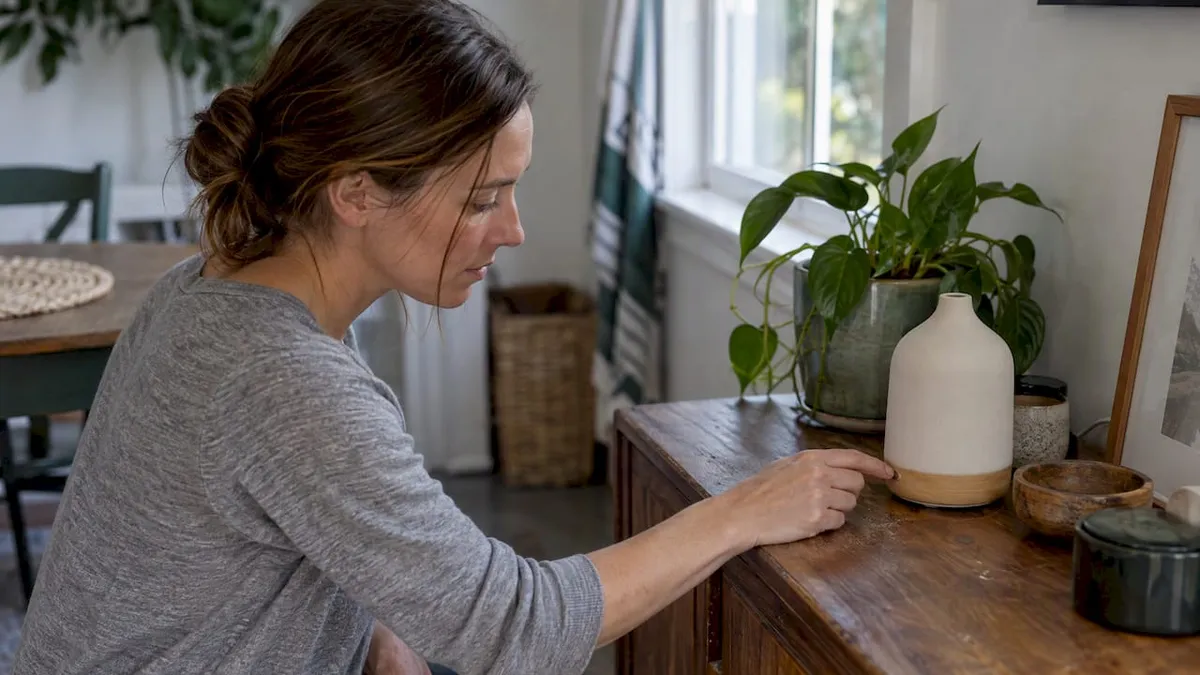
The order matters less than the repetition. Whether you shower first or meditate first, doing the same sequence most mornings turns several small actions into one recognisable ritual, which is easier to stick with than any single element on its own.
Why ritual matters more than perfect technique
Curating short guided practices has taught me that the biggest barrier isn’t finding the right meditation style, it’s finding one simple enough to repeat without negotiation each morning. People rarely abandon meditation because the technique failed; they abandon it because the version they started with needed too much time, too much stillness, or too much self-criticism when their mind wandered.
A short, repeatable ritual beats an ambitious one every time. If you want a few ready-made sequences to rotate through rather than build from scratch, our members’ library is where I’d point you first.
— Rob
A simple way to keep your morning practice varied
Switching between scripts you’ve written yourself gets tiring fast, which is where a curated collection earns its place. Our Well In Spirit Membership gives you ongoing access to guided sequences organised by length and theme, so you’re never stuck reusing the same five-minute track out of habit rather than choice.
- Themed rituals and guided sequences across different lengths, from quick morning resets to fuller evening wind-downs.
- Pairings with aromatherapy and bath and body rituals for mornings when you want to combine scent with stillness.
- A single place to return to each day instead of searching for a new guided track every time.
If mornings are the part of your routine that needs the most help, browse the Well In Spirit membership and library and sample a guided sequence to see which length and tone suits you.
FAQ
How long should a guided morning meditation be?
There’s no fixed length: NHS guidance notes that durations from one minute to around twenty minutes are all standard starting points. Choose based on the time you actually have, not an ideal number you’ve seen elsewhere.
What’s the best guided meditation structure for beginners?
A simple sequence works best: a brief breath anchor, a short body scan or loving-kindness phase, and a closing intention, a modular structure drawn from MBSR exercise guidance. Start with five minutes and extend only once that feels easy.
What if my mind keeps wandering during meditation?
Mind-wandering is expected, not a sign you’re doing it wrong. NHS guidance frames the act of noticing and gently returning attention to your anchor as the practice itself.
Is morning meditation safe for everyone?
Guided mindfulness is widely recommended for general wellbeing and is recognised for helping with stress and some less severe depressive symptoms, according to the Mental Health Foundation. If a practice brings up intense distress, speak with a GP or mental health professional rather than continuing alone.
Where can I find reliable guided morning meditations?
University wellbeing services and NHS resources offer free recorded sessions, while a themed, curated collection such as our own members’ library groups guided sequences by length and intent for easier daily use.
Sources
- How to meditate for beginners - Mental wellbeing tips - Every Mind Matters - NHS
- Mindfulness-based stress reduction (MBSR) - Guy’s and St Thomas’ NHS Foundation Trust
- Three-minute breathing space (transcript) - Oxford podcasts