5–10 Minute Loving Kindness Meditation: Script and Trauma Tips
Use a ready 5–10 minute loving kindness meditation script, trauma safe adaptations, and short evidence summaries to build a daily Metta ritual.
On this page
Loving kindness (Metta) meditation is a short practice of silently repeating wishes of goodwill that you can do in 5 to 10 minutes to cultivate compassion for yourself and others. You do not need experience, a special posture, or a quiet retreat to start. A simple guided script, explained below, works for complete beginners, and the reasoning and evidence behind it follow right after.
TL;DR:
- Repeating phrases of goodwill toward oneself and others trains the mind to adopt a warm, non-judgmental attitude, which builds lasting emotional resilience.
- The practice can surface discomfort or intense emotions, especially when extending kindness to difficult people or oneself, requiring adjustments or professional support if necessary.
- Consistency is key; short, regular sessions of three to five minutes often yield better long-term benefits than infrequent, longer practices.
- Variations in practice style, including imagery or verbal-only approaches, can be adapted to suit different preferences and physical comfort levels.
- Pairing Metta with ritual cues like scents or specific settings helps embed the practice into daily routines and encourages ongoing engagement.
A 5 to 10 Minute Guided Loving Kindness Script You Can Use Today
Sit or lie somewhere you will not be interrupted. Close your eyes or soften your gaze, and let your shoulders drop.
- Settle (30 to 60 seconds): Take three slow breaths, feeling your chest and belly rise and fall, and let your jaw unclench.
- Self: Silently repeat phrases directed at yourself, such as “May I be happy. May I be safe. May I be healthy. May I live with ease,” a phrasing drawn from traditional loving kindness meditation instruction.
- Benefactor or loved one: Picture someone who has been kind to you and repeat, “May you be happy. May you be safe. May you be healthy. May you live with ease.”
- Neutral person: Bring to mind someone you neither like nor dislike, such as a neighbor or a cashier, and offer the same phrases.
- Difficult person: Picture someone you have friction with and extend the wish again, starting small if this feels like a stretch.
- All beings: Widen the circle to everyone everywhere: “May all beings be happy. May all beings be safe. May all beings be healthy. May all beings live with ease.”
This five-stage progression, moving from yourself outward to a difficult person and finally to all beings, reflects the structure used in traditional Metta bhavana practice.
For a 5-minute version, spend about 30 seconds settling and 50 seconds on each stage. For a 10-minute version, stretch each stage to 90 seconds and add a closing minute of silence to simply notice how you feel.
Some people find a small physical cue helps anchor attention:
- Rest a hand on your chest during the self stage to feel the words land somewhere.
- Picture a warm light expanding outward as you move through each stage.
- Open your eyes slowly at the end rather than snapping back to activity.
Pro Tip: If a phrase feels hollow at first, keep repeating it anyway. The warmth tends to build with repetition rather than arriving on command.
How Loving Kindness Meditation Works and What the Research Shows
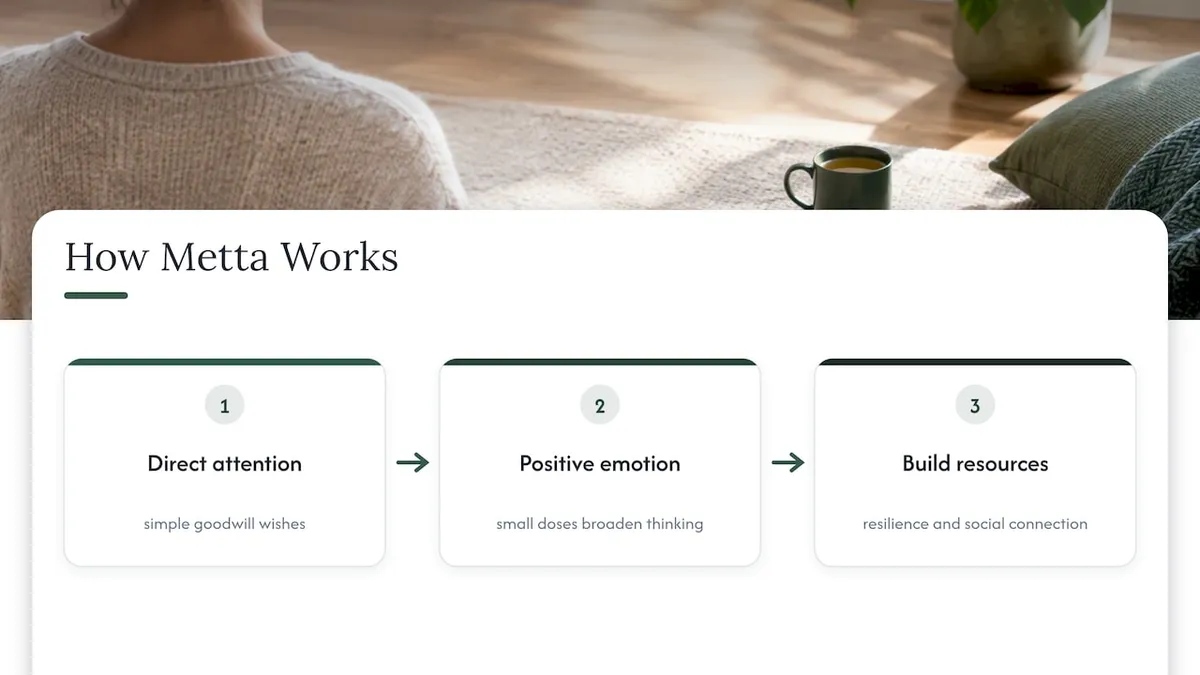
Metta works by repeatedly directing attention toward specific, simple wishes of goodwill, which trains the mind to default toward warmth rather than judgment. Psychologist Barbara Fredrickson’s broaden-and-build theory explains why this matters: repeated small doses of positive emotion gradually broaden thinking and build lasting resources like resilience and social connection, rather than producing a one-time mood boost.
A randomized clinical trial comparing group loving kindness meditation with cognitive processing therapy in veterans found comparable reductions in PTSD and depression symptoms between the two approaches, with some measures favoring loving kindness meditation at follow-up. That is a notable signal, since cognitive processing therapy is a well-established trauma treatment.
Broader systematic reviews and meta-analyses report small-to-moderate improvements in positive emotion, compassion, and self-compassion from kindness-based meditations, alongside some reductions in depression, though the underlying studies vary in quality and design. For some trauma survivors, the practice can surface discomfort before it brings relief, which is why it is often used alongside, rather than instead of, professional support.
Practical Variations and Adaptations for Every Practice Style
Metta adapts easily once you understand the core structure. You can practice seated in a chair, cross-legged on a cushion, or lying down if sitting is uncomfortable, and sessions can run anywhere from 3 minutes to 20 without losing their effect.
- Use first-person phrasing (“may I be…”) for the self stage and third-person (“may you be…”) for others, or keep everything first-person plural (“may we be…”) if that feels more natural.
- Choose visualization, picturing a face or a warm light, or stick to phrases alone if imagery feels distracting.
- If distress increases, especially with trauma history, start with neutral targets instead of the self stage, shorten sessions to two or three minutes, and consider practicing with a teacher or therapist rather than alone.
- Pair the practice with an existing habit, such as a few phrases while your tea steeps or before you turn off a bedside lamp.
Pro Tip: If the self stage feels uncomfortable, start with the benefactor stage instead and work backward. Many people find it easier to extend warmth to someone else before turning it toward themselves.
Working Through Resistance, Emotional Spikes, and Boredom
Resistance or sudden emotion during Metta is common, not a sign you are doing it wrong. Repeating goodwill phrases can surface grief, anger, or numbness, especially during the self or difficult-person stages, simply because attention is landing somewhere it does not usually rest.
- If a stage feels too intense, shorten your session or skip to a stage that feels safer, such as the neutral person.
- Use a breath reset: three slow exhales longer than your inhales before continuing.
- Ground in physical sensation, like your feet on the floor, if emotion feels overwhelming.
- If distress persists across sessions or feels unmanageable, pause the practice and talk to a therapist or qualified teacher.
Boredom or feeling nothing at all is also normal early on. Progress usually shows up as small shifts, like a calmer reaction to daily friction, rather than dramatic breakthroughs.
Why We Build Metta Into Everyday Rituals
We think of loving kindness less as a technique and more as a habit worth protecting with a little ceremony. A consistent setting, the same chair, a familiar scent, soft light, tells your body it is time to settle before you even begin the phrases. Well In Spirit & Health builds guided meditations and ritual collections around exactly that idea: pairing a practice like Metta with small sensory supports that make it easier to return to, session after session.
What Beginners Get Wrong About Loving Kindness Meditation
Most guides treat Metta as a mood booster you do once and feel instantly lighter. The research does not support that. The clinical and meta-analytic evidence points to a practice that works cumulatively, small, repeated doses of positive emotion building resilience over weeks, not a single session producing a breakthrough.
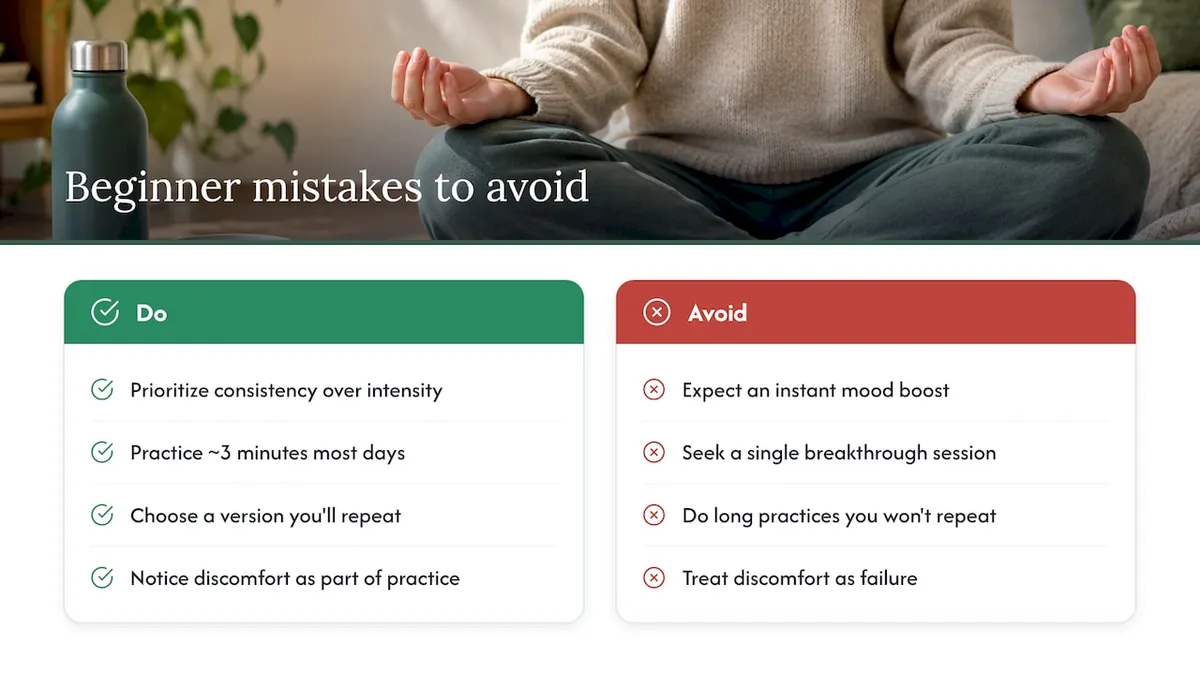
The bigger gap in conventional advice is honesty about discomfort. Plenty of guides promise instant warmth and skip past the fact that directing kindness at yourself, or at someone difficult, can feel strange or even upsetting at first. That is not failure. It is often the point where the practice is doing something.
If you take one thing from this, prioritize consistency over intensity. A rough three-minute practice most days will do more for you than one polished twenty-minute session you never repeat. Pick the version you will actually return to, and let the depth build on its own.
— Rob
Supporting Your Practice With Well In Spirit
A script gets you started, but a consistent setting is what keeps a practice alive. Well In Spirit & Health offers guided meditations and curated ritual collections designed to pair with exactly this kind of daily self-care, turning a few minutes of Metta into a small, repeatable ritual rather than another task on a list.
- The Well In Spirit Membership gives ongoing access to guided meditations and ritual content you can return to alongside your Metta practice.
- Collections like The Awakening Ritual and The Chakra & Third Eye Awakening Ritual pair reflective tools with a guided structure, starting from £30.
- Essential oils from our curated selection can add a calming scent cue to mark the start of each session.
If you would rather build a simple pre-practice routine first, a minimalist skincare routine or a relaxation-focused treatment can help create the unhurried mindset Metta works best from. When you are ready for a more structured option, explore the Well In Spirit Membership and ritual collections to build a practice that feels less like a chore and more like something you look forward to.
Sources
- Loving-Kindness Meditation vs Cognitive Processing Therapy for Posttraumatic Stress Disorder Among Veterans
- The broaden-and-build theory of positive emotions (Fredrickson)
- Effect of kindness-based meditation on health and well-being: a systematic review and meta-analysis
- LovingKindness Meditation for Posttraumatic Stress Disorder: A Pilot Study
FAQ
What are the 5 steps of loving kindness meditation?
The traditional sequence moves from yourself, to a benefactor or loved one, to a neutral person, to someone difficult, and finally to all beings. Each stage uses the same core phrases, simply widening who they are directed toward, following the structure described in traditional Metta practice.
What is loving kindness meditation?
Loving kindness, or Metta, meditation is a practice of silently repeating phrases of goodwill toward yourself and others to cultivate compassion and warmth. It can be practiced in short sessions of a few minutes or extended into longer, structured sittings.
What is the traditional source of loving kindness practice?
Loving kindness meditation traces back to the Metta Sutta and related canonical Buddhist texts, which describe step-by-step methods for cultivating goodwill toward all beings. Modern guided versions adapt this structure for a secular, beginner-friendly format.
What should I say during loving kindness meditation?
Common phrases include “May I be happy, may I be safe, may I be healthy, may I live with ease,” adapted for each stage of the practice toward yourself and others. You can adjust the wording as long as it expresses a genuine wish for safety, health, and ease, as outlined in pilot studies on loving kindness meditation.
Is loving kindness meditation safe for people with trauma histories?
Pilot research suggests loving kindness meditation is generally safe and acceptable, though some participants with higher trauma symptoms initially rate it as less helpful before benefits emerge. If distress increases during practice, it is best to shorten sessions, start with neutral targets, or work with a qualified therapist or teacher.