Calm in Five Minutes: Evidence Based Intention Setting Ritual
Evidence based, four step intention ritual to clarify goals and trigger action in 2–20 minutes. Morning, nightly and new moon variants.
On this page
An intention-setting ritual is a short, repeatable practice that helps you focus on and act towards a chosen outcome. Here is one to try now: light a candle or simply sit somewhere quiet, breathe slowly for two minutes, write one specific sentence naming what you want and when you will act on it, then fold the paper or blow out the candle to mark the moment closed. It takes a few minutes and leaves you clearer and calmer.
Key Takeaways
An intention-setting ritual combines mindful pauses, specific wording, and symbolic actions to help you clarify goals and reinforce commitment effectively.
| Point | Details |
|---|---|
| Structured steps | A ritual involves preparing a space, breathing to center, writing a clear intention, and sealing the practice, which promotes consistency. |
| Repetition matters | Performing the same ritual at the same time and place reinforces cues and helps turn actions into habits. |
| Use simple tools | Items like candles, journals, or objects are optional; a folded napkin or closed notebook can serve as effective seals. |
| Incorporate specific phrasing | Transform vague desires into concrete plans using if-then statements to facilitate automatic responses. |
| Well In Spirit approach | We suggest using curated ritual collections and guided practices to support consistent, meaningful intention setting. |
Step-by-step ritual template: prepare, set, seal
A reliable ritual needs structure, not equipment. The following four steps work whether you have a dedicated altar or five minutes at your kitchen table.
- Prepare the space: Clear a small area, dim harsh lighting if you can, and remove your phone from reach. A candle, cushion or scarf helps mark the space as different from your everyday one, but a closed door and a cup of tea do the same job.
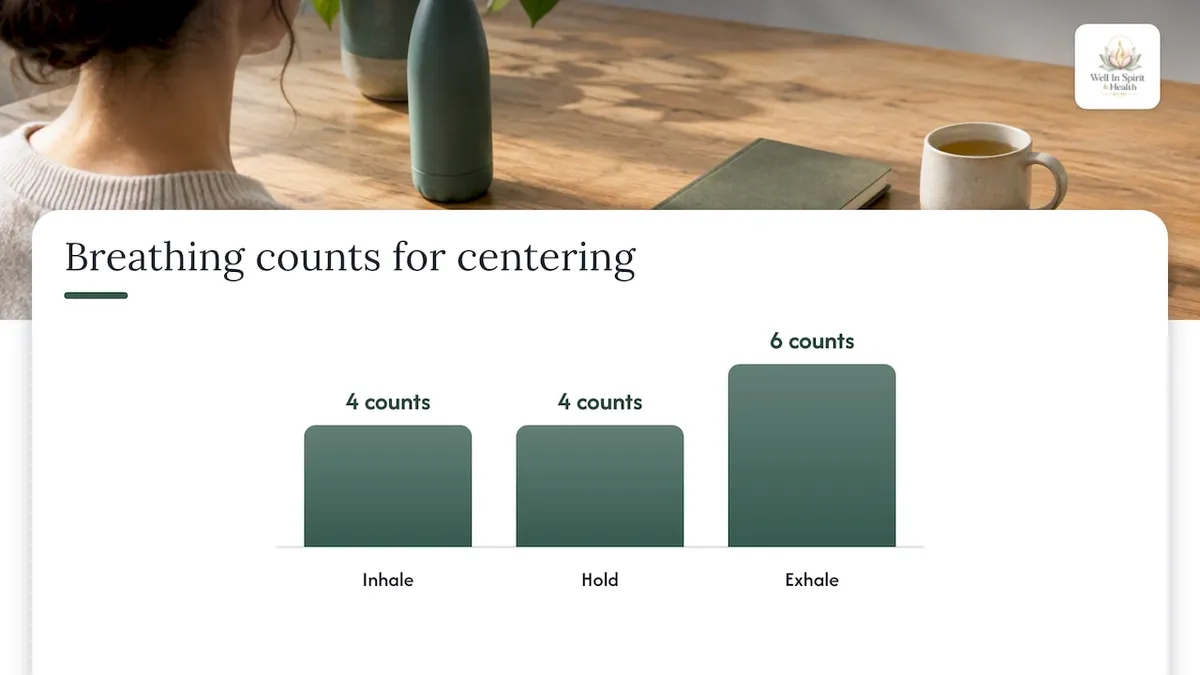
- Breathe and centre: Sit comfortably and breathe in for four counts, hold for four, and out for six, repeating several times. This slows your heart rate and settles your attention before you write anything.
- Write the intention: Put it in one sentence with a clear action and timeframe. “I will feel calmer” is vague; “if I feel anxious before a meeting, then I will take three slow breaths before speaking” gives you something to actually do.
- Seal it: Fold the paper and place it somewhere you will see it, light or extinguish a candle, or hold a small object and set it down deliberately. The physical action signals that the ritual is complete.
Total time varies from a brief moment for a stripped-down version to longer with the full sequence, and you can repeat it daily, weekly or at a date that feels meaningful.
Pro Tip: Keep the same time and spot each time you do this. Repetition in the same context makes the ritual easier to stick to and easier to remember.
Variants: nightly, morning and new-moon rituals
Different moments call for different versions of the same template.
- Nightly ritual (5 to 10 minutes): Name one thing you are releasing from the day and one thing you are grateful for, then write tomorrow’s single intention before sleep.
- Morning ritual (2 to 5 minutes): Three breaths, one sentence naming today’s focus, said aloud or written on a sticky note you will see again.
- New-moon ritual: Once a month, take slightly longer, perhaps 15 to 20 minutes, to review the past cycle and set one intention for the weeks ahead. Some people pair this with an astrology reading focused on the new moon for extra reflection prompts, though this stays entirely optional.
- Choosing between them: Pick the nightly version when you want closure, the morning version when you need daily focus, and the new-moon version when you are setting a bigger, longer-term goal.
Why ritual helps: mindfulness and psychological research you can trust
The pause at the centre of a ritual is not decoration. The NHS recommends regular, short mindfulness practice to reduce stress and support mental wellbeing, and the sitting-and-breathing step in any ritual template does exactly that.
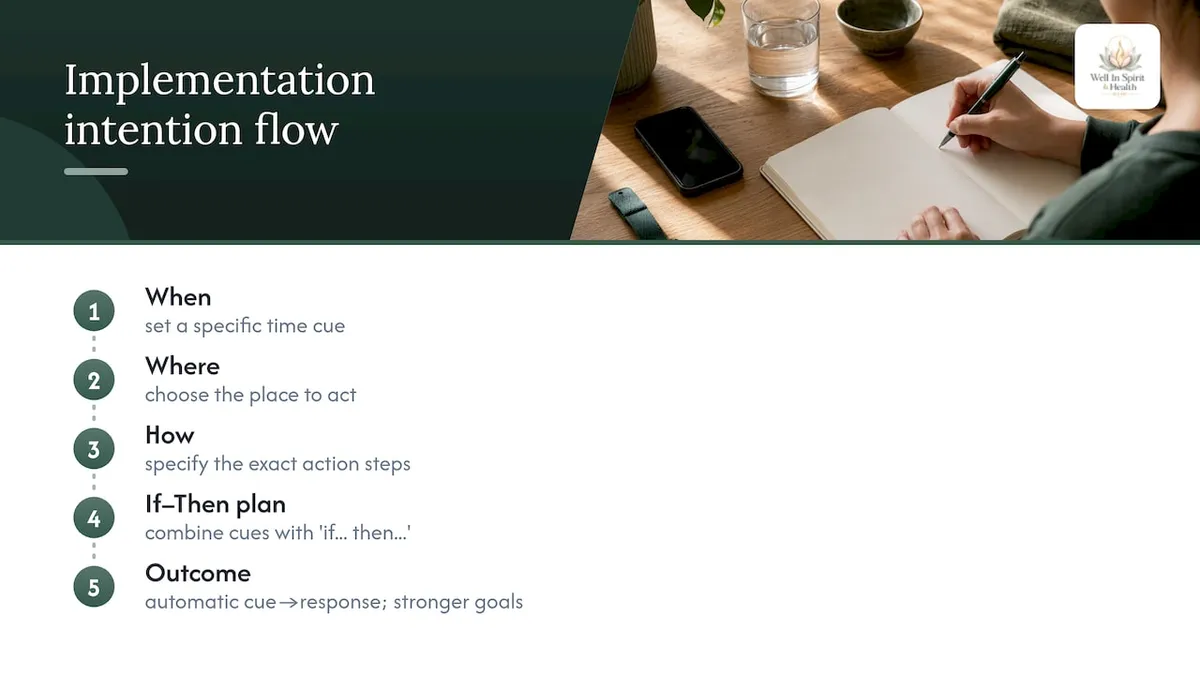
The writing step matters just as much as the pause. A meta-analytic review found that forming implementation intentions has a substantial positive effect on goal attainment across studies, because specifying when, where and how you will act creates an automatic cue-response link. A trial from the University of Manchester on fruit and vegetable intake found that “if-then” plans outperformed general intentions at changing behaviour.
Separately, qualitative research from the University of Northampton on Pagan ritual practice links ritual with liminality and flow, suggesting the boundary-marking act (lighting a candle, closing a door) helps attention settle into a focused state. Combine a mindful pause with specific if-then phrasing and you get a ritual that is both calming and more likely to actually change what you do.
How to design a ritual that fits you
Before copying any template, answer a few questions: what outcome do you actually want, how much time can you protect each day or week, and does a spiritual, secular or simply practical framing suit you best. These answers shape everything else.
- Materials: A candle, journal or crystal can mark the ritual as special, but none is required. A folded napkin or a closed notebook works just as well as a seal.
- Safety: If you use an open flame, keep it away from paper and never leave it unattended.
- If-then phrasing: Convert “I want to be less stressed” into “if I notice tension in my shoulders, then I will pause and breathe for ten seconds.” This format is what makes implementation intentions effective.
- Rehearse in context: Practising the ritual at the same time and place each day strengthens the cue, so the behaviour becomes closer to automatic.
Pro Tip: If a ritual starts to feel like one more task on a list, shorten it to ninety seconds rather than abandoning it altogether.
Troubleshooting is part of the process. If you feel self-conscious, start privately and skip anything symbolic until it feels natural. If strong emotions surface during the reflective step, that is common, but persistent distress is worth discussing with a GP or counsellor rather than working through alone.
Well In Spirit & Health: ritual collections that support the practice
There are curated ritual collections, aromatherapy and guided meditations designed to support this kind of practice at home. A kit built for evening wind-down typically supplies the candle, journal prompt and scent that map onto the prepare and seal steps above, so you are not hunting for pieces separately. Browse our full range at Well In Spirit if you want a ready-made starting point alongside the free template.
A brief reflection on ritual as an act of care
Small, repeated acts of attention matter more than elaborate ones. A ritual does not need candles or chanting to count: it needs honesty about what you want and a moment of stillness to notice it. Keep a short journal of what you tried and what shifted, even loosely, and let the practice change shape as you do.
— Rob
Where to find guided ritual collections and starter kits

Everything above works with items you already own, but if you would rather start with something beautifully put together, we offer curated collections such as The Awakening Ritual and The Forest Spirits Spa Ritual for spiritual practice, and seasonal options on our Christmas ritual collections page. None of this is required: a notebook and a closed door do the job too.
FAQ
What is an intention ritual?
An intention ritual is a short, deliberate practice, often combining a quiet pause, a written statement and a small closing act, that helps you clarify a goal and commit to acting on it. It typically takes between five and twenty minutes depending on the version you choose.
Can you give me some examples of intention setting?
Examples include a morning sentence naming today’s focus, a nightly release-and-gratitude practice before sleep, and a monthly new-moon review where you set one intention for the coming weeks. Each follows the same core pattern: pause, write, seal.
What are 5 examples of rituals?
Common examples are a morning breathing and writing practice, a nightly gratitude and release ritual, a monthly new-moon intention-setting session, a candle-lighting ritual to mark a decision, and a seasonal or birthday reflection ritual. All can be adapted with household items rather than special tools.
How to set intentions spiritually?
Many people add a spiritual dimension by lighting a candle, using a chosen object as a focus point, or tying the ritual to a lunar cycle such as the new moon. The structure stays the same: a mindful pause, a specific written intention, and a symbolic close, whatever beliefs you bring to it.
Sources
- Mindfulness - NHS
- Comparing implementation intention interventions in relation to young adults’ intake of fruit and vegetables - Research Explorer, University of Manchester
- Implementation intentions and mental health contexts - White Rose eprints
- Flow, liminality and eudaimonia: Pagan ritual practice as a gateway to a life with meaning - University of Northampton