How to Use a Sage Smudge Stick: A Safe, Simple UK Guide
Learn how to use a sage smudge stick safely, step by step, with simple UK advice on lighting, moving around the room and putting it out.
On this page
To use a sage smudge stick, open a window, hold the stick over a heatproof dish, light the tip until it flames, let the flame die down so it smoulders, then walk slowly around the room letting the smoke drift. Finish by pressing the tip out fully in sand or a dish. The whole thing takes five to ten minutes.
This guide is for anyone who has been given a smudge stick, or bought one out of curiosity, and wants to use it safely and with some thought. We cover where smudging comes from, what you need, the steps, what to say, how to keep fire and smoke under control, and gentler options if smoke is not for you.
TL;DR
- Light the tip, let the flame die, and keep the stick smouldering over a heatproof dish.
- Open a window, keep it away from fabric, and never leave it unattended.
- Walk slowly round the room, in whatever order feels natural, with a clear intention.
- Press the stick out fully in sand or a ceramic dish and check it is cold before storing.
- Skip the smoke if you have asthma, are pregnant, or share a home with pets or babies, and choose a smoke-free ritual instead.
What a sage smudge stick is
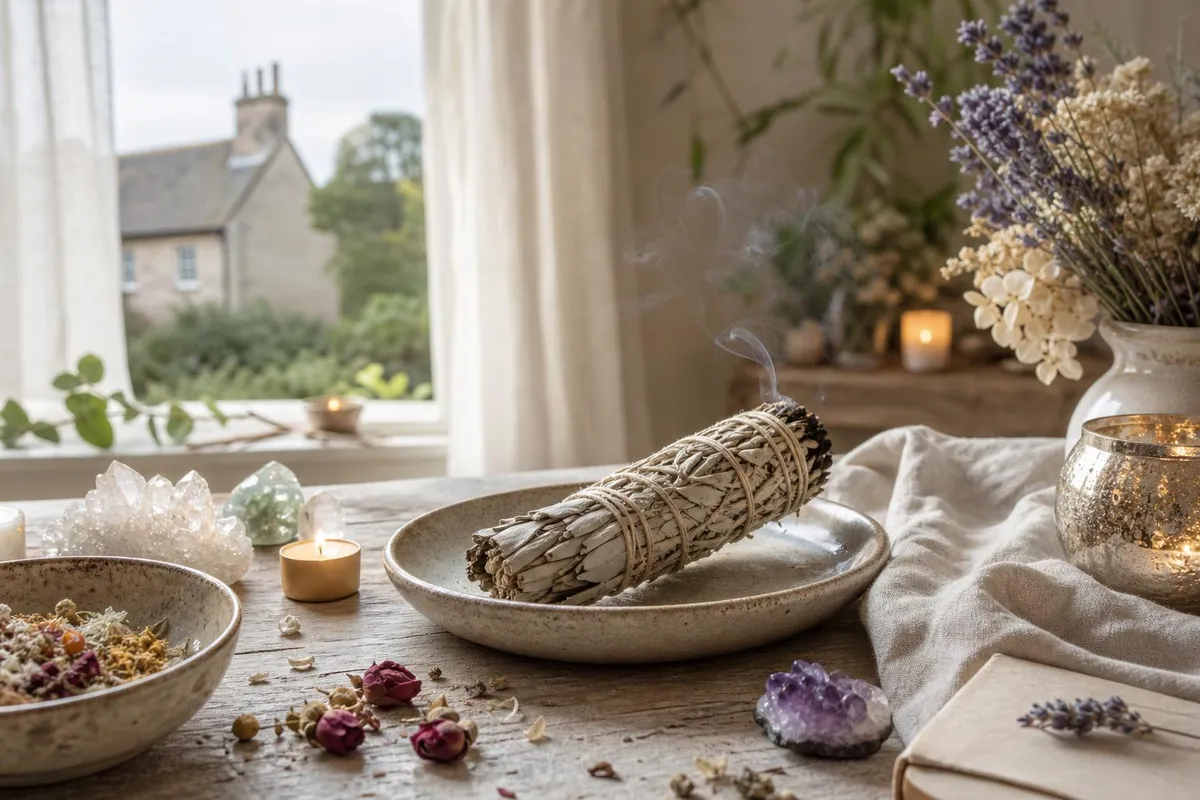
A smudge stick is a tight bundle of dried herbs, usually sage, bound with cotton string. You light one end, let it smoulder, and use the smoke as part of a ritual to mark a fresh start in a room or in yourself.
Most sticks sold in the UK are white sage, but you will also see garden sage, lavender, rosemary, cedar and mugwort. Each smells different. Garden sage is earthy and green, lavender is soft and floral, and white sage is sharp and resinous.
Burning herbs to mark a change of mood or place is an old and widespread custom. Many people use a smudge stick the way they might open a window after an argument: as a signal to themselves that the atmosphere is changing. That is a reasonable way to see it. It is a ritual, a pause and a scent, and it is not a treatment for anything.
If you like the symbolism side of burning plant material, our guide to incense meaning and what it symbolises is a good companion read.
Respect and sourcing
White sage and the practice of smudging are closely tied to Indigenous peoples of North America, for whom the ceremony is sacred. Many people from those communities have asked outsiders to be thoughtful about how they use it, and about how white sage is harvested, because overpicking from the wild is a real concern.
You do not have to give up the idea. You can simply be considerate about it.
- Buy from sellers who say where the sage was grown and how it was harvested.
- Consider sticks made from herbs that grow in Britain, such as garden sage, rosemary or lavender.
- Call it what it is, a herbal ritual of your own, rather than borrowing ceremonial language you do not fully know.
Garden sage is easy to grow in a sunny, well-drained spot, and the Royal Horticultural Society has practical advice if you fancy growing your own. A small bundle tied with string and left somewhere airy to dry fully is ready to burn once the leaves feel brittle.
Pro Tip: Tie your own mini bundle of garden sage, rosemary and a sprig of lavender in late summer, hang it upside down in a dry, airy spot, and check it is completely dry before you burn it.
What you need before you light it
Gather everything first. Once the stick is smouldering you want your hands free for it, not rummaging in a drawer.
- A smudge stick that feels dry, not damp or springy.
- A heatproof dish. An abalone shell works, but it needs a layer of sand in the bottom, because shells get hot. A ceramic saucer or small cast iron dish is better.
- Matches or a long lighter. A candle also works for lighting.
- A small bowl of sand, or a second dish, for putting the stick out.
- A feather or your hand to waft, if you like.
- A window you can open.
Choose a time when you will not be interrupted, such as a quiet Sunday afternoon or the evening before a new month. Put pets in another room and tell anyone at home what you are doing so no one is startled by the smell.
If you are new to burning anything for scent, read our simple guide to using incense sticks first. The same basics apply: stable surface, airflow, never unattended.
How to use a sage smudge stick, step by step
- Open a window. Smoke needs somewhere to go. Crack a window in the room you are working in, and close the doors to other rooms for now.
- Set your intention. Take a breath and decide what you want from the next few minutes. It might be a calmer evening, or a fresh start after a busy week.
- Light the tip. Hold the stick at an angle, tip down, and hold the flame to the end for about 20 seconds until it catches.
- Let the flame die. After a few seconds, gently blow or fan it out. The tip should glow orange and release a steady thread of smoke. If it goes out, relight it.
- Hold the dish underneath. Cup it beneath the stick the whole time to catch ash and embers.
- Walk slowly. Start at your front door, or the doorway of the room, and move around the edges. Waft smoke into corners, behind doors and along windowsills. Move at an unhurried pace.
- Finish where you began. Return to the door, then put the stick out.
- Put it out properly. Press the glowing tip firmly into sand or against the dish, twisting until the smoke stops. Do not run it under water, as that spoils the bundle.
You do not need a lot of smoke. A thin wisp is plenty.
Pro Tip: Once the stick is out, wait a full minute, then check the tip is cold by holding the back of a metal spoon near it and looking for any glow or wisp of smoke before you put it away.
What to say and how to close the ritual
You do not need special words. Some people say nothing and simply breathe. Others speak a line aloud as they move through the room.
Short, plain sentences work best, and they are yours to write. For example:
- This is a calm space.
- I am putting down the week.
- Welcome, new month.
When you are back at the door, stand for a moment and notice how the room feels. Perhaps quieter, perhaps just smelling of herbs. Either is fine. Then leave the window open for at least 15 minutes so the air can clear.
If you are using the ritual to mark the end of something, such as a job, a relationship or a difficult year, pair it with a practical act. Write what you are leaving behind on a slip of paper, or tidy the room you have just smudged. Our rituals for letting go include several you can do without fire.
Simple routines like this can be a pleasant part of your day, and the NHS Every Mind Matters pages are a good place to look for everyday ways to look after your wellbeing.
Safety: fire, smoke and who should skip it
A smudge stick is a lit bundle of dry plant material, so treat it with the same care as a candle, and a little more.
- Never leave it burning unattended, even for a moment.
- Keep it away from curtains, throws, paper and anything else that burns.
- Always hold a dish underneath, because embers can drop.
- Keep matches and sticks out of reach of children and pets.
- Make sure the stick is fully out before you store it or leave the room.
- Check your smoke alarm works, and do not cover it.
Smoke can irritate the airways. If you have asthma, a chest condition or are sensitive to smoke, burning anything indoors may not be right for you, and the NHS asthma pages are a good place to read about managing your symptoms and triggers. If you are pregnant, have a baby at home or keep birds, a smoke-free ritual is the kinder option. If smoke makes you cough or feel unwell, stop and get fresh air.
We talk more about this in our calm look at whether incense is bad for you. If symptoms persist, speak to your GP.
Smoke-free alternatives
If smoke is not suitable, or your landlord or neighbours would not thank you for it, you can keep the ritual and drop the fire. Plenty of people find the pause matters more than the smoke.
- Open every window. Fresh air for ten minutes, with a tidy as you go, is the original reset.
- Use a room spray. A mist made with a few drops of a scent you like, in water, works well. Keep it away from fabrics and wood that mark easily.
- Use sound. Clap in the corners or ring a small bell as you walk the room.
- Light a candle. A soy wax candle in a tidy room gives a gentle focus. Our candle meditation guide shows a safe 15-minute version.
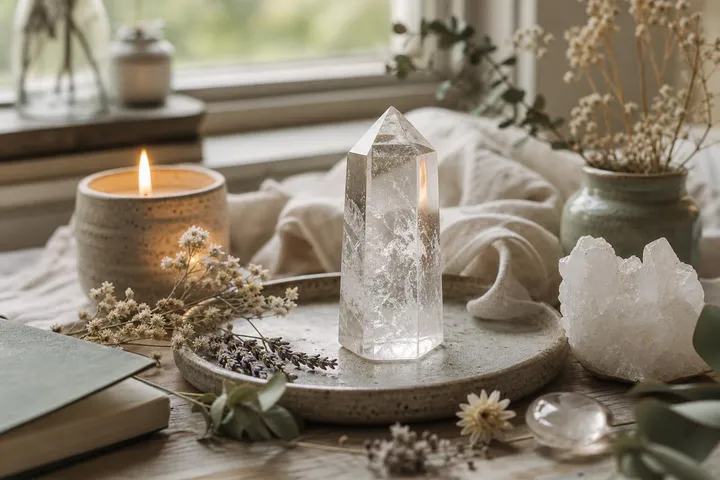
- Place a crystal. Set clear quartz or selenite on a windowsill as a symbol of clarity, no burning required.
For a fuller plan, see our low sensory home cleansing ritual, which includes smoke-free options.
The Mind relaxation guidance also has simple ideas for winding down that need nothing but a few quiet minutes.
Storing and reusing your stick
A good smudge stick lasts for many sessions if you burn it briefly. Each use only needs a minute or two of smoke, so one bundle goes a long way.
Once it is completely cold, store it somewhere dry. A ceramic dish on a shelf, a wooden box or a paper bag are all fine. Avoid plastic bags or airtight tubs, which trap moisture and can lead to mould. Keep it away from heaters and radiators, which can dry it out until it crumbles.
If the stick is crumbly, it will burn fast and shed bits. Trim the loose ends with scissors, and relight carefully. If it smells musty or looks furry, throw it away.
Tidy up after each session. Tip cold ash into the bin, wipe the dish, and wash your hands. If you use a shell, tip out and refresh the sand now and then.
Once a month is a good rhythm for most people, perhaps on a new moon or the first Sunday of the month. You do not need to do it daily, and doing it less often can keep it feeling special. How you pair it with the rest of your evening matters more: a bath, a cup of tea, clean sheets.
We have heard from customers who bought a smudge stick, lit it once in a rush, and felt rather silly. Our advice is to slow down and make it small. Clear a surface, open the window, light the stick for two minutes and then sit with a cup of tea. We also quietly suggest a smoke-free option for anyone who shares a home with someone sensitive to smoke. The ritual should leave your home feeling lighter, not smoky or stressful, so we treat comfort and safety as part of it.
- The Well In Spirit team
About Well In Spirit
At Well In Spirit we put together small rituals for calmer evenings and fresh starts. If you like the idea of marking a change, The Sunday Reset ritual box is a gentle place to begin, and The Better Sleep Ritual suits quiet nights in. Our palo santo, incense and botanical soy wax candles sit alongside crystals and oracle cards if you want to build your own routine. The members' library of guided meditations is a smoke-free way to pause when burning anything is not suitable. You can browse everything in our gift collection, whether you are shopping for yourself or someone you care about.
Frequently asked questions
Do I need to say anything when I smudge?
No. Many people stay silent and just breathe, while others say a short line of their own, such as a wish for a calmer home. There is no correct script. Pick words that feel natural and honest, keep them short, and focus more on moving slowly and safely around the room.
How long should a smudge stick burn?
Only a couple of minutes of smoke is needed to walk around a room or two. The stick should smoulder, not blaze. When you finish, press it out completely in sand or a heatproof dish. Burning it for less time makes the bundle last longer and keeps the room less smoky.
Is it safe to smudge with pets or children at home?
It is wiser to keep pets, especially birds, and young children out of the room, and to ventilate well afterwards. Smoke can irritate sensitive airways. If anyone in the house has breathing difficulties, choose a smoke-free option, such as opening the windows, ringing a bell or using a light room spray.
Can I use garden sage instead of white sage?
Yes. Garden sage, rosemary and lavender all make good bundles and are easy to source in Britain. They smell softer and earthier than white sage. Dry them fully before burning, since damp herbs smoulder poorly and smell bitter. Growing your own also avoids concerns about overharvesting wild white sage.
Sources
- Asthma, NHS
- Every Mind Matters, NHS
- Relaxation, Mind
- RHS gardening advice, Royal Horticultural Society