Is incense bad for you? A calm, honest UK guide
Is incense bad for you? Learn what is in incense smoke, who should take care, and how to burn it more safely at home, plus smoke-free options.
On this page
Incense is not harmless, but used sparingly it is not alarming either. Burning anything makes smoke, and smoke contains tiny particles and gases that can irritate your airways, especially in a small, closed room. A stick lit now and then with a window open is a different matter from burning sticks all day.
This article explains what is in incense smoke, who should take extra care, and how to burn it more safely in a UK home. It also covers smoke-free options for evenings when you want the ritual without the smoke. It is for anyone who loves the scent of incense or palo santo and wants an honest answer, and for anyone buying incense as a gift.
TL;DR
- Incense smoke can irritate the nose, throat and lungs, so burning it less often and with fresh air is better.
- If you have asthma or a lung condition, or you are pregnant, be especially careful and ask a professional if unsure.
- Open a window, burn one stick at a time, and never leave it unattended.
- Fire safety matters as much as air quality: use a proper holder and keep ash away from anything flammable.
- Candles, diffusers and smoke-free rituals give you the ritual without the smoke.
The short answer: what we know and don't know
Incense is made by burning plant material, resins, woods and fragrance on a stick or cone. Any burning indoors releases particles and gases. That is true of candles, open fires, toast and cooking too.
Research on incense has looked mostly at heavy, long-term, indoor use, often in small spaces. The findings point towards possible irritation of the airways with frequent burning. They do not show that a stick lit now and then on a Sunday evening will harm a healthy adult, but they do not rule out irritation either.
So the honest position is this. Incense is a smoke source, and smoke is best kept low. If you burn it, treat it as an occasional treat rather than a background habit.
We are a shop, not doctors, and nothing here is medical advice. Self-care should leave you feeling better, so if a scent or smoke makes you cough, gives you a headache or makes your eyes sting, stop. That is your body telling you something useful.
Pro Tip: Try a simple rule: one stick, one room, one window open, and only when you are in the room with it.
What is actually in incense smoke
When incense burns, the smoke is a mix. The main parts are:
- Fine particles. Tiny bits of soot and ash that can be breathed in.
- Gases. These include carbon monoxide and various compounds that come from burning plant material.
- Fragrance compounds. Natural oils or added scent, which some people find irritating or which can bring on headaches.
The exact mix depends on the incense. Sticks made from wood, resin and herbs without added synthetic fragrance are usually simpler than heavily perfumed ones. Cheap sticks with a strong artificial scent and a lot of binder often give off thicker, harsher smoke.
Why the room matters
A stick burned in a small, shut bedroom builds up smoke quickly. The same stick in a large, airy living room with a window cracked open disperses much faster. How long you burn it and how close you sit matter too.
This is worth remembering in a British winter, when windows stay shut and the heating is on. If you can smell a heavy haze, or your eyes or throat feel dry, the room has too much smoke in it. Put the stick out and let the air clear.
Who should be extra careful
Some people are more likely to be bothered by smoke of any kind. If any of these apply, speak to a GP or pharmacist before burning incense at home, or simply choose a smoke-free option.
- People with asthma. Smoke and strong smells can be triggers for some people. The NHS asthma pages are the place to start.
- People with long-term lung conditions such as COPD. The NHS COPD pages explain the condition, and your care team can advise on smoke indoors.
- Anyone who is pregnant. The NHS pregnancy pages are a good starting point, and your midwife can answer questions about scents and smoke.
- Babies, young children and pets. Their airways are smaller, and they cannot tell you when something bothers them.
- Anyone prone to headaches or sensitive to scent. Strong fragrance can be a trigger for some.
If you share a home, ask the people you live with. Smoke travels, and what feels soothing to you may not to them.
Pro Tip: Before gifting incense, check whether the person has asthma, a baby at home or a pet. If you are unsure, choose a candle or bath treat instead.
How to burn incense more safely
A few small habits make a real difference to how much smoke you breathe in.
- Open a window. Even a few centimetres gives smoke somewhere to go.
- Choose a larger room. Avoid burning in a small bathroom or a closed bedroom.
- Burn one stick at a time. Two or three sticks mean more smoke, not more pleasure.
- Keep sessions short. Ten to twenty minutes is plenty for a ritual, and you can snuff it out early.
- Do not burn while sleeping. Put it out before bed, every time.
- Air the room afterwards. Leave the window open for a while once the stick is out.
Choose simple ingredients where you can. Look for sticks made from wood, resin and herbs, with no thick synthetic perfume. If a pack does not say what is in it, we would pass.
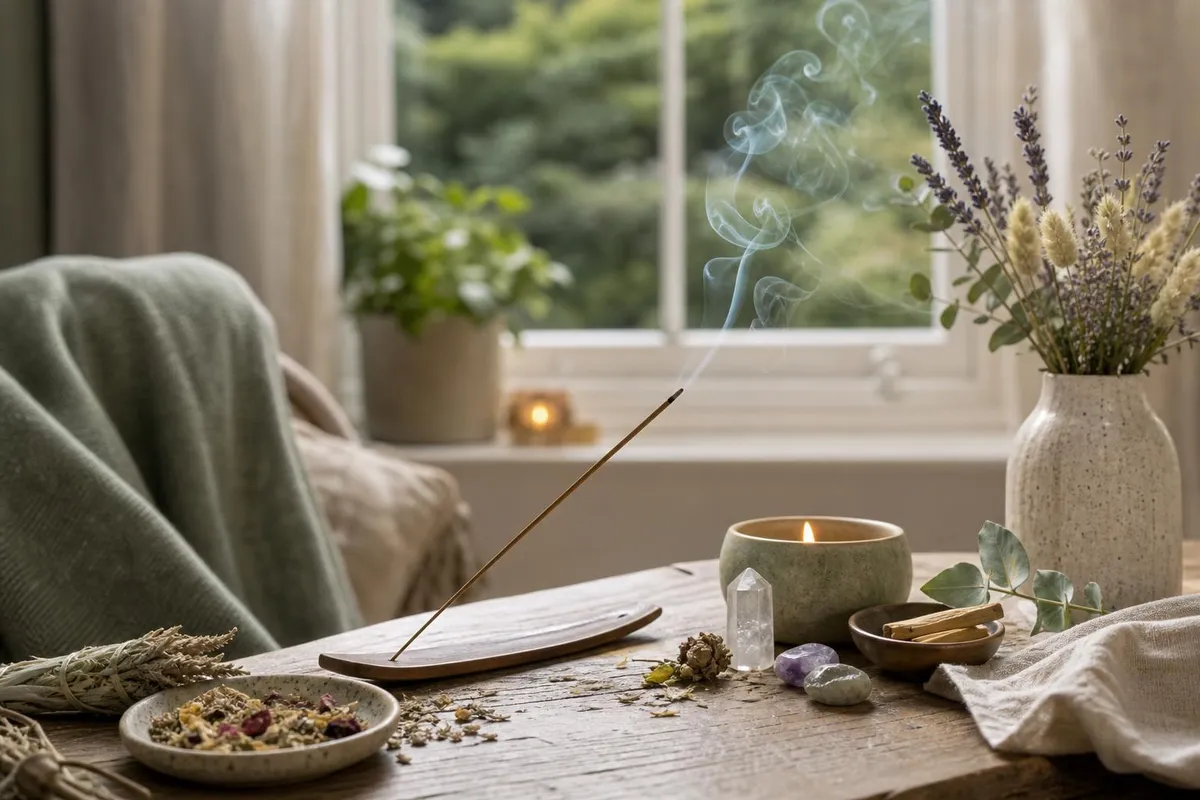
We have a full walk-through in our guide on how to use incense sticks safely, covering holders, snuffing and storage. Palo santo works the same way: a small flame, a short burn, then put it out.
Fire and home safety
Air quality gets most of the attention, but a burning stick is also a naked flame. The practical risks are ash, heat and forgetting about it.
- Use a proper holder or dish that catches all the ash. A flat ceramic or metal one is best.
- Place it on a stable, heat-proof surface, away from curtains, books, plants and fabric.
- Keep it out of reach of children and pets, and away from draughts that could knock it.
- Never leave it burning in an empty room or when you go to bed.
- Put the stick out fully. Press the tip into sand, or run it under water, rather than just setting it down.
- Check your smoke alarm works, and test it regularly.
Ash stays hot for longer than you would think. Wait until it is completely cold before tipping it away, and do not put it straight into a bin with paper in it.
If your alarm tends to go off when you light incense, that is another sign the room needs more air or less smoke. Move the ritual somewhere bigger rather than taking out the battery.
Pro Tip: Put a small dish of dry sand or a ceramic tile under your holder. It catches stray embers and makes the whole thing harder to knock over.
Smoke-free ways to get the same calm
Much of what people love about incense is the ritual: a pause, a scent, a signal that the day is done. You can keep all of that without the smoke.
Candles and diffusers
A candle still burns, so it needs the same care with ventilation and fire safety, but many people find it gentler than incense in a small room. A diffuser has no flame at all. Our comparison of candle and diffuser scent rituals shows how long each tends to last and which suits which room.
Low sensory cleansing
If you use smoke to mark a fresh start, you can open the windows, tidy a surface, wipe down a shelf, and use sound or a spritz instead. We cover this in our smoke-free home cleansing ritual.
Other small rituals
- A warm bath with bath salts and a book.
- Pulling one oracle card and writing a line about it.
- Holding a crystal, such as rose quartz or amethyst, while you breathe slowly.
- A cup of herbal tea and ten minutes with no screen.
The NHS Every Mind Matters pages have more everyday ideas for looking after your wellbeing, none of which need a flame.
When to stop and get advice
Stop burning incense if you notice any of the following after using it:
- Coughing, wheezing or a tight chest.
- A sore throat or stinging eyes.
- A headache or feeling lightheaded.
- A runny or blocked nose that clears when you leave the room.
Open a window, step into fresh air and give it a few days before deciding what to do. If symptoms keep coming back, or you have any difficulty breathing, speak to your GP or call 111. In an emergency, call 999.
If you use incense as part of a wind-down routine and are still sleeping badly, the NHS sleep pages have practical advice on routine, light and temperature. A calm evening can help you feel more settled, but it will not replace getting a persistent problem checked.
Finally, there is no prize for burning more. If incense is not right for you or your home, a candle, a bath and a quiet half hour can give you the same sense of pause.
We think the people who enjoy incense most are the ones who use it least. A single stick on a Sunday evening, window open, phone away, feels like a ritual. A haze in the bedroom every night feels more like a habit. Start small, notice how you feel, and if you have asthma, a new baby or pets at home, choose candles and bath treats instead.
- The Well In Spirit team
About Well In Spirit
Well In Spirit is a UK self-care gift shop. If you want the ritual without relying on smoke, our gift boxes pair botanical soy wax candles and bath treats with simple calming steps. If you do enjoy incense or palo santo, we stock both, and we are happy to talk you through using them sensibly. You can browse everything at Well In Spirit, and we are always glad to help you choose something that suits the person.
Frequently asked questions
Is incense worse for you than candles?
Both release smoke or soot when burned, and neither is risk free. Incense tends to give off more visible smoke for its size, so many people find a candle gentler. Ventilation and how often you burn matter more than the type. Diffusers avoid combustion entirely.
Is it safe to burn incense every day?
We would not recommend daily use indoors. Regular smoke can irritate airways, and a small home has little room for it to clear. Keep incense for occasional rituals, burn one stick with a window open, and take breaks. If you notice coughing or headaches, stop.
Is incense safe around pets and children?
Take care. Smaller airways, curious paws and low hands all raise the risks, both from smoke and from hot ash. Burn it only in a room they are not in, keep it well out of reach, and air the room afterwards. Many people simply choose a smoke-free alternative.
Is palo santo safer than incense?
Not really. Palo santo is wood that you burn, so it still makes smoke. A short burn in a ventilated room, put out properly, is sensible. The same cautions apply for asthma, pregnancy, pets and children. Check with a GP if you are unsure.