Heart chakra: what it is and how to work with it
Discover what the heart chakra means, how to recognise an open or closed heart, and simple breath, meditation and ritual practices to try at home.
On this page
The heart chakra, known in Sanskrit as Anahata, is the fourth of seven energy centres in yogic and spiritual traditions. It sits in the middle of the chest and is linked with love, compassion, forgiveness and the way we connect with other people and with ourselves. Its colour is usually green, sometimes pink.
This guide explains what the heart chakra stands for, how it is described when it feels open or closed, and how to work with it at home using breath, meditation, crystals, journalling and a short evening ritual. It is for anyone curious about chakras, and for anyone buying a thoughtful gift for a woman who is. Chakras are a spiritual idea, not a medical one, so we treat them as a framework for reflection.
TL;DR
- The heart chakra is the fourth chakra, found at the centre of the chest, and stands for love, compassion and connection.
- Its colour is green, with pink often added, and its element is air.
- Traditions describe it as open when you feel warm and receptive, and closed when you feel guarded or cut off.
- Slow breathing, a short meditation, rose quartz or green aventurine and a few journal prompts make a simple practice.
- Chakra work supports reflection but treats nothing, so see a GP for persistent low mood or any chest pain.
What the heart chakra is
In the chakra system, the body holds seven main energy centres running from the base of the spine to the crown of the head. The heart chakra is the fourth, so it sits right in the middle. Many teachers describe it as the bridge between the three lower chakras, which relate to survival, feeling and confidence, and the three upper ones, which relate to expression, intuition and spirit.
Anahata means unstruck, or unhurt. The idea is that part of us stays whole however much life has bruised us. That is a gentle thought, and it is why many people want to work with the heart chakra first after a hard season.
Its themes are easy to recognise:
- Love for others, family and friends.
- Compassion for yourself, not only for other people.
- Forgiveness and letting go of old resentments.
- Trust, and feeling able to receive as well as give.
None of this is scientific fact. It is a symbolic language that many women find helpful for noticing how they feel and what they need.
Colour, element and symbols
Traditional descriptions give the heart chakra a few consistent symbols. Knowing them helps if you want to build a ritual around them.
- Colour: green, with soft pink often used for tenderness and self-love.
- Element: air, which fits with breath and the lungs sitting close to the heart.
- Seed sound: YAM, pronounced like "yum", chanted quietly on the out-breath.
- Symbol: a lotus with twelve petals around two interlocking triangles.
Green is the easiest place to start at home. A green candle, a plant on your desk, a walk through a local park or a green scarf can all act as small reminders. If you want the full picture across all seven, our guide to chakra colours sets out what each one means and how to use it.
Pro Tip: Pick one green object and keep it where you will see it every morning, such as beside the kettle. Each time you notice it, take one slow breath into the chest. It takes five seconds and builds the habit without any extra time.
Signs of an open or closed heart chakra
Spiritual teachers describe the heart chakra as open, closed or somewhere in between. These are not diagnoses. Think of them as prompts to check in with yourself.
When it feels open
People describe feeling warm, patient and generous. You can listen without rushing to fix things. You are kind to yourself when you make a mistake, and you can accept help without guilt.
When it feels closed
The picture is usually guardedness. You might feel lonely in a crowd, hold grudges, or find it hard to trust. Some people describe being very giving yet quietly depleted, or being harsh with themselves in a way they would never be with a friend.
Everyone moves between these states. A bereavement, a breakup, a stretch of caring for others or simply a long winter can all make the heart feel more closed, and that is human, not a fault.
In the traditional view the chakras also influence one another. If you feel stuck, look at the neighbours: our guides to the solar plexus chakra and the sacral chakra cover the centres below it.
A five-minute breath and posture practice
Air is the heart chakra's element, so breath is the most natural way in. Many people find slow, steady breathing a pleasant way to pause, and the NHS Every Mind Matters site has everyday tips and breathing exercises for looking after your mind.
- Sit on a chair or cushion with your back supported and your feet on the floor.
- Roll your shoulders back and down, letting the chest lift slightly without straining.
- Rest one hand on the centre of your chest and the other on your belly.
- Breathe in through the nose for a count of four.
- Breathe out slowly through the mouth for a count of six.
- Repeat for ten breaths, then sit quietly for a minute and notice what you feel.
If you like, add the sound YAM on the out-breath, very softly. Stop if you feel dizzy, and go back to normal breathing.
Pro Tip: Do this at the end of the working day, before you switch on the television. Using the same chair each time becomes a cue that the evening has started.
Meditation for the heart centre
Meditation is where the heart chakra often becomes most personal. A simple version is to sit comfortably, picture a soft green or pink light in the middle of your chest, and let it grow a little with each breath. Stay there for five minutes. If your mind wanders, bring it back without telling yourself off, which is itself a small act of self-compassion.
Two related practices fit well. Loving kindness meditation sends good wishes first to yourself, then to others, and our loving kindness meditation script includes notes for anyone who finds it hard going. For a shorter option, try the five-minute self love meditation.
If you are new to all this, our chakra meditation for beginners walks through all seven centres in one session. Meditation can bring up strong feelings. If it does, stop, open your eyes, feel your feet on the floor and have a glass of water. Mind offers guidance on looking after yourself if difficult emotions keep surfacing.
Crystals, plants and scent
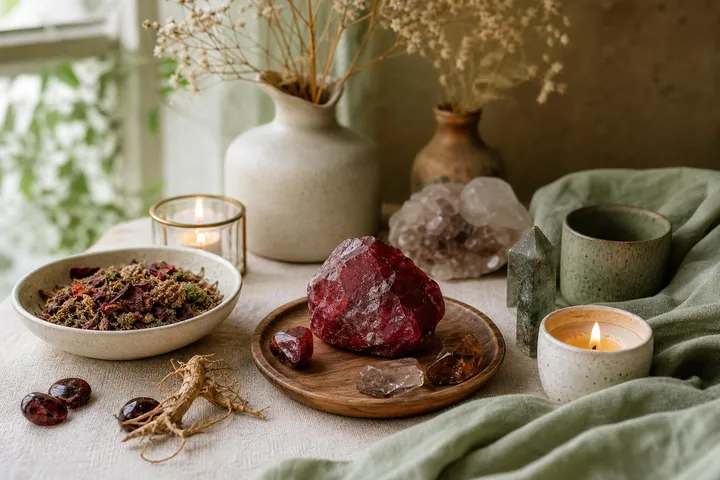
Crystals do not heal anything, but many people enjoy them as a focus for intention. For the heart chakra, the usual choices are:
- Rose quartz: pale pink, linked with gentleness and self-love.
- Green aventurine: a soft green stone associated with optimism and ease.
- Rhodonite: pink with dark veins, often linked with forgiveness.
- Malachite or jade: deeper greens, linked with growth and balance.
Hold one in your palm during the breath practice above, or place it on your chest if you are lying down. Our guide to rose quartz goes deeper on the most popular heart stone, and crystals for chakras covers the other six centres.
For scent, rose, geranium or a green herbal fragrance in a soy wax candle can set the mood. Always burn candles on a heatproof surface, in sight, and out of reach of children and pets.
Pro Tip: Keep your stone in a coat pocket or by your bed rather than on a shelf. A stone you touch daily becomes a cue to pause.
A ten-minute heart chakra evening ritual
Put the pieces together in a short ritual you can repeat on a Sunday evening or any night that feels heavy.
- Dim the lights and light a green or pink candle.
- Hold your chosen stone and take ten slow breaths.
- Write down one thing you are grateful for today.
- Answer one prompt in your journal, such as: "Who do I need to forgive, including myself?" or "What would I say to a friend feeling this way?"
- Finish by placing a hand on your chest and saying one kind sentence to yourself, out loud if you can.
- Blow out the candle and put your phone in another room.
A relaxing wind-down suits the end of the day, and the NHS sleep advice recommends a regular, relaxing bedtime routine. Heart work is also about relationships, so consider sending one message to someone you care about, even a short one. Connection is a heart practice too, and the Mental Health Foundation publishes information on how relationships relate to wellbeing.
When to get support
A heart chakra practice is a gentle companion, not a treatment. If low mood, anxiety or grief is lasting more than a couple of weeks, or getting in the way of daily life, speak to your GP. Mind and the NHS both have clear information on where to turn.
One more point is worth stating plainly. The heart chakra sits in the chest, but pain, tightness or pressure in the chest is a physical matter first. Do not put it down to energy. Read the NHS guidance on chest pain, and call 999 if the pain is sudden, severe or spreads to your arm, neck or jaw.
Used sensibly, chakra work can sit alongside proper care. It gives you a quiet moment, a language for how you feel and a reason to be kinder to yourself. That is plenty.
We have packed a lot of gift boxes for women who say they feel run down by looking after everyone else. Rarely do they want something grand. They want a candle, a stone, a card with a kind line and permission to sit down for ten minutes. In our experience the heart chakra appeals because it is really about tenderness towards yourself. We would rather you do one small thing every night than a long ritual once a month. Start with the breath, keep the stone by the bed, and be patient.
- The Well In Spirit team
About Well In Spirit
If you would like to try heart chakra work, we suggest starting small. Our rose quartz and green crystals and soy wax candles sit in the shop, and our ritual boxes bring calming pieces together in one parcel, which makes an easy gift for a friend who needs a gentle evening. Browse our gifts for her if you are buying for someone else.
Frequently asked questions
Where is the heart chakra located?
The heart chakra is described as sitting in the centre of the chest, level with the heart, near the middle of the breastbone. In yogic traditions it is the fourth of seven chakras, sitting between the solar plexus below and the throat chakra above. Many people place a hand there during meditation to focus attention.
What colour is the heart chakra?
The heart chakra is traditionally green, which is linked with growth, balance and renewal. Many modern practitioners also use soft pink to represent tenderness and self-love. You can use either, or both together, in candles, crystals, clothes or plants when you want a visual reminder of heart-centred intentions.
How do I know if my heart chakra is blocked?
Chakras are a spiritual idea, so there is no test. Teachings describe a closed heart as feeling guarded, lonely, resentful or very hard on yourself. Treat these as prompts for reflection rather than a diagnosis. If such feelings are heavy or lasting, talk to your GP or a trusted professional.
Which crystals suit the heart chakra?
The most common choices are rose quartz, green aventurine, rhodonite, jade and malachite. Pink stones are linked with gentleness and green stones with growth and balance. Crystals do not treat any condition, but many people find holding one a helpful focus for a short breathing practice or journalling session.