Crystals for Chakras: Which Stone Suits Each of the Seven
Discover which crystal suits each of the seven chakras, how to choose your first stones and how to build a simple ten-minute layout at home.
On this page
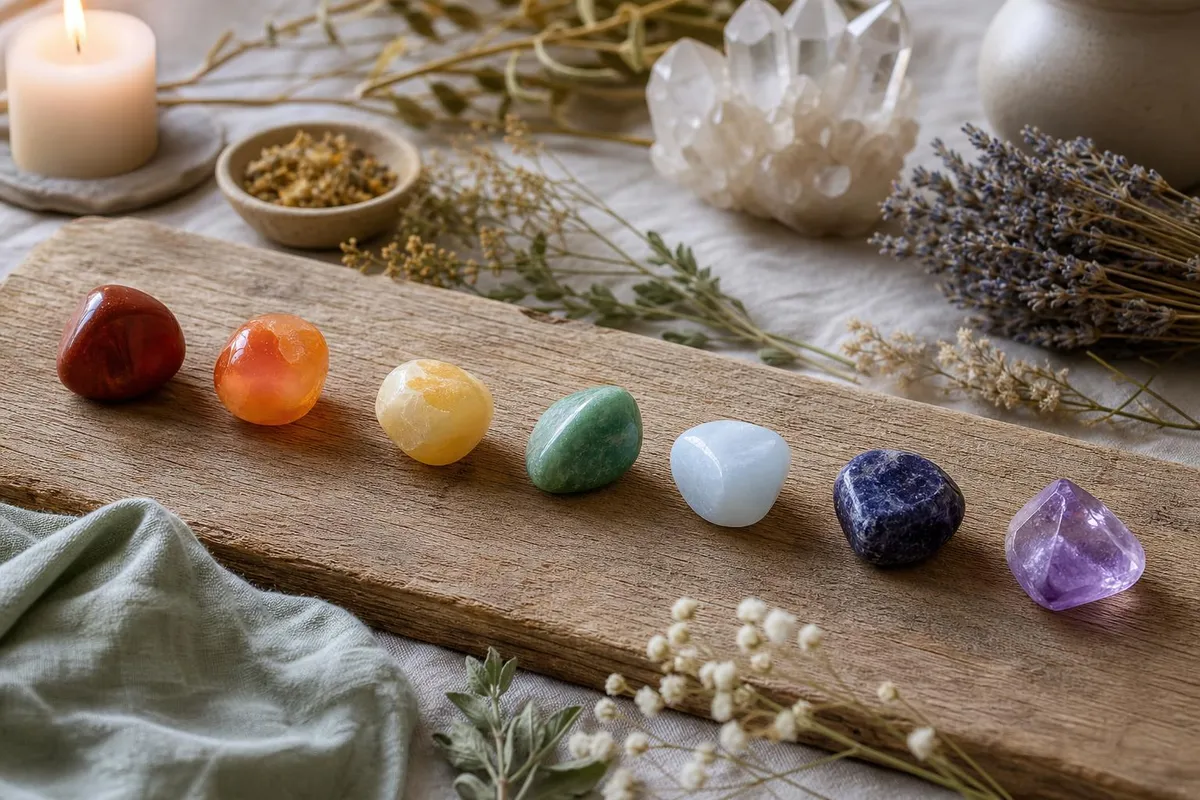
Crystals for chakras are stones matched by colour and traditional meaning to the seven energy centres of the body: red jasper for the root, carnelian for the sacral, citrine for the solar plexus, green aventurine for the heart, blue lace agate for the throat, amethyst for the third eye and clear quartz for the crown. You place or hold them while you rest, breathe or meditate. They are a focus for a calm ten minutes, not a treatment.
This guide explains what the chakras are, which stone is usually paired with each, how to choose your first few and how to build a simple layout at home. It is for anyone curious about crystals who wants plain steps, and for people buying a thoughtful gift for someone who already loves them.
TL;DR
- Each of the seven chakras has a traditional colour, and crystals are chosen to match it.
- Crystals do not treat or cure anything, but they can give a quiet ritual something to hold on to.
- Start with one or two stones you like the look of, not a full set of seven.
- A ten-minute layout lying down, with slow breathing, is the simplest way to begin.
- Rinse hardy stones, keep soft ones dry, and see a GP if low mood or poor sleep lingers.
What the chakras are
The word chakra comes from Sanskrit and means wheel. In traditions that grew out of India, the chakras are described as seven centres running from the base of the spine to the crown of the head. Each is linked to a theme, such as security, creativity, confidence, love, expression, intuition and connection.
This is a belief system and a way of reflecting, not something measured in a laboratory. Many people use it as a checklist for how they are feeling. Is your week all head and no heart? Do you feel unsettled and ungrounded? The chakras give you words for those moments.
Each chakra also has a colour, which is why crystals fit so neatly. You can read more about the shades in our guide to chakra colours and what each of the seven means.
You do not need to hold any belief to enjoy the practice. Plenty of people simply like the idea of pausing and giving each part of the body a moment of attention.
What crystals can and cannot do
Crystals cannot treat, cure or prevent any health condition. What they can do is give you a reason to stop, a small object to hold and a visual cue that this ten minutes is yours.
That matters, because the calming part is usually the pause itself. The NHS describes mindfulness as paying attention to the present moment, including your thoughts, feelings and the world around you. Holding a cool, heavy stone and noticing its weight is an easy way into that.
Think of a crystal as you would a favourite mug or a candle. It sets the scene. What you do next matters more: slow breathing, a quiet room, a phone left in another room.
Pro Tip: Hold the stone in your non-dominant hand for the first minute and notice three things about it: temperature, weight and texture. It is a quick way to settle your attention before you do anything else.
If you are struggling with low mood, anxiety or sleep that does not improve, the NHS Every Mind Matters pages are a good first stop, and your GP can help from there.
The seven chakras and their usual crystals
Stones are normally matched to a chakra by colour and traditional meaning. Sources differ, so treat this as a common starting point rather than a rulebook.
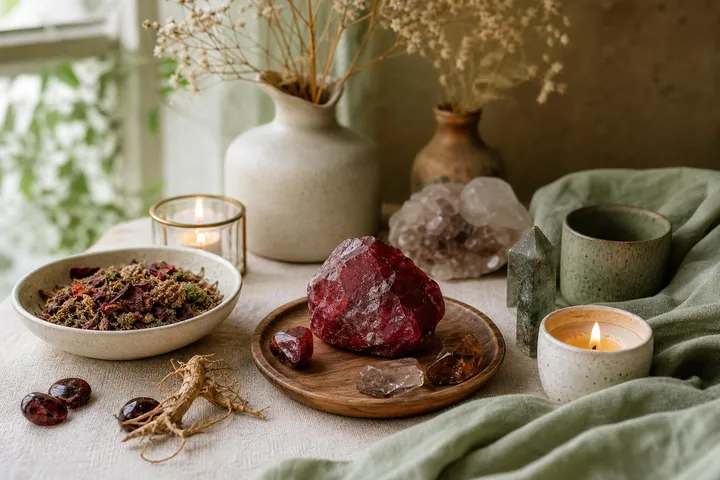
- Root (red): red jasper, garnet or black tourmaline. Linked with feeling grounded, safe and settled.
- Sacral (orange): carnelian or orange calcite. Linked with creativity, pleasure and emotions.
- Solar plexus (yellow): citrine or tiger's eye. Linked with confidence and personal drive.
- Heart (green or pink): green aventurine or rose quartz. Linked with love, kindness and self-compassion.
- Throat (blue): blue lace agate or sodalite. Linked with saying what you mean.
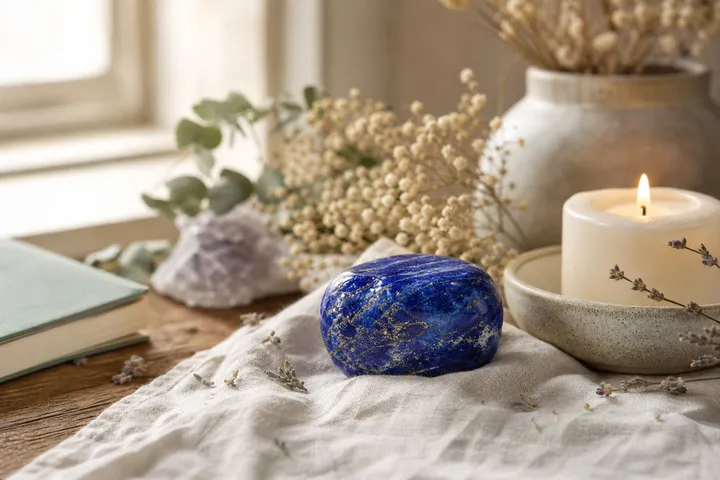
- Third eye (indigo): amethyst or lapis lazuli. Linked with intuition and reflection.
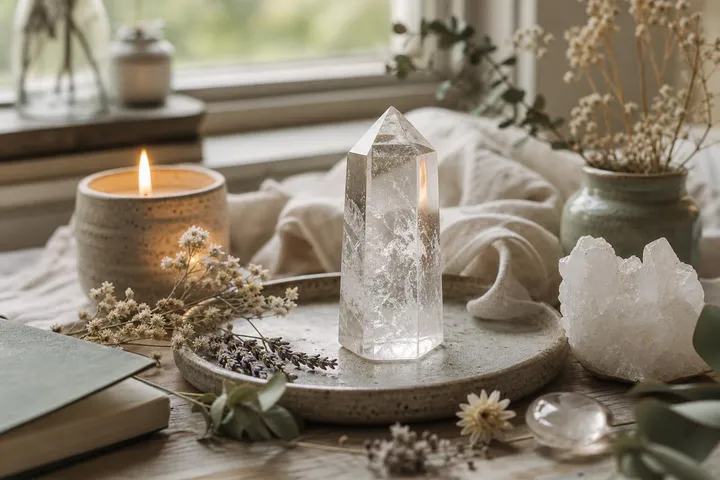
- Crown (violet or white): clear quartz or selenite. Linked with a sense of connection and stillness.
If one chakra interests you more than the others, read further. Our posts on the sacral chakra, rose quartz and amethyst go into more detail on individual stones and centres.
Choosing your first stones
You do not need all seven. Most people do better starting with one or two stones they are genuinely drawn to. If you pick up a stone and like it, that is a perfectly good reason to buy it.
Pick by how you feel
Ask what the week has felt like. If you are frazzled and scattered, a root stone such as red jasper gives you something solid to hold. If you have been giving to everyone else, a rose quartz for the heart is a gentle reminder to include yourself.
Pick by shape
Tumbled stones are smooth and easy to hold, so they suit layouts and pockets. Palm stones are flatter and sit well in the hand. Points and clusters look lovely on a shelf but are awkward to lie with.
Check what you are buying
Dyed stones are common, especially in bright blues and pinks. If a colour looks very vivid for the type of stone, ask the seller. A shop should be able to tell you what a piece is and where it comes from. For a broader overview before buying, our plain guide to 10 common stones is a useful companion.
Pro Tip: Buy a small set of three: one for grounding, one for the heart and one for rest. It covers most evenings and costs less than a full set.
A ten-minute chakra layout
This is the classic way to use crystals for chakras. It needs a rug, a bed or a sofa you can lie flat on.
- Choose a quiet time, perhaps in the evening after dinner. Put your phone out of reach and dim the lights.
- Lie on your back with your arms by your sides. Set a timer for ten minutes so you are not watching the clock.
- Place a stone on or near each point: between the feet or at the hips for the root, then up through the lower belly, stomach, centre of the chest, base of the throat, forehead and just above the head.
- Close your eyes. Breathe in through your nose for four counts and out for six.
- Move your attention slowly from the bottom stone to the top, spending around a minute on each.
- When the timer sounds, stay still for a few breaths, then sit up slowly and collect the stones.
Stones on the throat and forehead can slide, so use flat ones or place them on the floor beside you. If lying down is uncomfortable, sit in a chair and hold a stone in each hand instead.
You do not have to use all seven. Three stones, on the belly, chest and forehead, is still a lovely layout. If you would like words to follow, try our chakra meditation for beginners.
Other ways to use crystals for chakras
A full layout is not for every day. These smaller habits fit into a normal week.
- Pocket stone: carry a carnelian or citrine on days you want a bit of confidence, and touch it when you feel rushed.
- Bedside stone: keep amethyst or a smooth quartz by the bed as a cue to wind down. The NHS has sleep advice, including keeping a regular routine and a calm bedroom, which a stone can sit alongside.
- Desk stone: a blue lace agate near your keyboard is a reminder to breathe before a difficult email.
- Journalling: hold a stone and write for five minutes about the theme of the chakra it matches.
- Bath ritual: set stones on the side of the bath, never in the water, with a candle and a bath treat.
Pairing a stone with a scent can help the habit stick. Palo santo, lavender or a soy candle lit during your ten minutes becomes a cue your mind begins to recognise.
Pro Tip: Link the stone to something you already do, like the first cup of tea, and you will use it more often than if you set aside a special time.
Caring for your stones
Crystals are tough, but not all of them. Care depends on what the stone is made from.
Cleaning
Most hardy tumbled stones, such as quartz, jasper and agate, can be rinsed briefly under cool water and dried with a soft cloth. Selenite is soft and dissolves in water, so wipe it with a dry cloth. Some stones, such as lapis lazuli, can be damaged by soaking, so when in doubt, wipe rather than wash.
Clearing
Many people like to 'clear' stones between uses. Passing them through incense or palo santo smoke, leaving them on a windowsill overnight or placing them on a selenite plate are common choices. These are rituals that mark a fresh start, nothing more.
Storing
Keep stones in a small dish or pouch so they do not scratch each other. Softer stones, such as selenite, scratch easily, so store them apart. Keep small stones away from young children and pets, as they can be a choking risk.
Some stones, like amethyst and rose quartz, can fade in strong sunlight, so a windowsill is fine for a night but not for a summer.
Common mistakes to avoid
A few small habits make the practice more enjoyable and less stressful.
- Buying everything at once. A big set can sit in a drawer. Start small and add stones as you use them.
- Treating it as a fix. If you rely on a layout to solve a long run of poor sleep or low mood, you may be missing proper support. Talk to a GP. Mind also has clear information on mindfulness and other everyday ways to look after your wellbeing.
- Fussing over rules. There is no wrong stone for a chakra. If you like how a piece feels, use it.
- Skipping the pause. The stones do little if you scroll through your phone throughout. The quiet is the point.
- Ignoring comfort. If a stone digs in or you feel cold, adjust. The ritual should feel kind.
Keep it light. Some evenings you will do the full layout. Other evenings you will hold one stone while the kettle boils. Both count.
In our experience running a UK self-care shop, the people who stay with crystals are rarely the ones with the biggest collections. They are the ones who choose one or two stones, put them somewhere they will see them and use them in an ordinary routine, like a quiet ten minutes after the evening wash-up. We would rather you buy a single carnelian you love than a boxed set of seven you feel you should use. Start small, be honest with yourself about what helps, and treat the stones as company for a pause rather than a promise.
- The Well In Spirit team
About Well In Spirit
At Well In Spirit we sell crystals alongside soy wax candles, incense, palo santo and oracle cards, so you can build a small ritual in one go. If you want a ready-made evening, The Better Sleep Ritual and The Sunday Reset are gentle places to begin, and both make good presents. You can browse everything suited to gifting on our gifts page. If you would like guidance to follow while you lie with your stones, the members' library has guided meditations you can play at home, along with a community of people doing the same.
Frequently asked questions
Which crystal is best for all the chakras?
Clear quartz is the one most often used across all seven, because it is colourless and traditionally seen as adaptable. If you want just one stone to start with, choose it, or pick whichever colour you feel drawn to. There is no single correct answer, and the practice works best when you like your stone.
How many crystals do I need for a chakra layout?
A full layout uses seven stones, one for each chakra. You can begin with just one, three or five. A simple trio for the belly, chest and forehead is plenty for a first try. Add more later if you enjoy the routine.
Do crystals for chakras really work?
There is no scientific evidence that crystals treat or heal anything. What they can offer is a focus for a quiet pause, and pausing with slow breathing can feel calming. Enjoy them as a ritual, and speak to a GP if you are worried about your health or wellbeing.
How often should I use chakra crystals?
As often as feels pleasant. Many people do a full layout once a week and keep a pocket or bedside stone for everyday moments. If it starts to feel like a chore, scale back and keep it light.
Sources
- Mindfulness, NHS
- Every Mind Matters, NHS
- Sleep and tiredness, NHS
- Mindfulness, Mind