Sacral Chakra: What It Means and How to Work With It
Discover what the sacral chakra means, its orange colour, water element and symbols, plus simple colour, bath and ten-minute rituals you can try at home.
On this page
The sacral chakra is the second of the seven main energy centres in yoga and wider spiritual traditions. It sits in the lower belly, is linked with the colour orange and the element of water, and is associated with pleasure, creativity, emotions and how we connect with other people. In Sanskrit it is called Svadhisthana.
This article explains what the sacral chakra means, the themes people link to it, and simple ways to work with it at home in the UK, from colour and water rituals to a ten-minute evening practice. It is for anyone curious about chakras, and for anyone choosing a thoughtful gift for someone who is. The chakra system is a spiritual framework, not a medical one, and we treat it that way throughout.
TL;DR
- The sacral chakra is the second chakra, found in the lower belly and linked with creativity, emotion and pleasure.
- Its traditional symbols are the colour orange, the element of water and the sound VAM.
- People work with it through colour, warm baths, gentle movement, journaling, carnelian and sweet, warm scents.
- A short ritual of ten minutes, done regularly, suits most evenings better than one long session.
- Chakra practice is not a treatment. Speak to a GP about symptoms that last.
What is the sacral chakra?
Chakra means wheel in Sanskrit. Traditional texts describe seven wheels of energy running from the base of the spine to the crown of the head. Each one is linked with a part of life, a colour and a symbol.
The sacral chakra is number two. It follows the root chakra, which is about safety and feeling grounded. Where the root is about having enough, the sacral is about enjoying what you have. It asks what feels good, what feels alive and what you want to make or share.
There is no scientific evidence that chakras exist as physical structures. Many people still find the framework a useful way to pause and check in with themselves. Think of it as a set of prompts for reflection rather than a diagnosis.
If you are new to the wider system, our guide to chakra colours and what each of the seven means shows where the sacral chakra sits among the others.
Location, colour and symbols
The sacral chakra is traditionally placed a few finger-widths below the navel, in the lower belly and low back. Practitioners often picture it as a glowing disc of colour at that spot.
The details people use
- Sanskrit name: Svadhisthana, often translated as "one's own place".
- Colour: orange, from soft peach to deep amber.
- Element: water, which stands for flow, change and feeling.
- Sound: VAM, chanted or hummed quietly.
- Symbol: a lotus with six petals, with a crescent moon at its centre.
The themes
The themes linked with this chakra are creativity, pleasure, emotional expression, intimacy and adaptability. It is also associated with how comfortable you feel in your own body.
Water explains much of this. Water takes the shape of whatever holds it and moves around obstacles. In this picture, a well-flowing sacral chakra belongs to someone who can feel things, enjoy things and change course without fuss.
None of this is a checklist to pass or fail. It is a vocabulary, and you can borrow as much or as little of it as feels useful.
Signs people link to an out-of-balance sacral chakra
In chakra teaching, a sacral chakra that feels "blocked" or "overactive" is said to show up in everyday ways. These are traditional associations, not medical signs, and plenty of ordinary life can cause every one of them.
People often describe a blocked sacral chakra as:
- feeling creatively flat, or unable to start things you used to enjoy
- finding it hard to feel pleasure, even in nice moments
- feeling emotionally numb, or cut off from your own feelings
- being rigid about routines and uncomfortable with change
- feeling disconnected from your body
An overactive sacral chakra is described the other way round. That might mean feeling swamped by mood, chasing sensation, or struggling to set boundaries with others.
Used well, a list like this works as a gentle question: where in my life is there no flow right now? It should not become a reason to worry or to label yourself.
Pro Tip: Instead of asking whether your sacral chakra is blocked, ask one practical question each evening: what did I enjoy today, even for five minutes? Write the answer on a sticky note and keep them in a jar.
If low mood, numbness or anxiety are with you most days, that is a conversation for your GP, not a chakra reset. We come back to this near the end.
Colour and water rituals
The easiest way into sacral chakra work is through its two signatures: orange and water. Neither needs special equipment.
Bring in orange
You do not need to repaint the living room. Small touches work well in a British home, especially as the evenings draw in:
- a terracotta pot on the windowsill
- a burnt-orange throw over the sofa
- a bowl of satsumas or clementines on the table
- an amber or orange candle lit at dusk
Eating orange food is a simple, pleasant option too. Carrots, sweet potato, apricots and oranges are easy to find.
Work with water
A warm bath is the classic sacral chakra ritual. Dim the lights, add a handful of bath salts or a few petals if you like, and take twenty minutes or so to unwind.
If you do not have a bath, a slow shower, a foot soak in a washing-up bowl or a mug of herbal tea held in both hands all count. The point is to slow down and notice warmth and flow.
Time near real water suits this chakra too. A walk by a canal, a river or the sea is a fine sacral chakra practice, whether or not you call it that.
Pro Tip: Keep a small dish of bath salts and one orange candle together on a tray by the bath. When the setup is already there, you are far more likely to use it on a tired Tuesday.
Crystals and scents for the sacral chakra
Crystals and scents do not treat or change anything in the body. People use them as sensory cues that it is time to slow down and pay attention.
Crystals traditionally linked with the sacral chakra
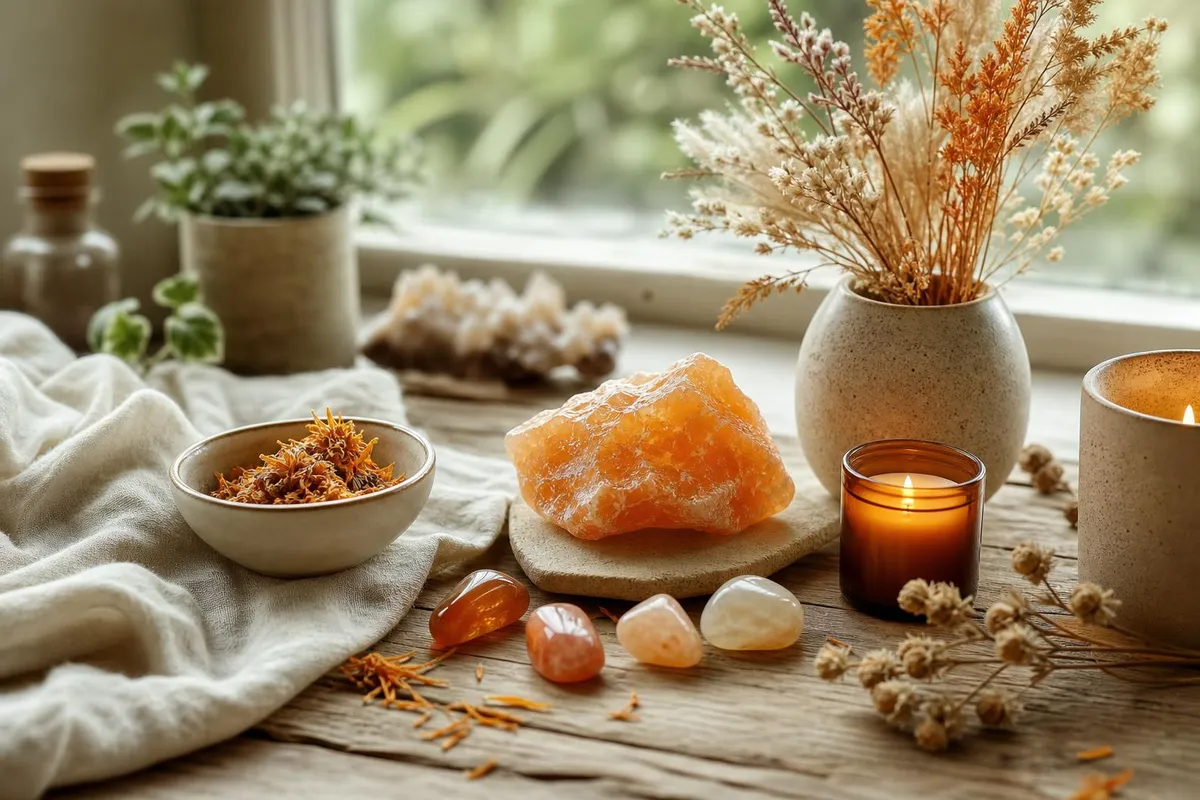
- Carnelian: a warm, red-orange stone, the most common choice.
- Orange calcite: a soft, milky orange with a gentle look.
- Sunstone: sparkly and golden, often chosen for its sunny look.
- Moonstone: pale and shimmering, linked with water and the moon.
Hold one in your palm during your ritual, or rest it on your lower belly while you lie down for a few minutes. A small tumbled stone on your desk or bedside table works as a quiet reminder.
Scents
Sweet, warm scents are the usual match: sweet orange, mandarin, ylang ylang, sandalwood and vanilla. A botanical soy wax candle in one of these is an easy place to start. Palo santo and gentle incense are also popular for marking the start of a ritual.
Always burn candles and incense on a heatproof surface, away from curtains and pets, and never leave them unattended. Open a window slightly for ventilation.
Movement and creativity
Because this chakra is about flow, gentle, fluid movement is its natural partner. Think hips, belly and low back rather than hard training.
Easy options at home include:
- slow hip circles, ten in each direction
- cat-cow stretches on a mat
- pigeon pose, held for a minute each side if it is comfortable
- dancing around the kitchen to one favourite song
Move within what feels comfortable, and stop if anything hurts. The NHS has guidance on staying active at every age and ability. Enjoyment is the key word here. A walk you look forward to beats a workout you dread.
Make something
Creativity is the other half. It does not need to be good. Colouring in, doodling, cooking from a new recipe, arranging flowers, knitting, writing a few lines of a poem or taking photos on your phone all count.
The Mind everyday living pages offer ideas for looking after your wellbeing day to day. Pick something with no pressure attached and no audience.
A ten-minute sacral chakra ritual
This works best in the evening, once the day's jobs are done. Keep your phone in another room if you can.
- Set the scene (2 minutes). Light an orange or amber candle. Pour a glass of water or a cup of herbal tea. Hold your carnelian if you have one.
- Settle (2 minutes). Sit or lie down. Rest one hand on your lower belly. Breathe in for a count of four and out for a count of six.
- Picture the colour (3 minutes). Imagine a warm orange light below your navel, moving gently like water. With each out-breath, let it soften and widen. If you like, hum the sound VAM quietly.
- Ask one question (2 minutes). What would feel enjoyable this week? Write down whatever comes, however small.
- Close (1 minute). Take three slow breaths and blow out the candle.
If you would like a voice to follow, our chakra meditation for beginners guide walks through all seven centres in one guided session.
Pro Tip: Tie the ritual to something you already do, such as finishing the washing-up or taking off your make-up. Three evenings a week for a month will teach you more than one long weekend session.
When to keep it gentle, and when to ask for support
Rituals like this are about taking a little time for yourself. They sit alongside, not instead of, the basics: sleep, food, movement and talking to people you trust.
The NHS Every Mind Matters pages offer practical ideas for looking after your mental wellbeing. The Mental Health Foundation also publishes plain guidance on everyday wellbeing.
Please speak to a GP if you notice that:
- low mood, numbness or anxiety last for more than a couple of weeks
- you are struggling to cope with daily life
- you have physical symptoms that worry you
- you have thoughts of harming yourself
The NHS mental health section explains where to find help, including urgent support. Reaching out is not a failure of self-care. It is part of it.
Our experience is that a ritual is rarely about the stone or the candle. It is about giving yourself permission to stop for ten minutes on a Sunday evening. Keep it small, repeat it often and pay no attention to anyone who says you are doing it wrong. There is no wrong way to enjoy a warm bath and a candle.
- The Well In Spirit team
About Well In Spirit
Well In Spirit is a UK self-care gift shop. If you would like the ingredients of a sacral chakra evening in one place, browse our self-care shop for candles, crystals, incense and bath treats, many of which make a thoughtful present. Take what suits you and leave the rest.
Frequently asked questions
Where is the sacral chakra located?
The sacral chakra is traditionally placed in the lower belly, a few finger-widths below the navel, and is often said to extend to the low back. People usually picture it as a disc of orange light at that spot. Resting a hand there during breathing can help you focus.
What colour is the sacral chakra?
The sacral chakra is orange. Shades range from soft peach to deep amber. Many people bring the colour in through candles, throws, fruit such as satsumas, or crystals like carnelian and orange calcite, without needing to redecorate.
What crystals are used for the sacral chakra?
Carnelian is the most popular choice, followed by orange calcite, sunstone and moonstone. These are traditional associations only. Crystals do not treat or cure anything, but many people enjoy holding one as a cue to slow down during a ritual, or keeping one on a desk or bedside table.
How long does it take to balance the sacral chakra?
There is no fixed timeline, and no way to measure it. Most people simply notice whether a short regular practice, such as ten minutes three evenings a week, feels worthwhile. If low mood or other symptoms persist, speak to your GP.