5 Minute Self Love Meditation Backed by Research for Busy People
Short, research backed guided scripts and habit design help build real self compassion. Try a 5 minute practice and practical tips for busy people.
On this page
Use short, kindness-based guided meditations daily to build genuine self-love. Sessions between 5 and 13 minutes, practiced most days, tend to increase self-compassion and ease self-criticism within a few weeks. Try the 5-minute script below right now. Momentum, not duration, is what actually moves the needle here.
TL;DR:
- Consistent practice, especially around three weeks of daily sessions, can increase self-compassion by about 21 percent and reduce self-criticism.
- Shorter practices, such as five minutes daily, are effective and easier to sustain than longer sessions, with noticeable shifts often appearing within a month.
- Using a calming ritual, like pairing meditation with scent or lighting, can help reinforce the habit and deepen the sense of pause.
- Emotional surges during practice are normal; grounding techniques and pausing are recommended, especially if distress worsens or signals trauma.
- Building the habit into existing routines, like post-brushing or before sleep, improves consistency and helps embed self-love practices into daily life.
Three Guided Self-Love Meditations You Can Start Today
Different days call for different amounts of time. Here are three complete scripts, ranging from a quick reset to a fuller practice, each with clear timing cues so you’re never guessing what comes next.
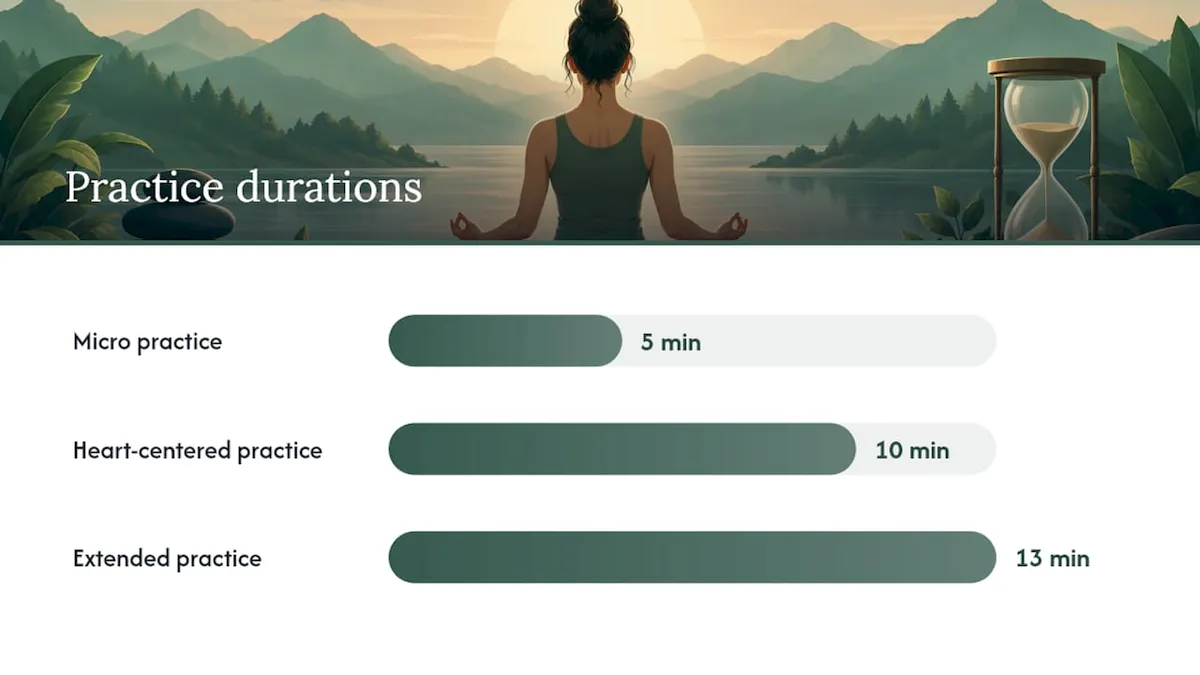
- The 5-minute micro practice. Sit or lie down. Spend the first minute on slow breathing, in for four counts, out for six. For the remaining four minutes, silently repeat one phrase on each exhale: “I am worthy.” Let your mind wander back to the phrase whenever it drifts. Close by taking one deeper breath and opening your eyes.
- The 10-minute heart-centered practice. Place a hand on your chest for the first two minutes, just noticing your heartbeat. Minutes 3 through 7 pair breath with phrase: inhale “I am worthy,” exhale “I am enough.” For the final three minutes, picture yourself at a moment you felt genuinely proud, holding that image without judgment.
- The 13-minute extended practice. Start with a 4-minute body scan, moving attention from feet to scalp. Follow with 6 minutes of loving-kindness phrases directed first at yourself (“May I be safe, may I be kind to myself”), then at someone you love, then at someone neutral. Finish with 3 minutes of journaling: write one sentence about what you noticed in your body and one about what you’d like to feel more of tomorrow.
Each script works as a solo silent practice or as something you record for yourself. A softer, slower voice suits the bedtime version; a slightly firmer, coach-like tone works better in the morning when you need help staying alert. Either way, mark a clear start (three slow breaths) and a clear stop (one final breath, eyes open) so your mind learns the practice has a beginning and an end.
Pro Tip: Record your own voice reading the 10-minute script on your phone. Hearing your own voice affirm “I am worthy” tends to land differently than a stranger’s, and it costs nothing to try.
How Do You Prepare for a Self-Love Meditation?
Setup determines whether the ten minutes feel restful or distracted. A short checklist removes most of the friction before you sit down.
- Set a timer so you’re not checking the clock, and put your phone on Do Not Disturb.
- Pick a quiet spot. A cushion or blanket helps if you’re sitting on the floor.
- Choose a posture: seated with a straight spine, lying down if seated feels tense, or even a slow standing/walking version if stillness feels uncomfortable that day.
- Use a breath anchor. For heart-centered scripts, rest one hand on your chest and let your palm rise and fall with each breath.
- If eyes-closed practice feels too vulnerable right now, keep your eyes open and softly focused on one spot. Shorter cues work fine if longer ones feel like too much.
If a wave of grief or panic surfaces and doesn’t settle, stop the practice and ground yourself first. That’s not a sign you’re doing it wrong.
Does Self-Compassion Meditation Actually Work?
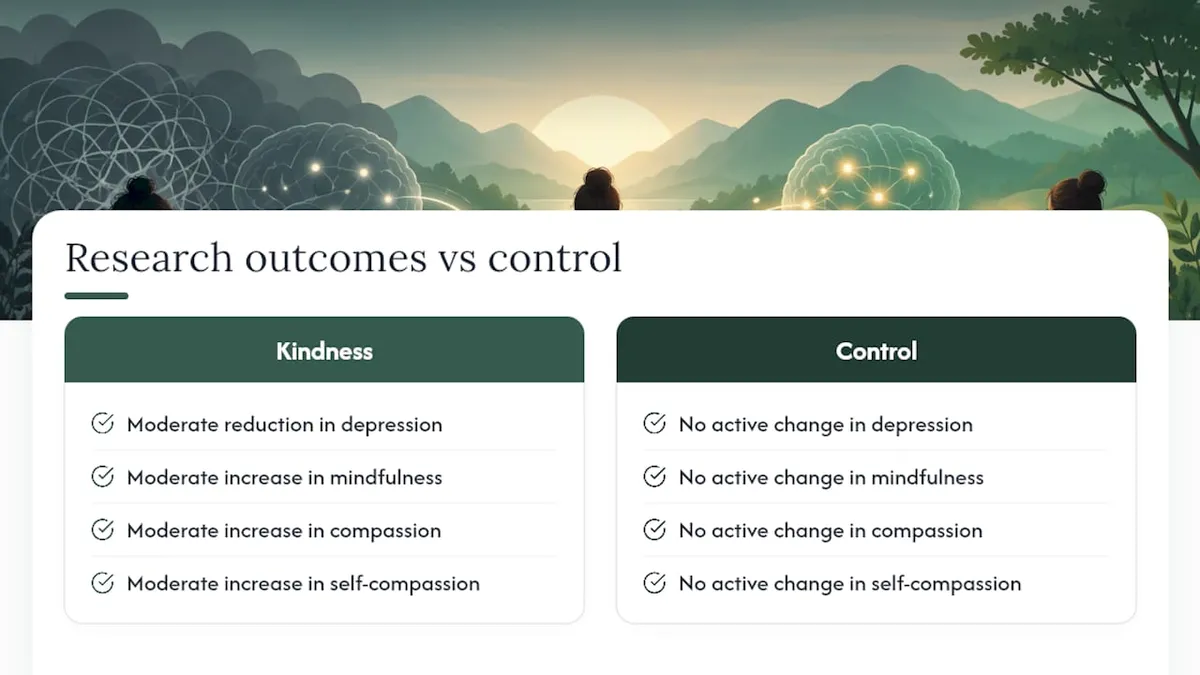
Yes, and the research behind it is stronger than most wellness claims. A meta-analysis of kindness-based meditation found moderate effects on depression, mindfulness, compassion, and self-compassion compared with passive control groups, meaning people who practiced consistently showed measurably better outcomes than those who did nothing.
Consistency, more than duration, seems to be what drives results. One trial found that three weeks of daily guided practice was linked to a 21% increase in self-reported compassion, with related randomized trials reporting moderate reductions in self-criticism and depressive symptoms. Separate research on self-compassion interventions found reductions in depression, anxiety, and stress, though the benefits often faded without continued practice, which is the honest caveat most articles skip.
Digital and app-based formats hold up too. Online self-compassion programs with weekly structure and daily guided audio produced real gains right after the program ended, though some people needed occasional booster sessions to keep the effect going.
The takeaway: Expect noticeable shifts in self-talk within three to four weeks of near-daily practice, not overnight. Self-compassion behaves more like a fitness habit than a switch you flip once.
What if Strong Emotions Come Up During Practice?
Feeling emotional during a self-love meditation isn’t failure. It usually means old, suppressed feelings are finally getting some air, which is uncomfortable but expected.
- 5-4-3-2-1 grounding: name five things you see, four you hear, three you can touch, two you can smell, one you can taste.
- Hand-on-heart breathing: slow your exhale and let your palm remind your body it’s safe right now.
- Gentle labeling: silently name the feeling (“this is grief,” “this is anger”) instead of trying to push it away.
If the distress feels bigger than the practice, shorten the session or stop entirely. Persistent worsening, panic, or anything tied to trauma is a sign to pause and talk with a mental health professional rather than push through alone.
Pro Tip: Keep a glass of water nearby during longer sessions. The simple act of pausing to drink can interrupt a spiral of emotion without forcing you to abandon the practice entirely.
How Do You Build Self-Love Meditation Into a Busy Routine?
The people who stick with this long enough to feel a difference almost always attach it to something they already do, rather than treating it as one more task on a list.
- Stack it onto an existing habit. Do the 5-minute script right after brushing your teeth, before your first cup of coffee, or as the last thing before you turn off the lamp at night.
- Use micro-practices for negative self-talk. When you catch a harsh inner comment, pause for 30 to 90 seconds and silently repeat your mantra instead of letting the thought run unchecked.
- Build a simple weekly shape. Aim for short daily sessions on five or six days, one longer 13-minute session on a weekend, and a two-line journaling prompt after that longer one: what felt easier this week, and what still feels hard.
Skipping a day isn’t a reason to quit the whole practice. It’s just a reason to do the 5-minute version tomorrow.
How Well In Spirit Supports Your Practice
Wellinspirit is a UK online wellness store built around curated ritual collections, aromatherapy, bath and body products, and guided meditations designed for exactly this kind of daily self-compassion work. The idea behind the collections is simple: pairing a guided practice with a physical ritual, lighting a candle, applying a scent, settling into a familiar space, helps the mind register that this time is different from the rest of the day. None of this replaces the meditation itself. It’s scaffolding around it, for readers who want their practice to feel like more than five minutes squeezed between emails.
A Realist’s Take on Self-Love Practice
Self-love meditation gets sold as a mood fix, and that’s where most people quit early, expecting a breakthrough after one session instead of the slow rewiring the research actually describes. It’s closer to strength training for your inner voice: unglamorous, repetitive, and only felt in hindsight, weeks later, when you notice you didn’t spiral after a mistake the way you used to. Skip the 13-minute version if you have to. Just do the 5-minute one today, and again tomorrow. That’s the whole strategy.
— Rob
Bring a Little Ritual Into Your Daily Practice
A guided script gives your mind something to follow. A ritual gives your body a reason to slow down and actually show up for it. Wellinspirit builds both into its collections, pairing aromatherapy, bath and body pieces, and guided audio so your five minutes feels like a deliberate pause rather than another task.

These are optional supports, not requirements. Plenty of people build a strong self-love practice with nothing but a timer and the scripts above. But if you want the sensory cues that make a ritual stick, The Awakening Ritual and other spiritual ritual collections are built around exactly that kind of grounding. Browse the Well In Spirit Membership to see current guided meditation and ritual offerings, and start with whichever collection matches how you want your next five minutes to feel.
Sources
- PMC article cited in research findings
- Effect of kindness-based meditation on health and well-being: A systematic review and meta-analysis
- Effects of Self-Compassion Interventions on Reducing Depressive Symptoms, Anxiety, and Stress: A Meta-Analysis
This article is general information, not a substitute for advice from a qualified doctor. Consult a qualified healthcare professional about your own circumstances before acting on anything here.
FAQ
Does Meditation Help With Self-Love?
Yes. Kindness-based and self-compassion meditations show moderate effects on compassion and reduced depression in controlled research, and consistent daily practice tends to soften self-criticism over several weeks.
How Do I Teach Myself Self-Love?
Start with a short daily guided practice, 5 to 10 minutes, paired with a simple mantra repeated on each exhale. Build in a weekly longer session and a journaling prompt to track shifts in your self-talk over time.
What Is a Good Mantra for Self-Love?
Simple, present-tense phrases work best: “I am worthy,” “I am enough,” or “I am allowed to be kind to myself.” Repeat the phrase on the exhale so it syncs naturally with your breath.
Can You Provide a 5-Minute Meditation for Self-Love?
Yes. Spend the first minute breathing slowly, in for four counts and out for six, then spend four minutes silently repeating “I am worthy” on each exhale, and finish with one deeper breath before opening your eyes.
Does Wellinspirit Offer Guided Self-Love Meditations?
Wellinspirit’s collections pair guided meditations with ritual products like aromatherapy and bath and body items to support a home practice. Current offerings and pricing are listed on the Wellinspirit site.