Full Moon Ritual: A Simple Guide for Calm, Release and Reflection
A practical full moon ritual you can do at home in 30 minutes: dates for 2026, a step-by-step routine, safe aromatherapy tips and an honest look at the science.
On this page
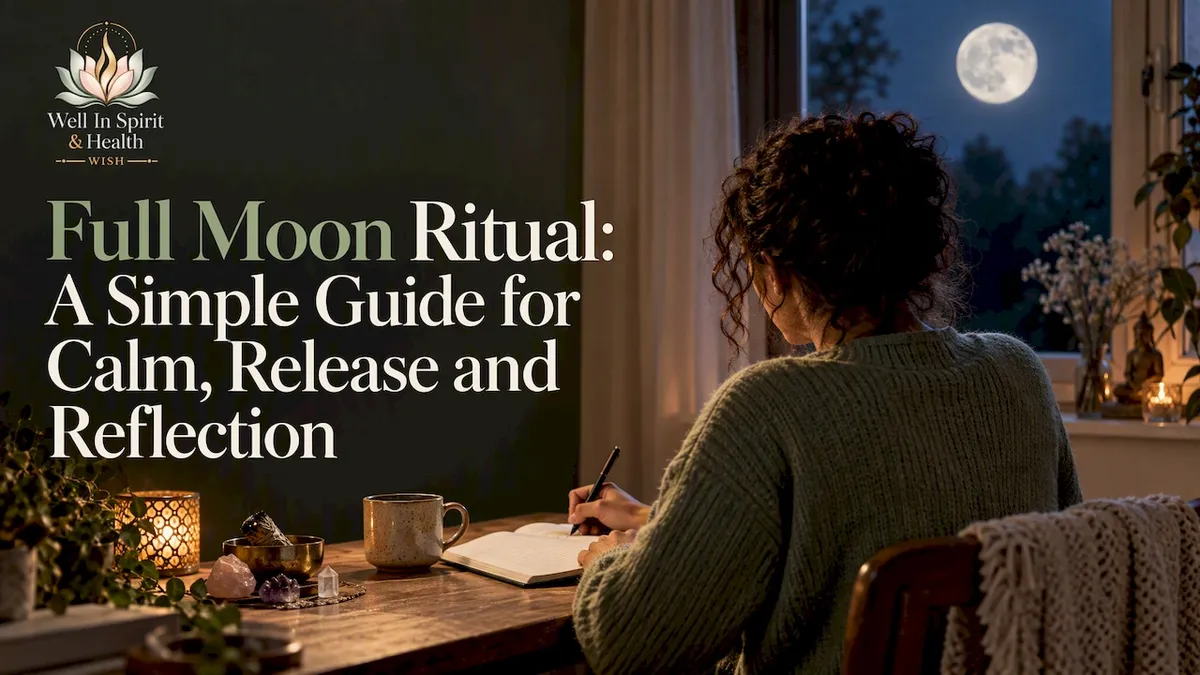
A full moon ritual is a short, intentional routine you do on or around the night of the full moon: you set up a calm space, reflect on the past month, write down what you want to let go of, and finish with something soothing such as a bath, a candle or a few minutes of quiet breathing. You need no special tools and about 30 minutes. The next full moon in the UK is the Hunter’s Moon on 26 October 2026, so you have a few days to prepare.
Below you will find the dates for the rest of the year, a step-by-step ritual, ideas for making it feel special, and a straight answer on what the moon does and does not do. We think the ritual is worth doing for what it gives you: a regular pause. The moon is a lovely excuse to take it.
Key takeaways
- The next full moons in the UK are 26 October (Hunter’s Moon), 24 November (Beaver Moon) and 24 December (Cold Moon), per the Royal Observatory Greenwich.
- A simple structure works best: prepare a space, reflect, release, then restore. Thirty minutes is plenty.
- The benefits come from the pause, the breathing and the scent, not from lunar energy. Treat the moon as a monthly reminder, not a mechanism.
- Essential oils are for inhaling or diluting in a carrier oil. Never swallow them.
Full moon dates for the rest of 2026
A full moon happens roughly every 29.5 days, the length of one lunar cycle, according to the Royal Observatory Greenwich. Here are the dates still to come this year, with times in the UK:
| Date | Time (UK) | Popular name |
|---|---|---|
| 26 October 2026 | 4.12am | Hunter’s Moon |
| 24 November 2026 | 2.53pm | Beaver Moon |
| 24 December 2026 | 1.28am | Cold Moon |
The exact peak can fall in the middle of the day or the small hours, when you cannot see it at all. That is not a problem. The moon looks full to the naked eye the night before and the night after, so most people choose the evening when it is visible and they are free. The 26 October peak is at 4.12am, so Sunday 25 October is the natural evening for your ritual, when the moon will be rising almost full.
If cloud covers the sky, do the ritual anyway. Nothing in it depends on seeing the moon, and a regular date is what makes it a habit.
What a full moon ritual actually is
Traditions differ. In many modern practices the full moon stands for culmination and release: a point to look back, notice what has run its course and let it go. New moons are for beginnings, full moons for endings and gratitude. You will see this framing in most guides, from lifestyle magazines to astrology sites, and it is a useful structure whether or not you believe in lunar influence.
Strip away the ceremony and a full moon ritual has four parts:
- A set time you return to every month.
- A calm, prepared space.
- A moment of honest reflection, often with pen and paper.
- Something sensory that tells your body the day is over: warm water, scent, soft light.
That is also a decent description of good self-care, which is why the ritual has lasted.
An honest word on the science
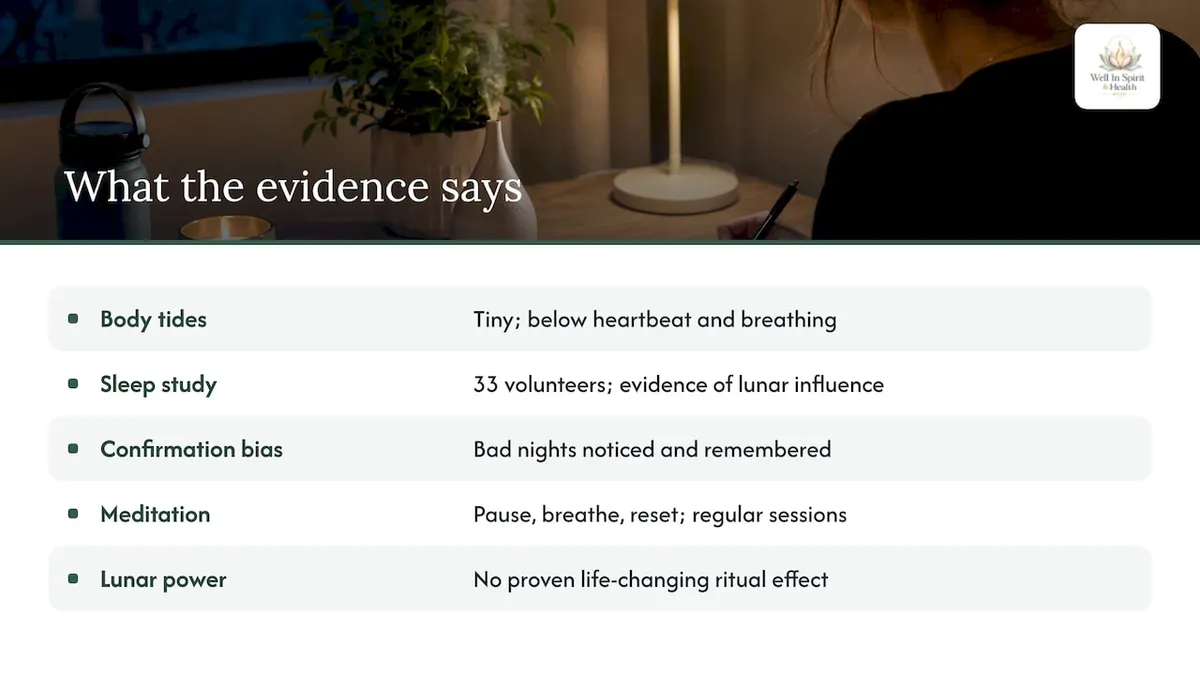
We would rather you knew this before you start. The idea that the moon pulls on the water in your body as it pulls on the sea does not hold up: the BBC’s educational guide explains that the moon’s tidal effect on a person is tiny, far smaller than the forces from your own heartbeat and breathing.
Sleep is more interesting. A 2013 BBC report described a study of 33 volunteers in a tightly controlled laboratory in which researchers found evidence of a lunar influence on sleep. Yet UK sleep expert Dr Neil Stanley told the BBC that people who believe the full moon disrupts sleep are more likely to notice and remember a bad night around it, a classic case of confirmation bias. The honest summary is that the evidence is mixed and small, and nobody has shown that a ritual changes your life by lunar power.
What does have support is the content of a good ritual. The NHS describes meditation as a way to pause, breathe and reset, and notes that it works best with regular sessions. A monthly ritual gives you a fixed point to practise exactly that. So think of the moon as the calendar reminder and the ritual as the medicine. If you have ongoing low mood, anxiety or sleep problems, speak to your GP: a candle and a journal are a lovely companion to care, not a replacement.
How to do a full moon ritual at home: step by step
This routine takes about 30 to 40 minutes. Do it in the order below or pick the parts you like.
1. Prepare your space (5 minutes)
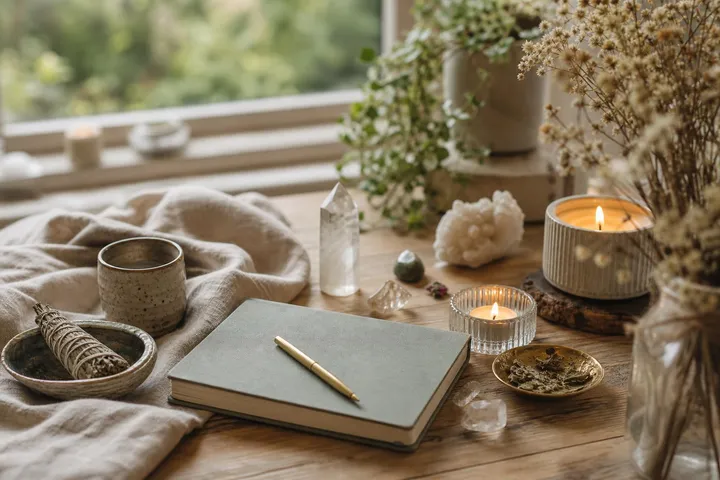
Choose a room where you will not be interrupted. Put your phone on silent, dim the main light and tidy one surface for the things you will use: a notebook, a pen, a candle, a glass of water. If you have a window with a view of the sky, sit near it.
Small touches matter more than equipment. A blanket, a favourite mug and a single candle are enough to tell your brain this is a different kind of evening.
2. Arrive with your breath (5 minutes)
Sit comfortably and breathe slowly. The NHS suggests focusing on your breathing and using sensory awareness, such as noticing the weight of your body on the chair or the sounds in the room, to bring your attention to the present. When your mind wanders, which it will, bring it back without scolding yourself. If you are new to this, the NHS beginner’s guide to meditation is a good place to start.
3. Reflect on the month (10 minutes)
Open your notebook and answer a few questions in a sentence or two each:
- What am I proud of since the last full moon?
- What drained me?
- What am I still carrying that I do not need?
- What do I want more of next month?
Write quickly and do not edit. If you like a more structured approach, our guide to an evidence-based intention-setting ritual takes only five minutes and pairs well with this step.
4. Release (5 minutes)
On a separate sheet, write what you are ready to let go of: a worry, a habit, a grudge, an unrealistic expectation. Read it once, then dispose of it in a way that feels right. Tearing it up and recycling it is perfectly good. If you choose to burn it, do so only in a fireproof dish or sink, away from curtains and with water to hand.
5. Restore (10 minutes or more)
Finish with something that soothes the body. Ideas that work well:
- A warm bath with a few drops of diluted oil (see the safety notes below).
- A short self-massage of hands, shoulders or feet with a diluted massage oil.
- A guided meditation for winding down. Our beginner-friendly sleep meditations run from 5 to 35 minutes.
- Simply sitting with a candle and a hot drink.
6. Close and note (2 minutes)
Blow out the candle and write one line about how you feel. Over a few months those lines become a quiet record of your year.
Making it feel special: scent, light and keepsakes
The sensory layer is what turns a to-do list into a ritual.
Candlelight. A candle gives the room a focal point. Our Hop Hare Crystal Magic Flower Candle, The Moon is made for exactly this kind of evening. If you prefer a scent to match your intention, our aromatherapy candles are named for the mood: Be Chilled for unwinding, Clear Thinking for the reflection step, and Creativity if you are using the evening to plan something new.
A bath. Water is a long-standing part of moon rituals, and a warm bath is also one of the simplest ways to relax. Our Sleepy Lavender massage and bath oil (300ml) suits a late bath before bed.
Something to keep. Many people like a small object that marks the practice: a journal, a dish for crystals, or a piece of jewellery worn only on ritual nights. A delicate crescent moon necklace is one idea, and a pretty porcelain box is a lovely home for the trinkets and notes you collect.
Moon water: a note of caution
Moon water, ordinary water left in a jar under the moonlight, is one of the most searched parts of the ritual. Treat it as a symbolic object. Use it to water plants or as a focus for your intention. We would not drink water that has sat outdoors overnight, since open water collects dust, insects and bacteria. If you want to drink something during the ritual, pour a fresh glass.
Using essential oils safely in your ritual
Aromatherapy is a gentle way to anchor the evening, and it comes with real rules. NHS guidance on aromatherapy describes oils as administered by massage, inhalation or dispersed in water, and notes that essential oils should never be ingested and should rarely be applied undiluted to the skin, because of the risk of irritation. In practice:
- Inhale from a tissue or a diffuser rather than putting oil straight on your skin.
- For massage or the bath, use a product already blended with a carrier oil, or dilute properly.
- If you are pregnant, have a health condition, or are using oils around children or pets, ask a midwife, pharmacist or GP first. NHS trusts publish specific aromatherapy guidance for pregnancy that is worth reading.
- Patch test a new product on a small area of skin before using it widely.
If you are new to oils, our guide to the five best aromatherapy oils to start with explains what each does and what to look for on the label. When you are ready to try them, you will find our essential oils in the shop, and the Wellbeing Massage Oil (100ml) is ready blended for a shoulder or foot massage.
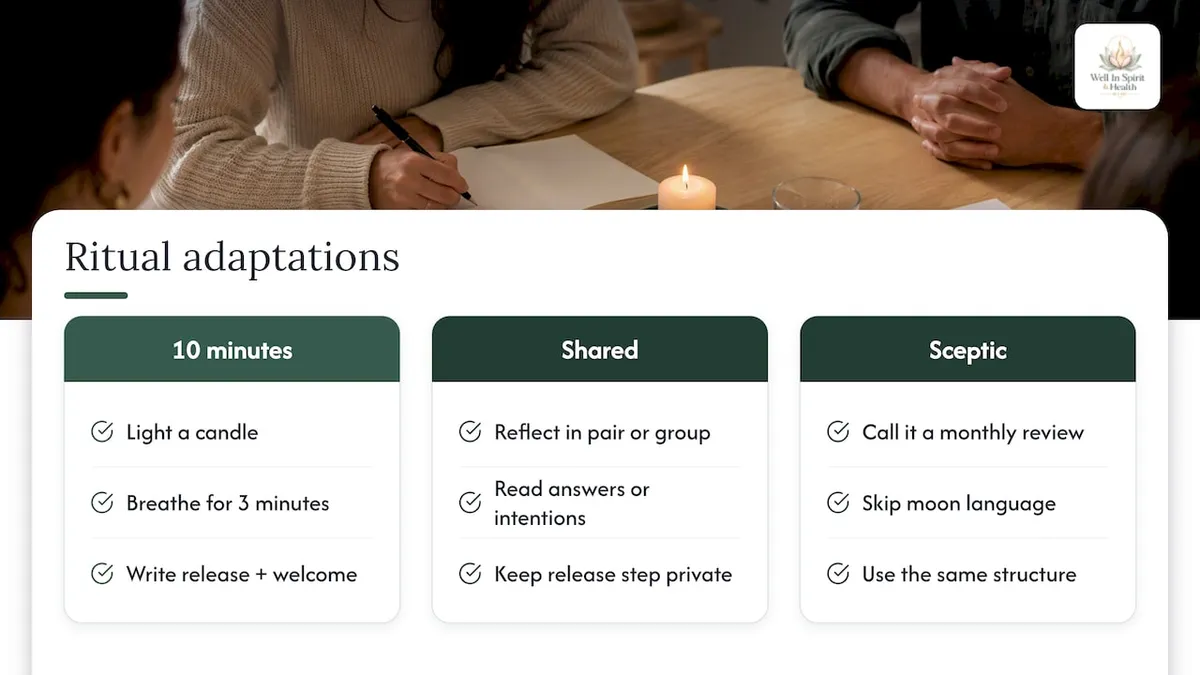
Three ways to adapt the ritual
If you have 10 minutes. Light a candle, breathe for three minutes, write one thing to release and one thing to welcome. Done.
If you are sharing it. Do the reflection step in a pair or small group and read your answers aloud, or only the intentions. Many people find that saying a goal to a friend makes it feel real. Keep the release step private.
If you are a sceptic. Skip the moon language entirely and call it a monthly review. Pick the date from the table above, use the same structure, and enjoy that it happens to be a clear night in autumn. It works the same way.
Our perspective
We built Well In Spirit & Health around one belief: a ritual works when it is easy to repeat and pleasant enough that you look forward to it. Plenty of people come to full moon practice because they are curious about the spiritual side, and we are happy to honour that. But the people who stick with it tend to talk about the same few things: the quiet, the scent, the candlelight, the written reflection.
So we design collections around those. We think the best ritual has a clear beginning and end, a few well-chosen objects and a guide that tells you what to do, so you do not have to invent it at 9pm after a long day. We would never tell you the moon will change your fortune. We would tell you that setting aside 30 minutes a month to breathe, reflect and let go is good for you, and that doing it with something beautiful in your hands makes it more likely you will come back next month.
— Rob
Ritual collections for your full moon evening
If you would rather have everything chosen for you, our ritual collections pair carefully selected products with a guided routine. For a moon-and-spirit evening, our spiritual rituals are the closest fit: The Awakening Ritual and The Forest Spirits Spa Ritual are each from £30.00, and The Chakra & Third Eye Awakening Ritual is from £50.00. All are one-off purchases. If you want to browse by the feeling you are after, the wellness collection is another good place to start. They also make thoughtful presents for a friend who has been asking for a way to switch off, and our spiritual gifts for women page gathers ideas.
For guided meditations to use in the restore step, our members’ library is where that content lives, and you can read more rituals and calm habits on our blog.
Frequently asked questions
When is the best time to do a full moon ritual?
The evening of the full moon, or the night before or after, is usually best because the moon looks full to the naked eye on all three nights. The peak moment can happen in daylight, so you do not need to match the exact time. For 26 October 2026, the peak is at 4.12am, so the evening of 25 October works well.
Do I need crystals, candles or any special tools?
No. A notebook, a pen and a quiet room are enough. Candles, oils and crystals are optional extras that make the evening feel different from an ordinary one. Choose only what you will really use.
Is moon water safe to drink?
We would not drink it. Water left outside overnight can collect dirt, insects and bacteria, so treat moon water as a symbolic item for plants or intention setting. If you want a drink during your ritual, use fresh water.
Does the full moon really affect sleep or mood?
The evidence is mixed. A small laboratory study of 33 volunteers found a lunar influence on sleep, but sleep experts note that belief in the moon’s power makes people more likely to notice bad nights around it. If you sleep badly regularly, speak to your GP rather than blaming the moon.
Can I do a full moon ritual if I do not believe in the spiritual side?
Yes. Many people use it as a monthly reflection and relaxation habit. The breathing, journalling and warm bath carry the benefit, and the moon simply gives you a date in the diary.
Sources
- Royal Observatory Greenwich: Full Moon Calendar 2026
- BBC Bitesize: the moon and tidal effects
- BBC News: Full Moon disturbs a good night’s sleep (2013)
- BBC News: Can a full Moon really affect your sleep? (2018)
- NHS Every Mind Matters: How to meditate for beginners
- North Tees and Hartlepool NHS Foundation Trust: Serenity aromatherapy
- Lancashire Teaching Hospitals NHS: Safe use of aromatherapy during pregnancy and labour