5 Best Aromatherapy Oils to Start With, Safe, Traceable UK Picks
Goal focused aromatherapy picks for sleep, stress, energy and focus, with safe dilution recipes, traceability checks and UK pregnancy cautions.

On this page
The best aromatherapy oils for most people are lavender for sleep and relaxation, bergamot or sweet orange for mood, peppermint for alertness, frankincense for grounding, Roman chamomile for calming, and eucalyptus for respiratory relief and refreshing the air. Diffuse these for a gentle daily effect, or dilute to around 1% in a carrier oil for skin use. The right choice depends on your goal and the dilution rules we cover below.
- ✓Curated ritual collections
- ✓Aromatherapy products
- ✓Guided meditations
- ✓Spiritual wellbeing experiences
Key Takeaways
Choosing the right essential oils based on clear wellbeing goals and following safety and quality guidelines enhances their effectiveness and reduces risks.
| Point | Details |
|---|---|
| Use oils for specific goals | Select oils like lavender for sleep, bergamot for mood, peppermint for alertness, and frankincense for grounding. |
| Prioritize safety precautions | Dilute oils properly, patch test before topical use, and avoid certain oils during pregnancy or in case of health sensitivities. |
| Check oil quality easily | Buy from reputable suppliers who disclose Latin names, chemotypes, batch numbers, and avoid vague labeling. |
| Rotate oils regularly | Switch between a few trusted oils every two to three weeks to minimize skin sensitivities and maintain effectiveness. |
| We at Wellinspirit emphasize traceability and safety | Our approach focuses on evidence-based, traceable products with no exaggerated claims, aligning with professional guidance. |
Best essential oils by wellbeing goal: sleep, stress, energy and focus
Choosing an oil starts with naming what you want it to do, not which bottle looks the nicest on the shelf.
For sleep, lavender (Lavandula angustifolia) remains the most studied option. A systematic evidence map found low-to-moderate confidence signals that aromatherapy can support sleep in some populations, though the evidence is inconsistent across studies and should be treated as a pragmatic, low-risk option rather than a guaranteed fix, according to an NCBI evidence map. Roman chamomile (Chamaemelum nobile) and sweet marjoram pair well with lavender for a rounder, less sharp scent. A simple sleep spritz: 4 drops lavender plus 2 drops frankincense in 100ml water in a spray bottle, shaken before each use on pillows or linen.
For stress and anxiety, bergamot (Citrus bergamia) is widely used for its uplifting, citrus profile, often blended with lavender or frankincense to soften its brightness. A 2024/25 government review concluded there is low-certainty evidence that aromatherapy may improve sleep quality and health-related quality of life for some people, with results varying by condition, according to a government aromatherapy evidence review. Ylang ylang and clary sage are traditional choices for tension, though clary sage carries pregnancy restrictions covered in the safety section below. For a quick calming inhalation, add 2 drops of bergamot to a tissue and breathe in slowly for a minute.
For energy and alertness, peppermint (Mentha piperita) is the standard choice, valued for its sharp, cooling scent that many people associate with mental clarity. Rosemary and lemon are good alternatives when peppermint feels too intense, particularly for anyone sensitive to menthol. Diffuse 3 to 4 drops of peppermint or rosemary in a well-ventilated room during a mid-afternoon slump rather than relying on a heavy topical dose.
For focus, rosemary and lemon again do double duty, often blended with a touch of peppermint for a brighter top note. Some people favour cedarwood for sustained concentration work, since its woody base note is less stimulating but still distinct enough to signal “focus time” when used consistently at a desk.
For grounding, frankincense (Boswellia carterii) and sandalwood are the two most reached-for oils, prized for their deep, resinous notes that many associate with meditation and slower breathing. Vetiver is a heavier, earthier alternative for anyone who finds frankincense too sweet.
For mood uplift, sweet orange (Citrus sinensis) is a gentler alternative to bergamot, without the phototoxicity concerns that some citrus oils carry, making it a reasonable choice for daytime diffusing.
A few practical notes apply across all of these:
- Diffuse 3 to 5 drops in a standard ultrasonic diffuser for a 20 to 30 minute session rather than running it all day.
- For topical use, dilute to a low concentration in a carrier oil unless a specific guideline says otherwise.
- Inhale directly from a tissue or your palms for a fast, low-dose effect when you are out and about.
- Rotate which oils you reach for rather than using the same one daily for weeks on end.
None of these oils replace sleep hygiene, stress management support or clinical treatment. They work best as a small, pleasant addition to a routine you already have.
How to use essential oils safely at home
There are three main ways to use essential oils, and each suits a different moment in your day. Passive diffusing (an ultrasonic or nebulising diffuser) disperses oil into the air gradually, is the gentlest method, and suits shared spaces or bedtime routines. Direct inhalation (a tissue, your palms, or an inhaler stick) delivers a quick, concentrated dose for an immediate effect, ideal for a stressful moment at your desk. Topical application, always diluted in a carrier oil, allows the scent to stay with you longer and lets you target pulse points like wrists or temples.
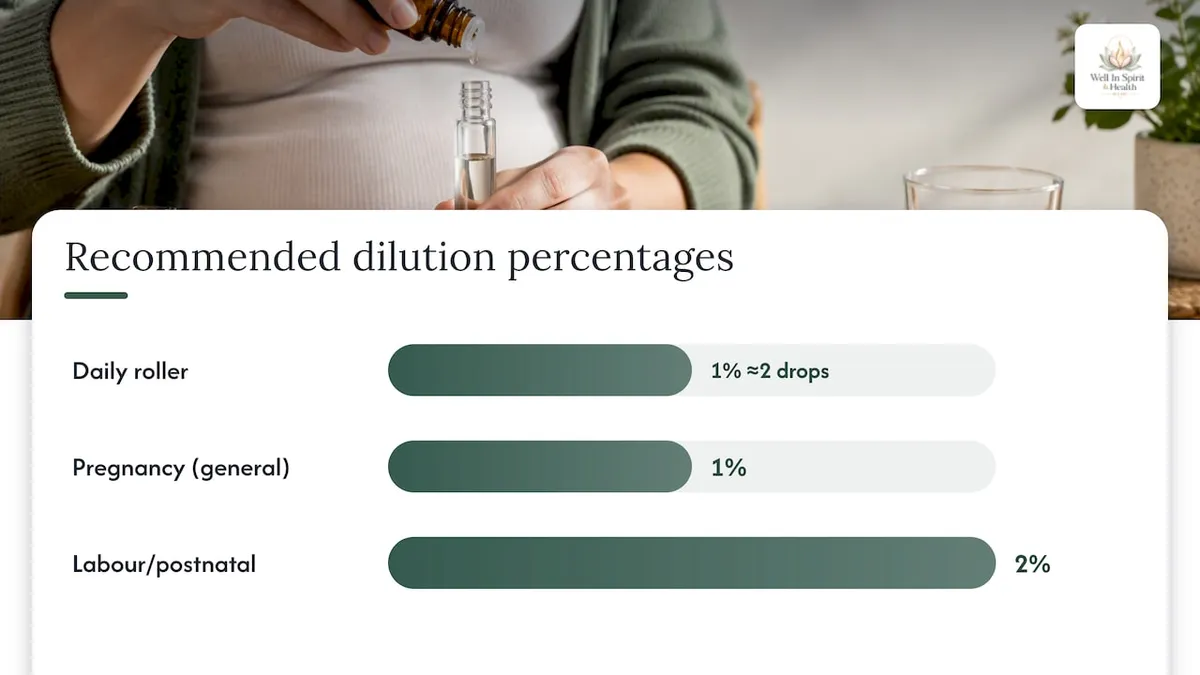
Dilution matters more than most people realise. Clinical midwifery guidance recommends around 1% during pregnancy generally, rising to up to 2% for labour and the postnatal period under professional oversight, according to aromatherapy dilution guidance for midwifery practice.
To build a simple 10ml roller blend for daily use:
- Choose your carrier oil (jojoba or grapeseed both work well) and fill most of a 10ml roller bottle.
- Add your essential oils at roughly 1% dilution, which is about 2 drops total per 10ml.
- Keep it simple: one main oil (such as lavender) and one supporting note (such as frankincense).
- Cap the bottle and roll it gently between your palms to mix, rather than shaking hard.
- Apply to wrists, temples or the back of the neck, avoiding eyes and broken skin.
Pro Tip: Label your roller with the date you made it and the dilution, so you always know how strong it is weeks later.
Pregnancy, children and other safety considerations
Essential oils are concentrated plant extracts, and “natural” does not mean risk-free. Midwifery and maternity guidance consistently restricts a number of oils during pregnancy, including clary sage and jasmine, which are considered potent enough to require professional oversight rather than casual home use, according to aromatherapy guidance for midwifery practice. If you are pregnant, breastfeeding, or managing a child’s exposure, check with a midwife or qualified aromatherapist before introducing a new oil, and favour lower dilutions throughout.
A few other groups and situations need extra care:
- Phototoxic citrus oils, such as bergamot and grapefruit (unless labelled furocoumarin-free), can cause skin burns or pigmentation when applied before sun exposure.
- Asthma and respiratory sensitivity: strong-smelling oils like eucalyptus and peppermint can trigger airway irritation in some people, so start with very short diffusing sessions.
- Children and infants need much lower dilutions than adults, and some oils are best avoided entirely in young children.
- G6PD deficiency: some guidance flags peppermint and menthol-rich oils as worth discussing with a doctor first.
An evidence map covering aromatherapy research found generally low-certainty evidence across many outcomes, which is a useful reminder to treat these oils as a gentle complement to care and not a substitute for it, according to a systematic evidence map on aromatherapy.
Before using any new oil topically, patch test it: apply a diluted drop to the inside of your forearm, cover loosely, and wait 24 hours. If you notice redness, itching or swelling, wash the area with a mild soap and avoid that oil going forward; seek medical advice if symptoms persist or worsen.
How to spot quality essential oils when buying
Most of the “quality” problems in this category come down to label transparency, not price alone. Purchasing guidance from the International Federation of Aromatherapists stresses buying from reputable suppliers and checking the Latin name, chemotype and packaging before you buy, and it notes that “therapeutic grade” is a marketing term with no regulated meaning anywhere in the industry, according to IFA purchasing guidelines. That label check is genuinely the single most practical filter available to anyone shopping for oils.
Look for these on the bottle or product page:
- The Latin binomial (for example, Lavandula angustifolia, not just “lavender”), which confirms the exact species.
- The chemotype, relevant for oils like rosemary or thyme that vary significantly by growing region and distillation.
- Country of origin, distillation method and a batch or lot number, which together support traceability back to a specific harvest.
- Dark glass packaging with a dropper insert, since clear glass degrades oils faster and a dropper limits accidental overuse.
- Clear supplier contact details, so you can ask questions or report concerns.
Be wary of rare oils (rose, neroli, sandalwood) priced suspiciously low, since these are genuinely expensive to produce and a bargain price usually signals dilution with synthetics or carrier oil. Missing batch numbers or vague “pure essential oil” labelling with no botanical name are both red flags worth walking away from. Where you can, favour suppliers who disclose sourcing practices for wild-harvested or endangered species such as sandalwood and rosewood, since overharvesting has made some of these plants genuinely scarce.
Advertising rules add another layer of protection here: the Advertising Standards Authority restricts aromatherapy claims that imply medicinal benefits, limiting acceptable marketing language to relaxation and wellbeing claims rather than treatment claims, according to ASA health aromatherapy guidance. A supplier making bold medical promises is often cutting corners elsewhere too, a pattern explored in skincare marketing, where restrained, accurate claims tend to track with better product standards overall.
Blending, carrier oils and storage that protect your skin and your oils
Simplicity protects both your skin and your blend’s effectiveness. Keep any blend to three oils or fewer, since more than that makes it harder to judge what is causing a reaction if one occurs, and the scent tends to muddy rather than improve. Rotate the oils you use regularly, working on a roughly two to three week cycle with a week off, which practitioner guidance links to lower sensitisation risk over time.
Jojoba and grapeseed are reliable, widely available carrier oils; grapeseed in particular appears in midwifery guidance as a suitable light carrier for massage blends. A simple 10ml starting blend: 4 drops lavender, 2 drops frankincense, topped up with carrier oil.
- Store bottles somewhere cool and dark, well away from direct sunlight and heat sources.
- Check caps are tight, since oxidation speeds up once air gets in regularly.
- Watch for cloudiness, a sticky residue around the cap, or a flattened scent, all signs an oil has oxidised and should be replaced.
- Dispose of oil-soaked cotton pads or cloths in a sealed container, since some concentrated oils are flammable.
Pro Tip: Keep a small notebook or note on your phone logging which blends you made and when, so your rotation schedule runs itself.
Why we focus on safety-first, traceable aromatheromy guidance
We offer a selection of ritual collections and aromatherapy products designed to integrate into thoughtful routines, rather than standalone bottles with no context. Our approach favours evidence-aware framing over bold claims: we look at what reviews like the NCBI evidence map actually show, which is modest, low-to-moderate certainty support for outcomes like sleep and stress, and we write accordingly rather than overstating benefits.
Traceability sits at the centre of how we think about quality, in line with the IFA’s purchasing guidance on Latin names, chemotypes and batch information. We apply the same pregnancy and safety cautions used in clinical maternity guidance when we talk about dilution, and we avoid medical claims entirely, keeping language to relaxation, mood and everyday wellbeing. You can read more about our approach to ritual collections if you want the fuller picture.
The gap between what aromatheromy promises and what it delivers
The conventional advice on essential oils tends to swing between two extremes: either a vague “natural, so it’s harmless” dismissal of safety, or inflated claims that an oil can treat anxiety, insomnia or chronic pain outright. Neither is accurate. The evidence we have, including government reviews and evidence maps, points to a middling, genuinely useful picture: low-to-moderate certainty support for sleep and stress outcomes in some people, nothing that functions like a clinical treatment, and real safety considerations that get glossed over far too often, particularly around pregnancy and phototoxic citrus oils.
What gets overrated is chasing rare or exotic oils for marginal benefit. What gets underrated is the basics: correct dilution, a traceable supplier, and sticking to two or three oils you actually enjoy rather than building a shelf of twenty you never finish. If you take one thing from this guide, prioritise the label check over the marketing copy. A bottle with a Latin name, a chemotype and a batch number will serve you better than one promising a miracle in a diffuser.
— Rob
Try a curated ritual instead of guessing at blends
If building your own blend from scratch feels like more trial and error than you want, our curated ritual collections pair pre-blended oils with guided routines for sleep, grounding and clarity, so you are not starting from an empty shelf.

The Awakening Ritual and Forest Spirits Spa Ritual bring together grounding and calming blends in one box, while our essential oils shop carries individual oils for anyone who prefers to build their own routine from traceable, well-labelled bottles.
FAQ
What is the best essential oil brand in the UK?
There is no single official “best” brand, since essential oil quality is unregulated and varies by supplier rather than by brand reputation alone. Look for suppliers who disclose the Latin name, chemotype, origin and batch number on every bottle, as recommended by IFA purchasing guidance, rather than choosing by name recognition alone.
Which aroma essential oil is considered the best overall?
Lavender is the most widely used and studied essential oil, with low-to-moderate certainty evidence pointing to benefits for sleep and relaxation in some people, according to an NCBI evidence map. It also blends easily with other oils, which is part of why it tends to top most recommendations.
What is the highest quality essential oil brand?
Quality depends on sourcing and labelling practices rather than a fixed brand ranking, since “therapeutic grade” has no regulated meaning, as the International Federation of Aromatherapists notes. The strongest signal of quality is a supplier who publishes Latin names, chemotypes, batch numbers and clear contact details for every product.
What are the top five essential oils to start with?
A reasonable starter set covers lavender for sleep, bergamot or sweet orange for mood, peppermint for alertness, frankincense for grounding, and eucalyptus for respiratory relief. This combination covers most common everyday goals without needing a large collection.
Which essential oils should I avoid during pregnancy?
Clinical midwifery guidance flags oils such as clary sage and jasmine as potent enough to need professional oversight during pregnancy, alongside general dilution limits of around 1%. Always check with a midwife or qualified aromatherapist before introducing a new oil if you are pregnant, according to aromatherapy guidance for midwifery practice.