Sound Bath at Home: How to Set One Up and Enjoy It
Create a calming sound bath at home: the setup, audio or singing bowls, a 20-minute routine, who should be careful, and what the research says.
On this page
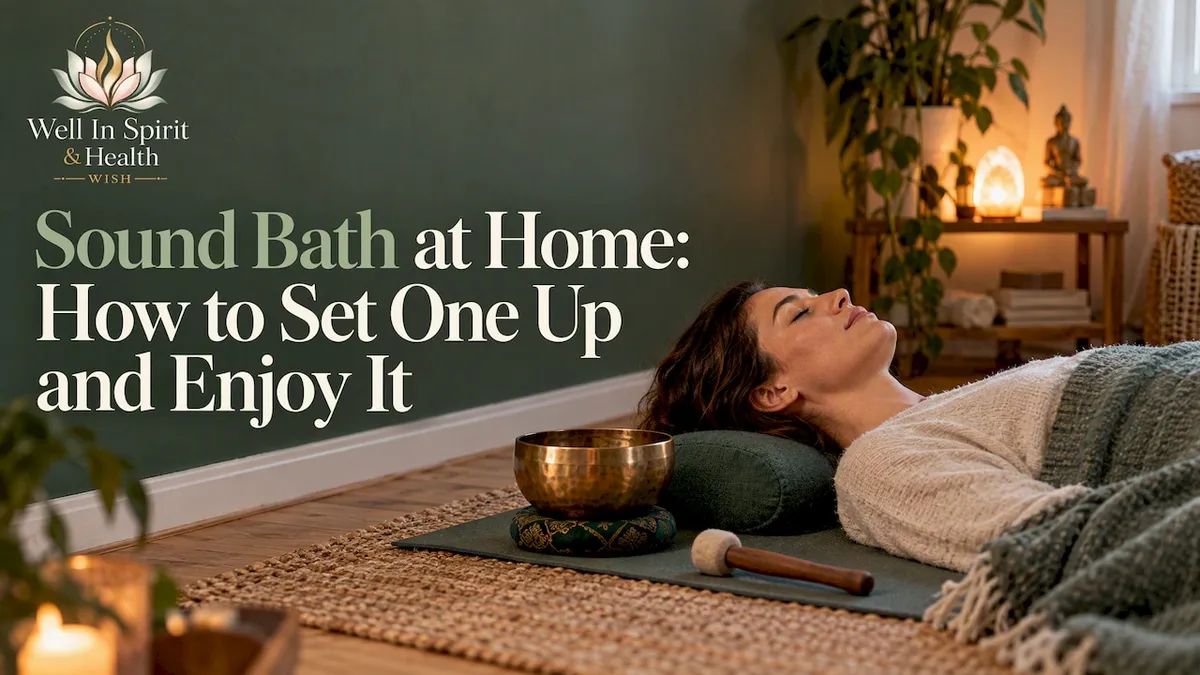
You can have a sound bath at home with a quiet room, something comfortable to lie on, a warm blanket and a good recording or a small set of singing bowls. Lie down, close your eyes and let the sound do the work for 10 to 30 minutes. You don’t need a studio, a gong or any prior meditation experience. This guide covers the setup, the audio options, a simple routine, the safety points worth knowing and what the research does and doesn’t show.
Key takeaways
- A home sound bath is mostly about the setup: a quiet, warm, undisturbed space matters more than expensive kit.
- You can use a recording (over-ear headphones help) or your own singing bowls. Start with 10 to 20 minutes.
- Research links music and sound-based listening to lower anxiety, but a sound bath is a relaxation practice, not a treatment.
- Check with a healthcare professional first if you are in early pregnancy, have epilepsy, a serious heart condition, tinnitus or a complex mental health diagnosis.
- Consistency beats perfection: a short practice you actually repeat is worth more than an occasional long one.
What a sound bath actually is
In a studio, a practitioner plays crystal or Tibetan bowls, gongs and chimes while you lie still. BBC News describes online sound baths as one of the wellness habits you can start at little or no cost, and notes that professional sessions typically last around 50 minutes. At home, the same idea is scaled to your schedule.
The aim is not to “do” anything. You listen, let your attention follow the sound as it rises and fades, and let your body settle. Sound therapists often describe this as helping the nervous system shift from a stressed, alert state towards the calmer “rest and digest” response. That is how practitioners explain it, for example on BBC Radio 4, rather than a settled medical finding, so treat it as a useful description of the experience.
You also don’t need to believe in anything. Practitioners quoted by the BBC say being open to the possibility of relaxation is enough.
What the research says about sound and stress
The evidence is encouraging but needs reading carefully. A 2022 systematic review and meta-analysis of controlled studies found that music listening had a large effect on reducing anxiety (d = -0.77). The same research notes a 2018 meta-analysis in which binaural-beat exposure had a medium effect (g = 0.45) on anxiety and pain perception.
Two caveats. First, those studies cover music listening and binaural beats, not sound baths specifically. Second, a meta-analysis shows an average across studies, not a promise for you on a given evening. Sound bath research itself is still young: the University of Northampton has a project investigating whether sound bath meditation produces measurable, lasting effects on wellbeing, stress and resilience.
So the honest summary is this: listening to calming sound is a reasonable, low-cost way to unwind. It is not a substitute for medical care if you are struggling with anxiety, low mood or poor sleep that persists. If that is you, speak to your GP.
Setting up your space
The BBC’s wellness guidance and the practitioners quoted in it point to the same thing: the setting counts as much as the sound. Work through this list before you press play.
Choose a quiet, undisturbed spot
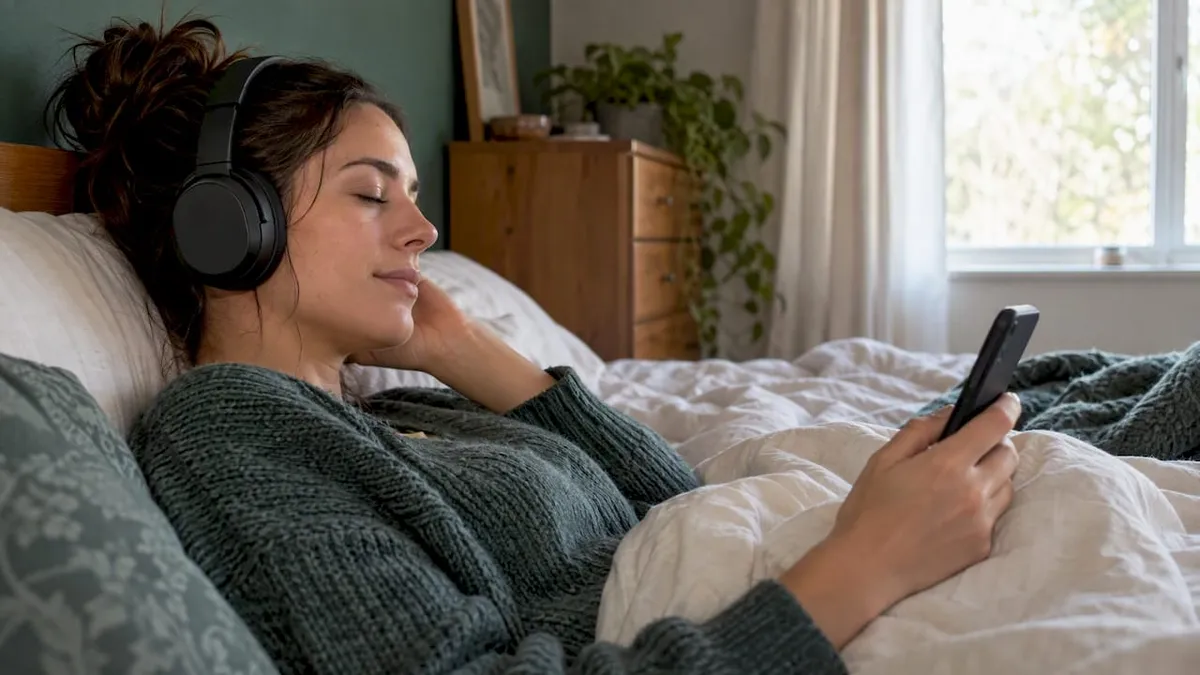
Pick a room where you won’t be interrupted for the length of the session. Tell the household, put your phone on silent (leave it on only if it is playing the audio), and close the door. If outside noise is a problem, over-ear headphones help block it and deepen the sense of immersion.
Get properly comfortable
Lie on a yoga mat, a bed or a sofa, wherever you can fully let go. Add a blanket, because your body temperature tends to drop as you relax. A cushion under the knees and a folded towel or small pillow under the head make it easier to stay still. An eye mask, ideally a soft or weighted one, helps shut out visual distraction. If you want ideas for building a cosy, restful setup, this at-home spa day guide covers comfort items that translate well to a listening session.
Dim the lighting
Bright overhead light keeps your brain in daytime mode. Switch it off and use a lamp, or a candle in a safe holder, instead. A few thoughtful changes to lamps and lighting, like those in this guide to designing ambiance at home, are enough to change how a room feels in the evening.
Add scent, if you like it
Scent is optional, but it works well as a cue. Lighting the same candle each time teaches your mind that this is the moment to slow down. We make that point with our Be Chilled aromatherapy candle and Sleepy Lavender massage and bath oil, which both suit an evening session. Keep any flame well away from blankets and never leave it burning while you drift off. If you use oils, check they suit your skin and, if you are pregnant or have a health condition, check with a professional first.
Recording, app or singing bowls?
There are three practical routes. Each works, and you can switch between them.
| Option | Best for | Watch out for |
|---|---|---|
| Streamed recordings (YouTube, Spotify, apps) | Trying it out, no cost | Quality varies a lot; ads can break the spell |
| Guided or longer-form recordings by established practitioners | A structured, hands-off experience | Generic “relaxation” tracks are not the same thing |
| Your own singing bowls | A hands-on, repeatable ritual | Takes a few minutes to learn the sound; it is harder to play and relax at once |
Using recordings
The BBC notes that sound bath recordings are widely available on platforms such as YouTube and Spotify, but quality varies. Its guidance, and the practitioners it quotes, suggest looking for work by experienced, established practitioners or organisations rather than generic relaxation audio. Choose something at least 20 minutes long, so you are not woken by an abrupt ending, and download it so a dropped connection doesn’t interrupt you. Keep the volume low to moderate. A sound bath should feel enveloping, never loud.
Using singing bowls
Playing your own bowls turns the session into something you do rather than something you press play on. A small set is plenty to begin with. We stock the Medicine Buddha singing bowl set, a Tree of Life singing bowl set and individual chakra bowls, such as Heart and Root.
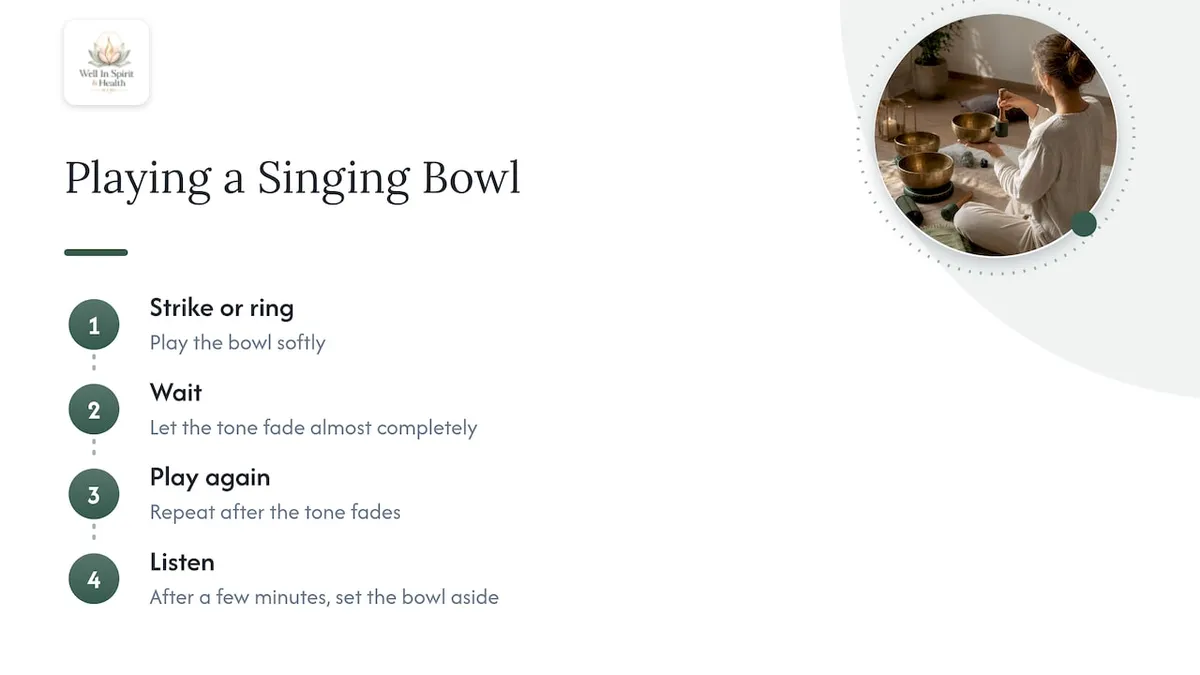
If you play for yourself, strike or ring the bowl softly, wait for the tone to fade almost completely, then play again. Many people find it easier to play for the first few minutes, then set the bowl aside and simply listen to the last of the sound. If you want to be fully passive, play a recording and keep the bowls for the days you feel like a more hands-on ritual. Playing for a partner or friend while they lie down is also a lovely way to share it.
A 20-minute home sound bath, step by step
- Prepare (3 minutes). Dim the lights, light a candle if you are using one, and put a drink of water within reach. Set a quiet alarm or choose a recording of the right length.
- Settle (2 minutes). Lie down, cover yourself with a blanket and put on your eye mask. Let your arms rest by your sides, palms up if that feels comfortable.
- Breathe (2 minutes). Take a few slow breaths, making each out-breath a little longer than the in-breath. You don’t need to force anything.
- Listen (10 minutes). Start the audio or play your bowls. Follow one tone at a time as it fades. When your mind wanders, which it will, simply return to the sound without judging yourself.
- Return (3 minutes). When the sound ends, stay still for a minute. Wiggle your fingers and toes, roll to one side, and sit up slowly.
If 20 minutes feels long, begin with 10. Practitioners and the British Academy of Sound Therapy, quoted by the BBC, stress consistency and finding an approach you will genuinely use. Three short sessions a week will probably do more for you than one long one every month.
Who should be careful
A sound bath is gentle for most people, but not for everyone. NHS trust guidance and practitioners say that you should speak to a healthcare professional before trying sound therapy if any of the following apply (the Leeds and York Partnership NHS Foundation Trust is one NHS source for these cautions):
- You are in the first three months of pregnancy.
- You have epilepsy or a history of seizures.
- You have a severe heart condition.
- You have a complex mental health diagnosis, or complex trauma.
- You have had recent surgery or have metal plates in your body.
Practitioners explain that some low-frequency vibrations can physically affect the body, and that some people are more sensitive to sound stimuli. If one of these applies to you, ask your GP, midwife or specialist before you start, and tell them exactly what kind of sound you plan to use.
If you have tinnitus
Tinnitus needs particular care. An NHS tinnitus leaflet explains that silence can make tinnitus more noticeable, and that using other gentle sounds, known as sound enrichment, can reduce the contrast between a quiet room and the tinnitus. That suggests soft, steady sound is often more comfortable than a very quiet room. But some sound experiences can heighten awareness of symptoms, so keep the volume low, stop if it makes things worse, and speak to your audiologist or GP if you are unsure.
Listen at a safe volume
Headphones are useful, but they are not a reason to turn things up. Keep the level comfortable and well below anything that feels sharp or piercing. If anything feels uncomfortable, stop and take the headphones off.
Our perspective: make it a ritual, not a performance
At Well In Spirit, we think the sound is only half of a good sound bath. The other half is the ritual around it: the lamp you switch on, the scent you light, the blanket you reach for. Those small, repeated cues tell your body that the day is over.
We design our collections on that principle: carefully chosen products, simple guided steps and thoughtful presentation, so that a quiet evening feels like an occasion rather than a task on your list. That’s why we recommend building a small “calm corner” at home, a spot that is always ready, so that starting a session takes seconds rather than effort. Our guide to starting a calm corner shows how.
Our advice is simple. Don’t wait until you own the perfect bowls or the perfect room. Begin tonight with a recording, a blanket and ten minutes, and add one thing at a time as you find what you enjoy.
— Rob
Turn it into a ritual with Well In Spirit
If you want the surroundings ready-made, our ritual collections bring together products and guided steps for an evening of calm. The Forest Spirits Spa Ritual is from £30, and The Chakra & Third Eye Awakening Ritual is from £50. Both pair naturally with a listening session. You can also browse our essential oils or look at wellness gifts if you are choosing something for someone who needs to unwind. For guided meditations to follow on other evenings, there is the members’ library.
Common mistakes to avoid
- Choosing a cold room. Relaxing lowers your body temperature, so warm the room and keep a blanket close.
- Using a patchy recording. Constant ads and abrupt endings pull you out of the experience. Choose a good-quality, download-ready track.
- Expecting a big experience straight away. Some sessions feel deep and others feel restless. Both are normal.
- Falling asleep and feeling guilty. Many people do. If sleep is your goal, that is no failure. If you wanted to stay awake, try sitting up with support.
- Rushing out afterwards. Give yourself a few minutes to come round, and drink some water.
FAQ
Can you do a sound bath at home?
Yes. You need a quiet, comfortable space, a recording or a few singing bowls, and ideally a blanket and an eye mask. BBC guidance suggests lying down, wearing over-ear headphones if you can, and staying warm. Start with 10 to 20 minutes.
Are sound baths actually effective?
Many people find them relaxing, and research on music listening and binaural beats links them with lower anxiety. However, that research is not specific to sound baths, and sound bath studies are still developing. Treat it as a relaxation practice rather than a treatment for any condition.
Who should not do sound healing?
Talk to a healthcare professional first if you are in the first three months of pregnancy, have epilepsy, a severe heart condition, a complex mental health diagnosis, or have had recent surgery or have metal plates. Take care too if you have tinnitus, since some sounds may make you more aware of it.
What should you not do after a sound bath?
Don’t jump up or rush straight back to a screen or a busy task. Stay still for a minute, sit up slowly and drink some water. If you feel dizzy or unsettled, rest until it passes, and speak to a professional if it keeps happening.
Sources
- Wellness habits you can start today, BBC News
- BBC Radio 4, In Touch, Wellness
- Is music listening an effective intervention for reducing anxiety? Systematic review and meta-analysis
- University of Northampton, sound bath meditation research
- Leeds and York Partnership NHS Foundation Trust
- Understanding and managing your tinnitus, NHS leaflet