Best Bath Salts in the UK for Sensitive Skin, Safety and Rituals
UK guide to the best bath salts for relaxation, muscle relief and sensitive skin. Evidence backed dosing, safety cautions and ready rituals.
On this page
For most people, Epsom salt suits muscle soreness, Dead Sea or Himalayan salt suits a mineral-rich relaxing soak, and sodium bicarbonate or colloidal oatmeal suits dry or sensitive skin. Rather than guessing between jars on a shelf, a curated ritual collection that pairs the right salt with guided oils and a simple routine, takes the decision-making out of your hands. We walk through each type below, with the dosing and safety detail that most product pages skip.
Key Takeaways
Choosing the right bath salt depends on your specific skin or muscle needs, with curated rituals providing a simple, effective routine over trial-and-error sourcing.
| Point | Details |
|---|---|
| Muscle soreness relief | Epsom salt is best for muscle soreness due to its magnesium sulfate content and routine use in warm baths. |
| Soothing dry skin | Sodium bicarbonate and colloidal oatmeal are suitable for dry or itchy skin, with oatmeal reducing irritation and moisture loss. |
| Proper selection and safety | Check ingredients, granule size, price per bath, and buy from trusted sources to ensure safety and value. |
| Application and precautions | Use warm, not hot, water and soak for around 15 minutes to minimize skin irritation and avoid fainting. |
| Wellinspirit routines | We offer curated bath collections with pre-matched salts and oils, simplifying choices and enhancing routine consistency. |
Types of bath salts and what each is best for
Epsom salt is magnesium sulfate dissolved in warm water. Any mineral uptake through skin is probably minimal, and most of the comfort people feel likely comes from warm water and the ritual of soaking rather than systemic magnesium absorption. That doesn’t make it useless: a warm Epsom soak after exercise is a reasonable, low-risk way to wind down.
Dead Sea salt and Himalayan pink salt differ mainly in texture and mineral profile rather than function. Dead Sea salt tends to be finer and richer in magnesium and potassium, while Himalayan salt is coarser, pink-tinted and often marketed for its appearance as much as its soak. Both dissolve into a mineral-rich bath that most people find pleasant without any particular therapeutic claim standing up to scrutiny.
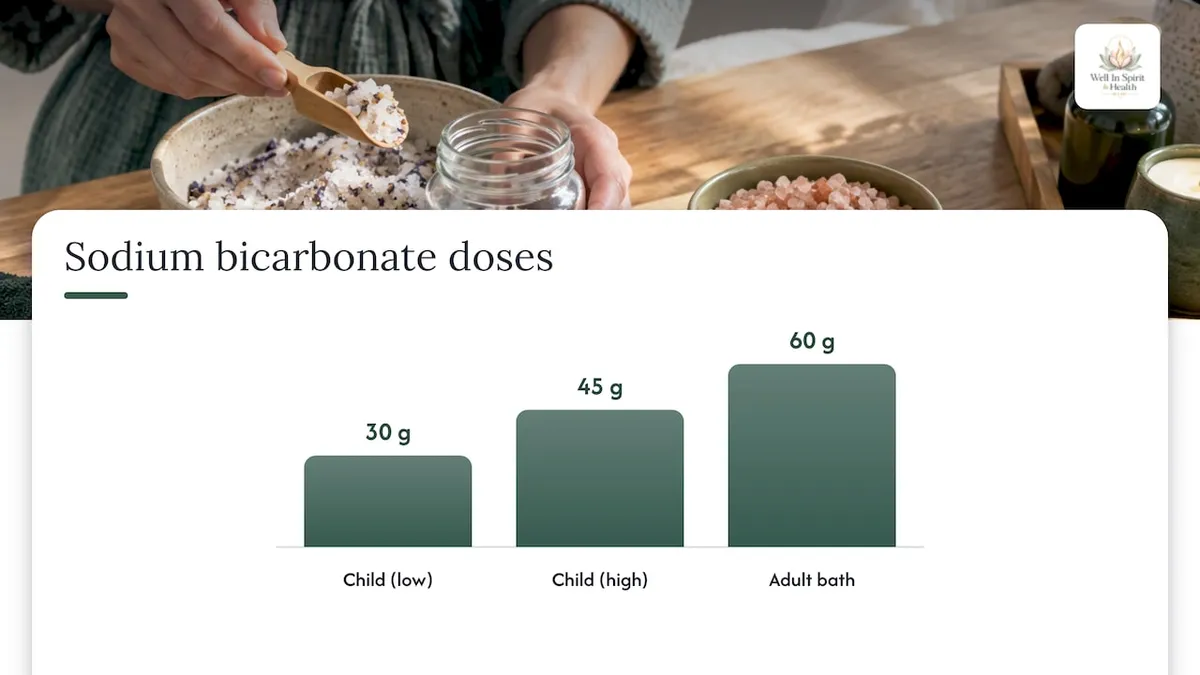
Sodium bicarbonate and colloidal oatmeal sit in a different category. Great Ormond Street Hospital gives a specific recipe for soothing dry or itchy skin: 2 to 3 heaped tablespoons (30 to 45 grams) for a child’s bath, up to 4 tablespoons (60 grams) for a full adult bath. Colloidal oatmeal works differently again: it binds water and forms a protective film on skin that can reduce itch, making it a sensible pick when sensitive or eczema-prone skin is the priority rather than muscle soreness.
Fragranced ritual blends that combine salts with essential oils are sensory tools, not medical treatments. They’re worth choosing for how they smell and feel, not for any claimed skin or circulation benefit.
Best for:
- Muscle soreness after exercise: Epsom salt in a warm (not hot) soak.
- General relaxation and a mineral-rich feel: Dead Sea or Himalayan salt.
- Dry, itchy or sensitive skin: sodium bicarbonate or colloidal oatmeal.
- Sensory ritual and sleep wind-down: fragranced salt and oil blends.
How to choose bath salts: scent, additives and value
Choosing well means looking past the label and checking four things: the ingredient list, the granule size, the price per bath, and where you’re buying from.
- Check for fragrance-free or emollient-focused formulas if your skin is reactive. Clinical guidance from the Dudley Group NHS notes that fragranced, coloured and foaming products can dry out or irritate eczema-prone skin, so a soap substitute and fragrance-free option is the safer starting point.
- Read the ingredient list for essential oils versus synthetic fragrance. Natural essential oils and synthetic fragrance compounds can both trigger a reaction in sensitive skin, so the distinction matters less than patch-testing before a full soak.
- Consider granule size. Fine salts dissolve faster and need less agitation, while coarse rock salt can take longer to break down and may need a higher dose for the same mineral concentration.
- Work out cost per bath. Divide the jar weight by the recommended dose to see how many soaks you actually get, rather than comparing jars on price alone.
- Decide where to buy. Pharmacies and supermarkets carry basic Epsom and bicarbonate salts cheaply, while specialist retailers and curated ritual sellers offer blended, presentation-led options for gifting or a more considered routine.
Pro Tip: Weigh out one dose on a kitchen scale the first time you use a new salt: it stops you under or over-dosing by eye on every soak after.
How to use bath salts safely
Fill the bath with warm, not scalding, water and add your salt while the taps are still running so it dissolves evenly. For a sodium bicarbonate skin bath, Great Ormond Street Hospital’s guidance recommends 2 to 3 heaped tablespoons for a child, up to 4 tablespoons for an adult, soaked for 10 to 15 minutes.
- Keep the water warm rather than hot: DermNet’s balneotherapy overview warns that prolonged immersion in hot water carries a risk of irritation, low blood pressure and fainting.
- Aim for a soak of around 15 minutes rather than lingering much longer.
- Pat skin dry gently rather than rubbing, then apply emollient within minutes while skin is still slightly damp.
- Take care getting in and out: wet salt residue on an enamel or acrylic bath can be slippery.
- If you have a cut, infection or broken skin, check with a pharmacist before adding any salt or fragrance to the water.
A 10 to 15 minute soak is the window GOSH recommends for sodium bicarbonate baths, long enough to settle skin without the irritation risk that comes with extended hot soaking.
If your skin feels tight, itchy or newly irritated after a soak, that’s a sign to shorten the next one and moisturise sooner.
Sensitive skin and when to ask a clinician
Bath additives, however well formulated, are not a substitute for leave-on emollient. NHS patient guidance is clear that for eczema-prone skin, soap substitutes and regular leave-on moisturiser do the heavy lifting, and fragranced bath products should be chosen cautiously. Colloidal oatmeal is one of the better-evidenced additives for itch relief because of how it binds water and forms a barrier on skin, making it a reasonable choice when soothing is the goal rather than fragrance or luxury.
- Choose fragrance-free and dye-free products if you have eczema, psoriasis or generally reactive skin.
- Treat colloidal oatmeal as a soothing option, not a cure, and keep soaks short and lukewarm.
- Antiseptic or bleach baths are sometimes recommended for specific skin infections, but only under a clinician’s direction and at the concentration they specify.
- See a GP or dermatologist if skin becomes more inflamed, weeps, or you notice signs of infection after bathing.
Jar sizes, cost per bath and storage
A straightforward way to judge value is to divide a jar’s weight by the dose you’ll actually use. Take a 500 gram jar with a recommended dose of 50 grams per bath: that gives you 10 baths, so a £15 jar works out to roughly £1.50 per soak. A concentrated blend with a smaller recommended dose stretches further than a coarse rock salt that needs a heavier handful to feel the same in the water.
- Store salts somewhere dry: moisture causes clumping and can shorten shelf life, especially with bicarbonate blends.
- Keep the lid tightly closed between uses, particularly for scented blends where the fragrance oils can fade with air exposure.
- A larger tub suits everyday use, while a smaller, nicely packaged jar suits gifting, where presentation matters more than the per-bath cost.
Organic and natural certification: what the labels actually mean
“Natural” on a bath salt label isn’t a regulated claim in the same way “organic” is. A genuine organic certification, from a recognised body, means the ingredients (typically the carrier oils or botanicals blended with the salt, since mineral salt itself isn’t farmed) were grown and processed under defined standards without most synthetic pesticides or fertilisers. It says nothing about whether the product suits sensitive skin or delivers any particular soak benefit.
“Natural” is a marketing term with no fixed legal definition in most markets, so two products both labelled “natural” can have very different ingredient lists. The more useful check is the actual ingredient panel: look for recognisable minerals and named essential oils rather than a long list of synthetic fragrance compounds, regardless of what the front of the jar says.
For sensitive skin specifically, a certification badge is less informative than a straightforward fragrance-free claim backed by an ingredient list you can read and understand. Treat “organic” and “natural” as context, not as a substitute for checking what’s actually in the jar and whether it suits your skin.
Possible side effects and safety warnings
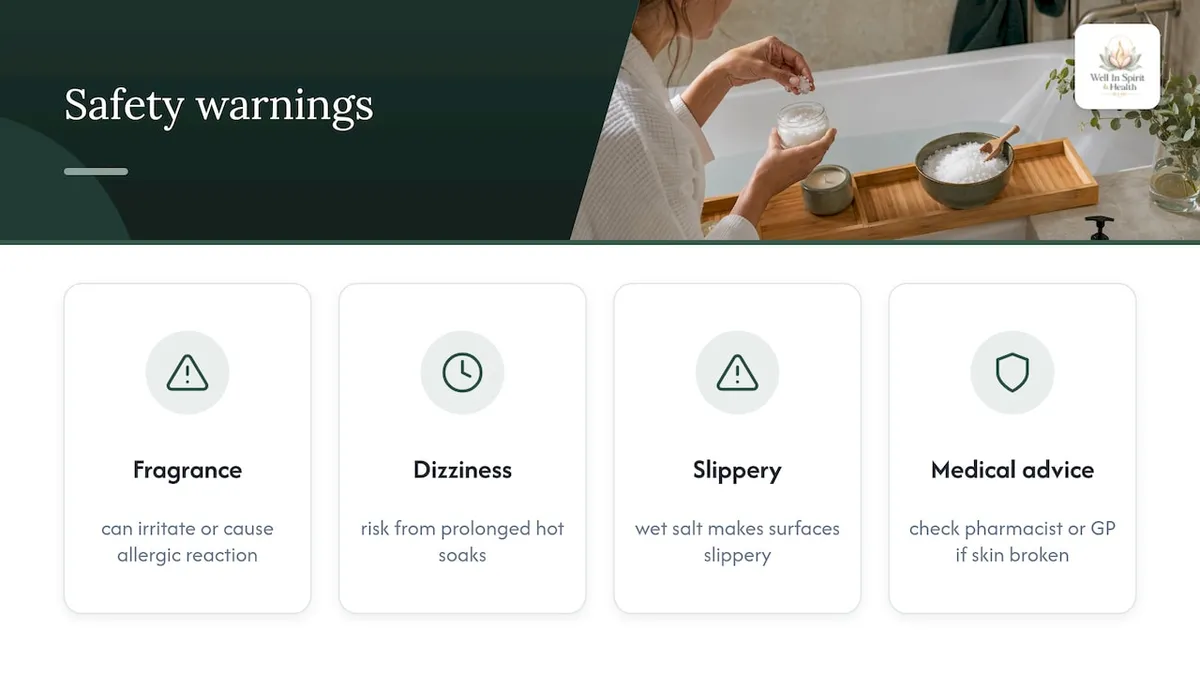
Bath salts are generally low-risk when used as directed, but a few things are worth knowing before you soak. Fragranced salts, whether the scent comes from essential oils or synthetic compounds, can trigger irritation or an allergic reaction in sensitive skin, which is why a patch test on a small area is sensible before a full bath.
Extended time in hot water, regardless of what’s dissolved in it, carries a risk of dizziness, low blood pressure or fainting, a caution DermNet’s balneotherapy guidance raises directly. Wet salt residue on the bath surface can also make getting in and out more slippery than usual, so a non-slip mat is a sensible precaution, particularly for children or older adults.
If you have open cuts, a skin infection or a diagnosed condition like severe eczema or psoriasis, check with a pharmacist or GP before adding salts or fragrance to bathwater, since some additives can sting broken skin or interfere with prescribed treatment. Stop use and seek advice if you notice new redness, swelling or a rash developing after a soak.
Synthetic versus natural bath salts
The core difference is composition: natural bath salts are mined or harvested minerals such as magnesium sulfate, Dead Sea salt or Himalayan rock salt, while synthetic versions are manufactured to mimic a similar mineral profile or scent at lower cost. For the soak itself, the practical difference is often small, since any mineral absorption through skin is probably minimal either way, and much of the benefit people report comes from warm water and routine rather than the salt’s exact origin.
Where the distinction matters more is fragrance and additives. Synthetic fragrance compounds are generally cheaper and more consistent between batches, but they’re also a more common trigger for skin reactions than naturally derived essential oils, though neither is risk-free for reactive skin. Natural salt blends with essential oils tend to cost more and vary slightly batch to batch, which some buyers value as a sign of a less processed product.
For sensitive skin, the safer comparison isn’t natural versus synthetic but fragranced versus fragrance-free, since that’s the factor most likely to cause irritation regardless of whether the base salt is mined or manufactured.
Why ritual and curation matter
A bath doesn’t need to do anything dramatic to be worth the time. The value is mostly in the pause: warm water, a few quiet minutes, and a scent you’ve chosen on purpose. I’d rather see someone pick one good salt and stick with a short evening ritual than rotate through five jars chasing a detox effect that the water itself probably isn’t delivering. The one step worth never skipping is moisturising straight after you towel off, while skin is still a little damp.
— Rob
Well In Spirit curated rituals: an easy, trusted starting point
If working through salt types, doses and ingredient panels sounds like more homework than you want before a bath, a ready-made ritual collection takes that decision off your plate. Our collections pair a considered salt or bath blend with aromatherapy oils and simple guidance, so the scent, texture and routine are already matched for you rather than left to trial and error.
- Some ritual collections start from around £30 and are built for an everyday wind-down soak.
- Others start at a higher price for a more involved, guided routine.
- These collections are designed for ease: open the box, follow the guidance, and the pairing decisions are already made.
Browse our full range of curated ritual collections to find one that matches your evening, or explore individual bath and body pieces if you’d rather build your own routine piece by piece.
FAQ
Is it better to soak in Epsom salt or baking soda?
It depends on the goal: Epsom salt (magnesium sulfate) is the more common choice for a warm, relaxing soak after exercise, while sodium bicarbonate is specifically recommended by Great Ormond Street Hospital for soothing dry, itchy or irritated skin. Neither is superior overall; choose Epsom for general relaxation and bicarbonate when sensitive skin comfort is the priority.
What is the best Epsom salt to purchase?
There’s no single best brand, since plain magnesium sulfate performs similarly regardless of packaging, so the more useful checks are purity, fragrance-free formulation if your skin is reactive, and a clear dose on the label. A curated blend that pairs Epsom salt with chosen oils, such as our ritual collections, suits readers who want the scent and routine decided for them.
Where can I buy bath salts?
Plain Epsom and bicarbonate salts are widely available from pharmacies and supermarkets at low cost, while specialist retailers and curated ritual sellers offer blended, presentation-led options better suited to gifting or a considered evening routine. Where you buy depends mainly on whether you want a basic functional product or a more complete sensory experience.
Are Himalayan bath salts the same as Epsom salts?
No, they’re chemically different: Himalayan salt is primarily sodium chloride with trace minerals, while Epsom salt is magnesium sulfate, and the two offer a different texture and soak feel. Himalayan salt is often chosen for its appearance and mild mineral soak, while Epsom salt is more commonly associated with post-exercise muscle comfort.