2 Hour to Full Day Home Spa Day Templates and Doctor Sourced Safety
Create a relaxing home spa day with ready 2 hour, half day, or full day templates, simple DIY recipes, and dermatologist vetted safety tips.
On this page
A relaxing home spa day follows one simple formula: prepare your space, pick 2 to 4 treatments, follow a timed routine, and finish with moisture and rest. You can build this around a quick 2-hour version, a half day, or a full day, and the same safety basics apply throughout, from patch testing new products per the American Academy of Dermatology to keeping bath water at a moderate temperature as described by Harvard Health.
TL;DR:
- A spa day routine should be carefully sequenced to prevent skipping steps or masks drying out, with each phase timed using a stopwatch.
- Moderate water temperature of about 100 to 105 degrees Fahrenheit is safest for soaking, and long exposures may pose risks for vulnerable individuals.
- Homemade treatments like sugar coffee scrubs and banana honey masks are effective when ratios and patch tests are correctly followed, especially for sensitive skin.
- Using dim lighting, battery candles, and warm towels enhances the atmosphere affordably, with small luxury items like silk pillowcases improving rest quality.
- People with serious health conditions or high-risk pregnancies should consult healthcare providers before hot baths or fragranced treatments to avoid adverse effects.
Quick templates and a checklist you can copy right now
Pick a template based on how much time you actually have, then swap in budget alternatives where they make sense.
The 2 hour express version works like this: spend 5 minutes setting the mood, do a quick body exfoliation, soak or steam for 20 to 30 minutes, apply a sheet mask, moisturize, then spend 10 minutes on hands and feet. A half day adds a hair mask, a facial steam, a proper manicure and pedicure, and a 30 minute rest or meditation block after the bath. A full day stretches the soak, adds a longer steam session, works in a self-massage, and leaves room for journaling or a second meditation block later in the afternoon.
Budget swaps keep the experience just as good without extra spending:
- Use a homemade sugar scrub instead of a store-bought exfoliant.
- Swap real candles for battery-operated ones near towels and fabric.
- Replace a store mocktail with herbal tea steeped a little stronger than usual.
- Make an eye pillow from a clean sock filled with dry rice instead of buying one.
Copy whichever list fits your day into a phone note so you are not hunting for steps mid-soak.
The step-by-step routine: prep, soak, and finish
A spa day works best when you treat it like a sequence rather than a pile of random treatments. Rushing the order usually means one step gets skipped or a mask dries out before you can rinse it.
- Prep the space. Tidy the bathroom, set out a robe and warm towels, put your phone in another room, set a timer, and pour a glass of water within reach.
- Warm up the water. Harvard Health points to a comfortable soak range of roughly 100 to 105 degrees Fahrenheit for most adults, warm enough to relax muscles without straining your heart or skin.
- Soak with intention. Give yourself 20 to 30 minutes in the tub or under a facial steamer, long enough for muscles to loosen without your skin turning waterlogged.
- Multitask carefully. Apply a hair mask before you get in, add a sheet mask once you are soaking, and finish with a foot soak on the way out so everything lands close to the same finish time, a layering trick recommended by AARP’s spa night guide.
- Rinse and moisturize. Rinse off any mask or bath residue, then apply moisturizer while your skin is still damp so it seals in water instead of letting it evaporate.
- Move the lymph. Spend a few minutes on self-massage, working from your extremities toward your heart, then finish with nail care.
- Rest. Lie down for 15 to 20 minutes, or nap if the day allows, and keep sipping water.
Pro Tip: Set a timer for each phase of your soak so you’re not guessing when to move to the next step, it keeps the whole routine from dragging or rushing.
DIY recipes and the safety rules that go with them
Homemade treatments are cheap and effective when the ratios and safety steps are right.
- Sugar coffee body scrub: mix 1 cup granulated sugar, 1/2 cup used coffee grounds, and 1/4 cup melted coconut oil, then massage onto damp skin for one to two minutes before rinsing.
- Banana honey face mask: mash half a ripe banana with 1 tablespoon honey, leave on skin for 10 to 15 minutes, then rinse with warm water.
- Avocado honey hair mask: blend half an avocado with 2 tablespoons honey and 1 tablespoon olive oil, apply root to tip, leave for 20 minutes under a shower cap, then wash out.
Most essential oils need dilution before touching skin, and some, including tea tree and eucalyptus, can be dangerous for pets or small children if used undiluted or inhaled directly, according to the Cleveland Clinic’s guide to essential oils. A safe general ratio is a few drops of essential oil per tablespoon of carrier oil such as jojoba or almond oil.
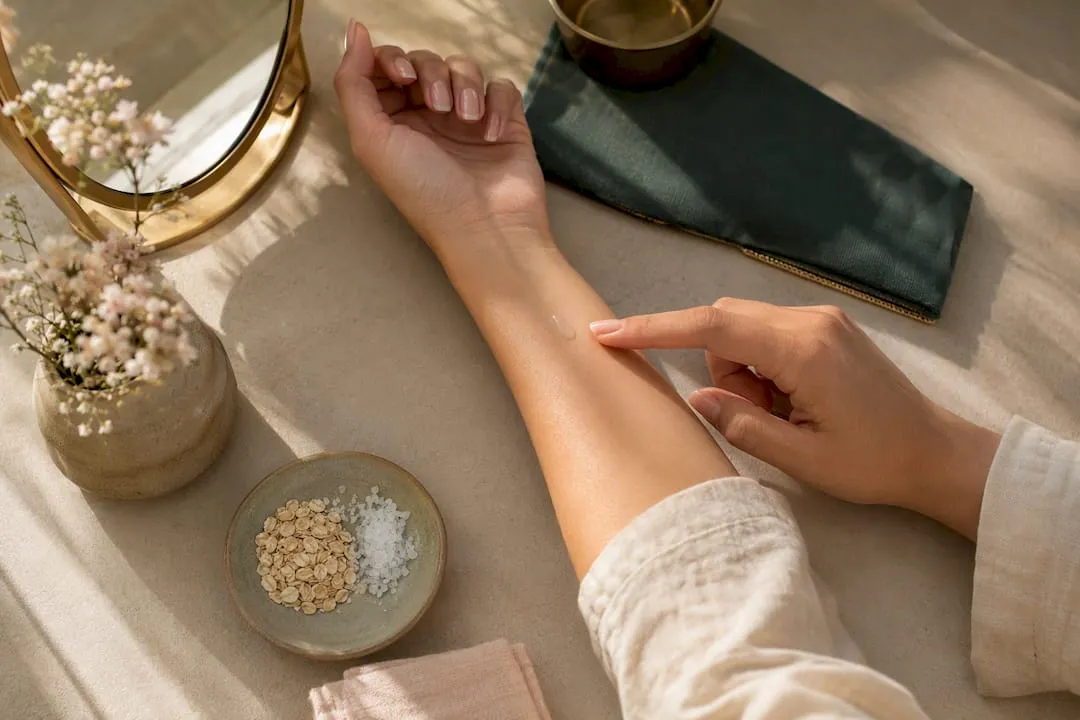
If you are pregnant or have sensitive skin, plain Epsom salts and colloidal oatmeal are gentler substitutes for fragranced bath products. Before using any new product on your face or body, follow the American Academy of Dermatology’s patch-test guidance: apply a small amount to your inner arm twice a day for about a week or more and watch for redness, itching, or swelling before using it more broadly.
Setting the mood without spending much
The atmosphere matters as much as the treatments themselves.
- Play something slow and instrumental at a low volume, loud enough to mask household noise but quiet enough to fade into the background.
- Use dimmable lights or battery candles rather than open flames near towels and robes, and keep your diffuser away from paper and fabric.
- Warm your towels in the dryer for five minutes before your bath, and consider a silk pillowcase for the rest period afterward since it creates less friction on skin and hair than cotton.
- Small extras that feel luxurious but cost little include a rice-filled eye pillow, a wooden bath tray for tea or a book, and a basin for a simple foot soak.
Health and safety notes worth reading before you start
A few precautions keep a relaxing day from becoming an uncomfortable one.
- Skip very hot baths, saunas, or hot tubs if you have an unstable heart condition, since Harvard Health notes that while moderate hot bathing is linked to lower cardiovascular risk in observational research, high temperatures and long exposures carry real risk for vulnerable people.
- If you are pregnant, avoid hot tubs and saunas entirely and keep bath water under a safe, warm temperature suitable for pregnancy, with fragrance-free Epsom salts or colloidal oatmeal as safer soak additives, per Cleveland Clinic guidance on hot tub safety during pregnancy.
- Rinse off after using bath bombs or heavily fragranced products, since the Cleveland Clinic notes that residue left on skin can trigger irritation later, especially for people prone to eczema.
- Talk to a healthcare provider before your spa day if you have a serious skin condition, an unstable heart condition, or are managing a high-risk pregnancy.
Why small rituals beat occasional indulgence
A once-a-year spa day feels nice, but a short ritual repeated weekly does more for how you actually feel day to day. Consistency, not scale, is what makes self-care stick. Guided collections can support that habit, never a substitute for making it your own. Pick one ritual and keep it.
— Rob
Let Well In Spirit & Health handle the planning for you
Building a spa day from scratch takes time most people do not have on a Tuesday night. Well In Spirit & Health packages the products and the guided steps together, so you get the treatment, the sequence, and the presentation without piecing it together yourself.
Each ritual collection is built around a specific mood or occasion rather than a generic bundle:
- The Awakening Ritual and Forest Spirits Spa Ritual for grounding, spiritual-themed self-care.
- The Snowfall Stillness Ritual and Yuletide Magic Ritual for seasonal, winter-focused rituals.
- The Zodiac Self-Care Collection and Birthday Queen Ritual for personal milestone rituals.
For skin and body basics to round out any ritual, a gentle option like Maison Dovellé’s lavender and rosemary soap pairs well with sensitive skin, and a Bella-Lu silk pillowcase set extends the rest phase of your routine. If you would rather browse and build your own combination, the rituals and bath & body shop is the place to start.
Sources
- Essential oils 101: Do they work and how do you use them? - Cleveland Clinic
- Hot baths and saunas: Beneficial for your heart? - Harvard Health
- How to test skin care products at home - American Academy of Dermatology (AAD)
FAQ
What are the must-haves for a spa day at home?
The essentials are a clean, tidy space, warm towels, a robe, one or two treatments like a mask and a scrub, and enough time set aside without interruptions. A timer helps you move through soaking, treatment, and rest without rushing any step.
What does a full spa day include?
A full spa day typically includes a longer soak or steam, a hair mask, a facial treatment, a body scrub, nail care, self-massage, and a rest or meditation period afterward. It follows the same prep, treat, and finish structure as shorter versions, just with more time in each phase.
What are some ideas for a spa day at home on a budget?
Homemade scrubs from sugar and coffee grounds, battery candles instead of real ones, and a rice-filled sock as an eye pillow all recreate a spa feel without extra spending. Herbal tea brewed strong can also stand in for a store-bought spa drink.
What are some ideas for a home pamper day?
A home pamper day can be as simple as a warm bath, a face mask, and a nap, or as involved as a full routine with hair treatment, manicure, and self-massage. The key is picking two to four treatments you actually enjoy rather than trying to do everything at once.