Selenite crystal meaning: what it stands for and how to use it
Selenite crystal meaning explained: the traditional themes of clarity, calm and renewal, plus simple home rituals and care tips from Well In Spirit.
On this page
In crystal lore, selenite stands for clarity, calm and a fresh start. It is a pale, softly glowing stone that people keep nearby to mark the end of a busy day and to make a room feel lighter. That meaning comes from tradition and personal ritual, not from science, so treat it as a gentle prompt rather than a promise.
This article explains what selenite is, where its meaning comes from, and how to use it at home in simple ways. It also covers how to look after it, because selenite is soft and marks easily. It is for anyone curious about crystals, and for people choosing a thoughtful gift for someone who likes them.
TL;DR
- Selenite is a soft, translucent form of gypsum, and its traditional meaning is clarity, calm and renewal.
- It is linked in crystal lore to the crown chakra and to a clean, quiet feeling in a room.
- Use it as a wind-down ritual, on a shelf, or as a small plate to rest other stones on.
- Never soak it in water, because it is soft and can dissolve or cloud over time.
- It supports a mood and a routine, and it does not treat any health condition.
What selenite actually is
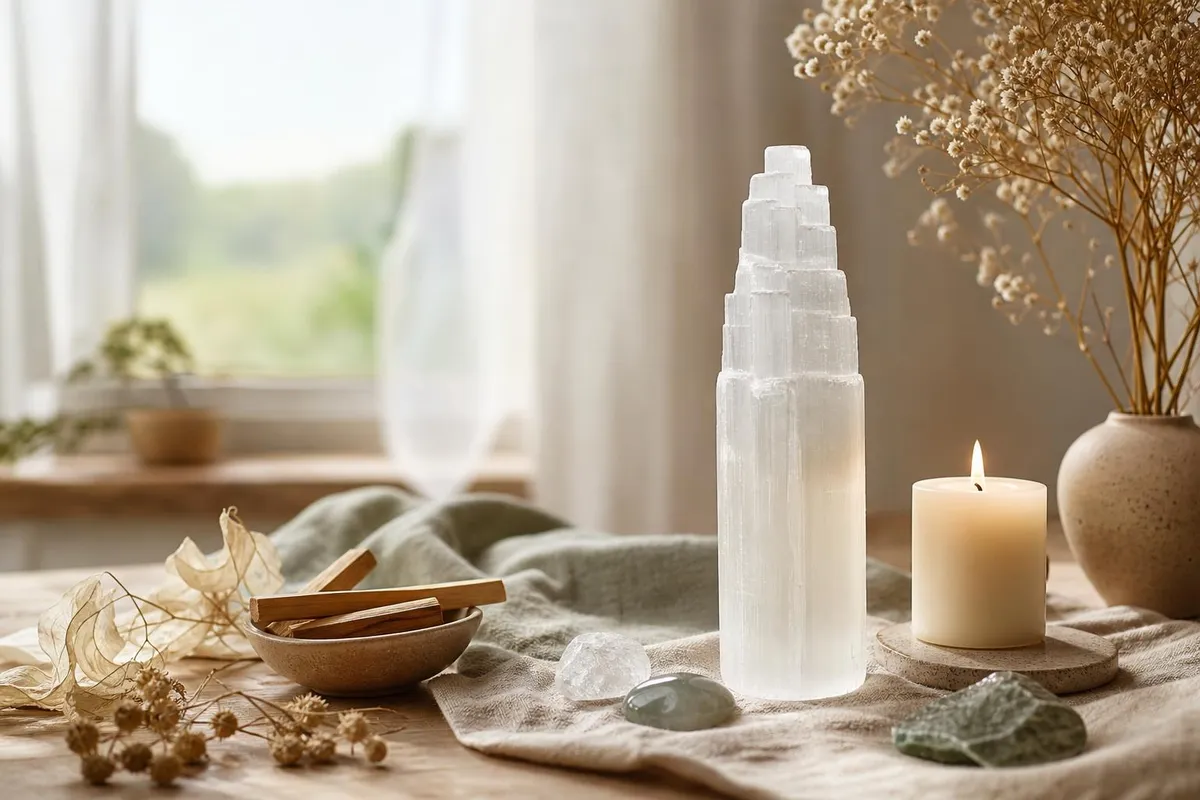
Selenite is a crystal form of gypsum, a soft mineral. It is usually white or clear, with a silky, pearly sheen and fine lines running along its length. The name comes from the Greek word for the moon, which is one reason it is tied so closely to moonlight and calm.
It is very soft. You can scratch it with a fingernail, which is unusual for a crystal. That softness shapes how you handle it and where you keep it.
In shops you will usually find it in a few shapes:
- Wands: long, slim sticks, good for a shelf or a desk.
- Towers and lamps: chunky pieces, often lit from inside to give a warm glow.
- Charging plates: flat discs or slabs for resting other stones and jewellery on.
- Raw sticks and fans: rough, natural pieces with a fan-like edge.
Be aware that some pale stones are sold under similar names. Satin spar, for example, is a fibrous gypsum that looks a little different. If you want to compare selenite with other common stones, our plain guide to 10 common stones is a good place to start.
Selenite crystal meaning
In crystal tradition, selenite is the stone of clarity. People reach for it when they want a clear head, a tidy mind or a calm space. It is also linked with renewal, which is why it often turns up at the start of a new month, a new year or a fresh routine.
The common themes are:
- Clarity: sorting through a muddle of thoughts and deciding what matters today.
- Calm: a quiet, still feeling, much like moonlight in a dark room.
- Cleansing: a sense of clearing the air, in a room or in a ritual.
- Fresh starts: marking a change, a move or a new chapter.
None of this is proven by research. A crystal cannot change your thoughts or your health. What it can do is act as a physical cue. You pick it up, you pause, and you take a breath, and that small pause is the useful part.
Many people find that a simple object tied to an intention makes it easier to stick to a habit. Selenite works well for that because it looks calm and sits happily almost anywhere.
Selenite and the crown chakra
In chakra teaching, selenite is most often linked to the crown chakra. This is the energy centre said to sit at the top of the head, and it stands for awareness, stillness and a sense of connection. Selenite is also sometimes paired with the third eye, which relates to intuition.
Chakras come from older Indian spiritual traditions. They are not a medical idea, and there is no scientific test for them. Most people today use them as a framework for reflection, a way to ask how they are feeling and what they need.
If you like that approach, here is a simple way to use it:
- Sit comfortably with the selenite in your hands or resting in your lap.
- Breathe in for four counts and out for six, five or six times.
- Ask yourself one question, such as what do I need to let go of today.
- Sit quietly for a minute before you carry on.
For the full picture of the seven centres and the stones people pair with them, see our guide to crystals for chakras.
Pro Tip: Pair the question with a time of day. Asking it at the same point each evening, such as when you put the kettle on, makes the ritual much easier to remember.
How to use selenite at home
The best uses are small and easy to repeat. You do not need a special room or a lot of time. Five minutes is plenty.
A wind-down ritual
Dim the lights, put your phone out of reach and hold a wand or a small piece in your hands. Take a few slow breaths. The NHS offers advice on sleep habits, including a regular bedtime routine and a relaxing wind-down, and a short ritual like this fits neatly inside that.
On a shelf or desk
Place a tower or lamp where you will see it, such as your desk, bedside table or windowsill. Let it be a visual reminder to pause. A selenite lamp also gives a soft light that suits evenings.
In a meditation or journalling session
Rest a piece beside your notebook while you write. Use it as a marker for a time that is just for you, with no emails and no chores.
Pro Tip: Keep your selenite on a small dish or cloth rather than loose on a hard surface. It will stay free of scratches and chips for far longer.
Using selenite with your other crystals
Selenite is best known as the stone that people use to reset other stones. The idea is that resting a crystal on a selenite plate, or running a wand over it, leaves it feeling refreshed. This is a ritual belief, not something you can measure, but many people enjoy the habit.
A simple way to do it:
- Gather the stones you use most, such as the ones from your desk or bedside.
- Place them on a dry selenite plate, or lay a wand beside them.
- Leave them for a few hours or overnight.
- Put them back where you use them, with a short intention for the week ahead.
You can also use the plate as a small altar centrepiece. Put a candle, a favourite stone and a card from your oracle deck on it for a weekly check-in.
If you are building a collection for feeling settled at home, selenite sits nicely alongside the stones in our guide to crystals for protection. People often keep a few of those near the front door and a piece of selenite in the living room or bedroom.
How to care for selenite
This is the section that saves your stone. Selenite is soft and sensitive to water, so the usual advice for hardier crystals does not apply.
- Keep it dry. Do not soak it, rinse it or leave it in a damp bathroom. Water can dull the surface and, over time, wear the stone away.
- Dust it gently. Use a soft, dry cloth or a clean make-up brush.
- Avoid knocks. It scratches easily, so keep it away from keys, jewellery and rough surfaces.
- Skip strong sunlight. Long exposure may dry or dull the surface of some pieces.
- Handle thin wands with care. They can snap if dropped.
If you want to refresh it, simply set it somewhere quiet and dry. Avoid placing it close to a candle flame or any heat source.
Pro Tip: Wrap each piece in a soft cloth or tissue if you store it in a drawer, and keep wands flat rather than standing upright, where they are easier to knock over.
Selenite compared with amethyst and rose quartz
If you are choosing between a few stones, it helps to know what each one is traditionally for. Selenite is about clarity and calm. Amethyst is about rest and a settled mind. Rose quartz is about gentleness and self-kindness.
- Selenite: pale and glowing, soft, suits a wind-down or a clear-out ritual.
- Amethyst: purple, much harder, popular near a bed. Our guide to amethyst crystal meaning explains why.
- Rose quartz: soft pink, associated with warmth and compassion. See our rose quartz meaning guide.
The three work well together on a tray or shelf. Selenite beneath the others gives you a clean, light base, and the colour of the other stones adds interest.
One practical difference is durability. Amethyst and rose quartz are much tougher, so they cope better with being carried in a pocket or bag. Selenite is best kept at home.
Selenite as a gift, and a note on wellbeing
A small selenite piece makes a calm, low-pressure gift. A wand or a little tower suits someone who likes quiet corners and evening rituals. A charging plate suits someone who already owns a few crystals. Pair it with a candle and a note about the ritual you hope they enjoy.
Remember what a crystal can and cannot do. It is a pleasant object that can anchor a habit. It does not treat stress, low mood or poor sleep. The NHS Every Mind Matters pages and Mind both offer practical ideas for looking after your wellbeing day to day.
Habits like going to bed at a regular time and winding down without screens are also covered by The Sleep Charity. If low mood, anxiety or poor sleep goes on for a while, speak to your GP. The Mental Health Foundation also has helpful information on looking after your mental health.
We have sold crystals for a while now, and selenite is the one customers most often break. It is lovely to look at and very easy to scratch. Our advice is to buy one piece you will actually use, keep it on a dish at home and treat it gently. We also think the ritual matters more than the stone. If a few quiet minutes with something pretty helps you end the day well, that is a good reason to own it.
- The Well In Spirit team
About Well In Spirit
Well In Spirit is a small UK shop for self-care gifts and rituals. If selenite appeals because you want calmer evenings, The Better Sleep Ritual is a gentle place to begin, built around winding down. The Sunday Reset suits a fresh-start feeling at the end of the week. You can browse crystals, candles and more on our home page or see our gift ideas. Our members' library of guided meditations is there too, if you would like someone to talk you through a quiet few minutes.
Frequently asked questions
What is selenite good for?
In crystal tradition, selenite is linked with clarity, calm and renewal. People use it as a focus for evening rituals, meditation and tidying a space. It is not a medical treatment, and there is no scientific evidence that it affects health. Think of it as a pretty reminder to slow down.
Can selenite go in water?
No. Selenite is a soft form of gypsum and water can dull it and wear it away over time. Keep it dry, dust it with a soft cloth and avoid damp rooms such as bathrooms. If it does get wet, pat it dry straight away.
Where should I put selenite at home?
Choose a dry, stable place you will see often, such as a bedside table, desk or shelf. Place it on a small dish or cloth to protect it from scratches. Keep it away from sinks, steamy rooms and busy spots where it could be knocked.
Is selenite the same as satin spar?
They are closely related, but not identical. Both are forms of gypsum. Selenite is usually clear to white and more crystalline, while satin spar is fibrous with a silky, striped look. Shops sometimes use the names loosely, so check the description if it matters to you.
Sources
- Sleep and tiredness, NHS
- Every Mind Matters, NHS
- Tips for everyday living, Mind
- The Sleep Charity, The Sleep Charity
- Mental Health Foundation, Mental Health Foundation