How to create a bath ritual at home: a simple UK guide
Learn how to create a simple bath ritual at home, with a 30-minute step-by-step sequence, tips on salts and scents, and easy wind-down advice.
On this page
A bath ritual is a short, repeatable routine around a bath: you set the room, run comfortably warm water, add one or two simple things you enjoy, soak without a screen, and finish slowly. It feels calming because the steps are the same each time, so you start to slow down before you get in.
This guide is for anyone who wants a calmer evening at home, and for people buying a thoughtful present for someone who rarely stops. We cover the set-up, a 30-minute sequence, choosing salts and scents, winding down for sleep, safety, and how to keep it going.
TL;DR
- A bath ritual is a fixed, simple sequence: prepare, soak, finish gently.
- Keep the water comfortably warm rather than hot, and keep your phone out of reach.
- One or two sensory touches, such as a candle and bath salts, are enough.
- Have your towel, drink and clean clothes ready before you run the water.
- Check with a GP or pharmacist if you have skin problems, are pregnant or have a health condition.
What a bath ritual actually is
A bath is something you do. A ritual is something you do on purpose, in the same order, with attention. The difference is small, and it matters.
Most of us bathe while thinking about tomorrow. A ritual gives the time a shape: a beginning, a middle and an end. That shape marks this half hour as yours.
You do not need a spa bathroom. A rented flat with a plain white tub works perfectly well. If you only have a shower, you can borrow the idea with a warm foot soak and the same steps.
A ritual is not a treatment. It will not fix a bad week or a health problem. What it can do is give you a reliable pause, and for many people that pause is what they were missing.
Mind's information and support pages are a good place to read about looking after your wellbeing, and a regular bath can sit alongside the everyday habits they describe.
Set the room before you run the water
Most of the calm comes from preparation. If you step out of the bath and realise the towel is in the airing cupboard, the spell breaks.
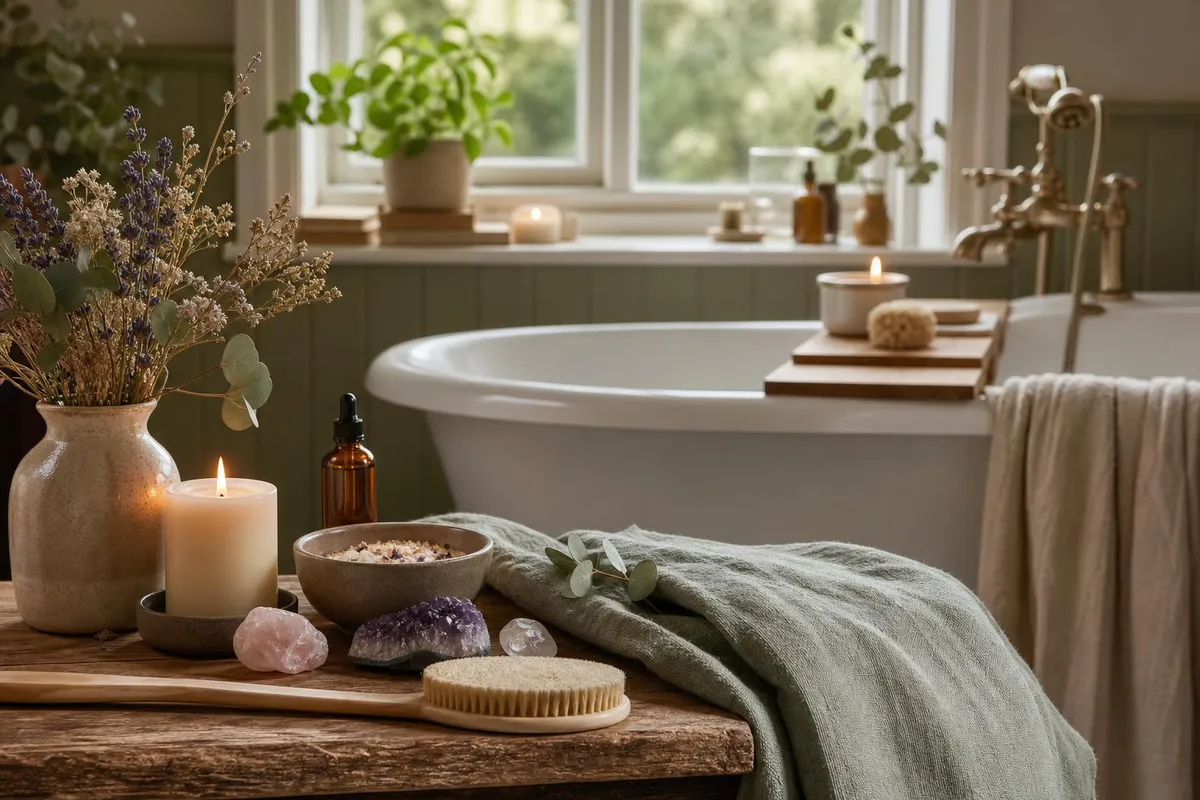
Spend five minutes on the basics:
- Wipe round the tub and clear the edge of bottles.
- Put a clean towel on the radiator or a chair.
- Lay out soft clothes, such as pyjamas or a robe.
- Fill a glass of water and set it within reach.
- Place a candle on a steady, dry surface away from towels and shelves.
- Turn off the main light and use a lamp or the candle.
Put your phone in another room. If you want music, load a playlist first, then leave the phone outside the door and use a small speaker.
Pro Tip: Keep a small basket in the bathroom with your candle, matches, a flannel and your salts. When everything lives in one place, the ritual takes no effort to start.
Never leave a lit candle unattended, and blow it out before you leave the room.
A simple 30-minute sequence
This is a template. Change it freely, but keep the order the same each time.
- Minutes 0 to 5: Light the candle, run the bath and add your salts, or a bath product that is made for the bath and diluted as the label directs.
- Minutes 5 to 8: Test the water with your elbow. It should feel comfortably warm, not hot. Get in slowly.
- Minutes 8 to 20: Lie back. Breathe in for four counts and out for six, about ten times. Then let your mind wander, or read a few pages of a paper book.
- Minutes 20 to 25: Wash your face or gently exfoliate your arms and legs if you like.
- Minutes 25 to 30: Pull the plug, stand up slowly, pat yourself dry and apply moisturiser while your skin is still slightly damp.
You do not have to stay in for the full time. If you feel light-headed or too warm, get out, sit down and drink some water.
Finish with one small closing act, such as blowing out the candle or writing one line in a notebook. That act marks the end of the ritual.
Choosing salts, oils and scents
Keep it simple. One scent and one texture is plenty. Too many products make the water feel busy rather than restful.
Bath salts
Look for short ingredient lists and be careful with anything heavily fragranced if your skin is easily irritated. Our guide to the best bath salts in the UK covers sensitive skin and safety in more detail.
Aromatherapy oils
Essential oils are strong and should never be poured straight into the water, as they float and can sit on the skin. Follow the dilution guidance on the product, and read our beginner's guide to aromatherapy oils before you buy.
Scent by mood
- Lavender or chamomile for a slow, quiet evening.
- Citrus, such as orange or grapefruit, for a lighter mood on a grey afternoon.
- Frankincense or sandalwood for a calm, grounded feel.
These are about atmosphere and enjoyment, not treatment. If a scent gives you a headache or irritates your skin, stop using it.
Using the bath to wind down for sleep
If your aim is a calmer evening, timing matters. The NHS sleep and tiredness advice recommends a regular wind-down routine before bed, and a warm bath can be part of one. Try to finish the bath an hour or so before bed, so you are not rushing from the tub to the pillow.
Keep the evening version quieter than the daytime one:
- Use low light and skip the music, or choose something very soft.
- Make the water comfortably warm and the room not too hot.
- Avoid screens before and after.
- Follow the bath with something calm, such as herbal tea, a few pages of a book or gentle stretching.
If sleep is a regular struggle, The Sleep Charity offers practical guidance on routines, and a GP can help if it continues.
Pro Tip: Keep your pyjamas on the radiator while you bathe. Stepping into warm clothes makes the move from bath to bed feel like part of the same ritual.
For more ideas, our sleep ritual menu lets you mix and match 30 to 60 minute routines.
Keeping it safe and comfortable
A ritual should feel good, not leave you dizzy or itchy. A few sensible rules cover most situations.
- Keep the water comfortably warm. Very hot baths can leave you faint when you stand up.
- Stand up slowly and hold the side of the tub.
- Do not bathe if you have been drinking alcohol or feel unwell.
- Patch test new products on a small area of skin first.
- Rinse off and moisturise afterwards, especially in winter when heating dries the air.
If you have eczema or very dry skin, many bath products can irritate it. The NHS page on atopic eczema is a good starting point, and a GP or pharmacist can advise on bathing and emollients.
If you are pregnant, have heart problems, low blood pressure or another health condition, ask your GP or midwife whether a warm bath is suitable and what temperature is right for you.
None of this is meant to put you off. A few minutes of care means you can relax properly.
Making it a habit that lasts
The ritual works best when it is regular and easy. A short bath every Sunday is worth more than an elaborate one twice a year.
Pick a fixed slot. Sunday evening suits many people because it eases the step into the week. Others prefer Friday, to mark the end of work. Put it in your diary as you would any appointment.
Keep a short version for tired days. Ten minutes, one candle and no extras still counts. Skip the guilt if you miss a week and simply start again.
Notice how you feel afterwards. The Mental Health Foundation publishes advice on everyday habits that support wellbeing. If low mood or poor sleep carries on for weeks, speak to a GP rather than relying on a bath alone.
When you want to build the bath into a longer break, our home spa day templates show how it fits alongside a face mask, a hair treatment and a quiet lunch.
Giving a bath ritual as a gift
A bath ritual is a good present for someone who always puts others first. It says: here is permission to stop.
Choose a small set of things that belong together:
- A candle.
- A jar of bath salts or a bath treat.
- A soft flannel or eye mask.
- A short handwritten note suggesting a night to use it.
Keep scents gentle, and avoid strong fragrance if you do not know their preferences. A note about the ritual matters as much as the products, because it gives the gift a purpose.
If you are buying for someone with sensitive skin, choose unscented or lightly scented items and include the ingredients list.
We see the same thing every season: the gifts people love most are the ones that give them an evening back. A bath ritual does that simply. We would rather you buy fewer, better things and add a note than fill a basket with products nobody has time to use. Start with one candle and some salts, and build from there.
- The Well In Spirit team
About Well In Spirit
If you would like a ready-made starting point, Well In Spirit is a UK self-care gift shop, and you can browse everything on our gifts page. None of it is essential. A candle, some warm water and half an hour is enough.
Frequently asked questions
How often should I have a bath ritual?
Once a week is a realistic start, and many people choose Sunday evening. You can add more if you enjoy it. Regular and simple beats occasional and elaborate. If your skin is dry, you may prefer shorter baths and good moisturiser afterwards.
How long should a bath ritual last?
Around 30 minutes covers preparation, the soak and a slow finish. The soak itself can be 10 to 20 minutes. If you feel too warm or light-headed, get out sooner. A shorter ritual that you repeat is better than a long one you skip.
Can I do a bath ritual without a bath?
Yes. Use a warm foot soak in a basin, or a slow, warm shower with the lights low. Keep the same steps: set the room, use one scent, take time and finish gently with moisturiser and comfortable clothes.
Are bath salts and oils safe for everyone?
Not always. Fragranced products can irritate sensitive or eczema-prone skin, and essential oils need correct dilution. Patch test first and follow the label. If you are pregnant or have a health condition, check with your GP, pharmacist or midwife before using them.
Sources
- Sleep and tiredness, NHS
- Atopic eczema, NHS
- Information and support, Mind
- The Sleep Charity, The Sleep Charity
- Mental Health Foundation, Mental Health Foundation