Citrine crystal meaning: what it stands for and how to use it
Discover citrine crystal meaning, what this sunny yellow quartz stands for, how to spot natural stone and simple ways to use it at home.
On this page
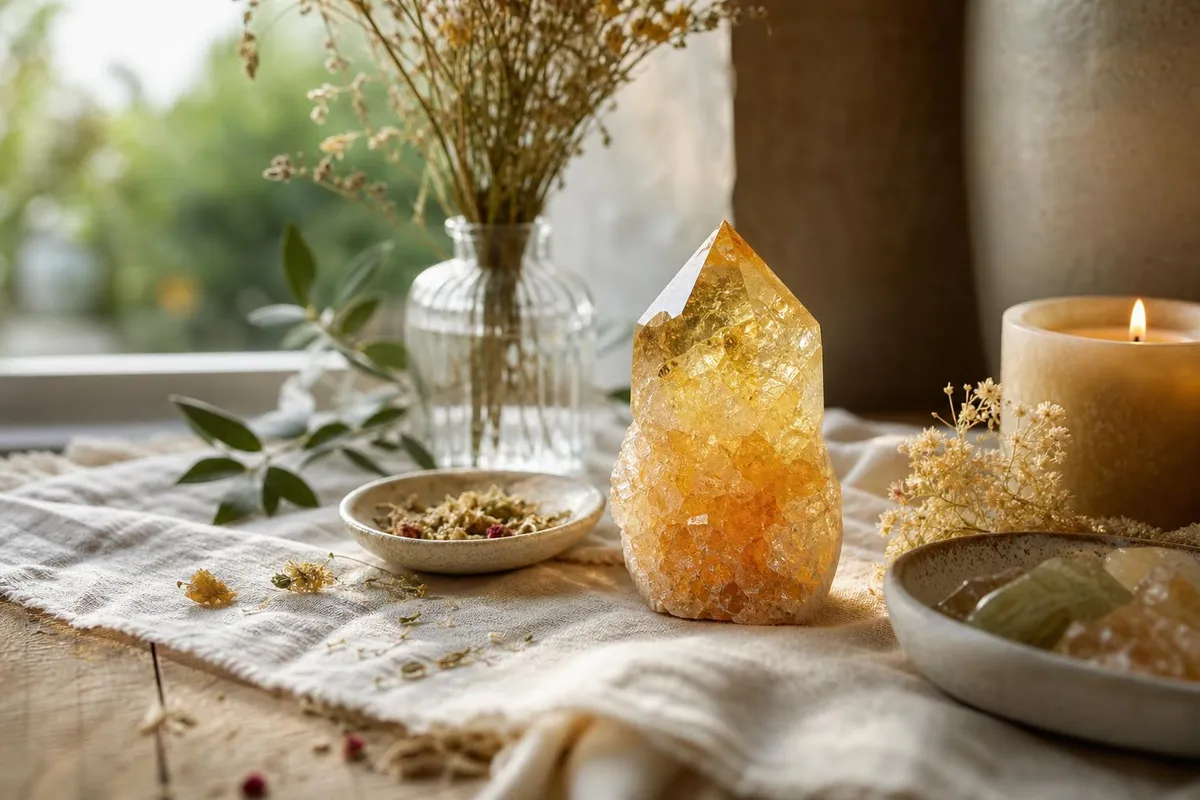
Citrine is a yellow to golden-orange form of quartz, and in crystal lore it stands for warmth, confidence, optimism and a sense of getting going. People often call it the sunny stone. It is a symbolic meaning, not a medical one, and it works best as a prompt for a habit you already want to build.
This guide explains where citrine comes from, what it traditionally represents, how to tell a natural stone from a heat-treated one, and how to use it at home in small, realistic ways. It is for anyone curious about their first citrine, and for anyone choosing one as a gift.
TL;DR
- Citrine is yellow quartz, linked in crystal lore with warmth, confidence and fresh starts.
- Much of the citrine sold in shops is heat-treated amethyst, which is common and nothing to be alarmed by, but worth knowing.
- It is traditionally tied to the solar plexus chakra, the centre of personal drive and self-belief.
- Easy uses include a desk stone, a morning pocket ritual and a journalling companion.
- Crystals support a mood or routine; they do not treat anything, so see a GP if low mood or worry lingers.
What citrine is
Citrine is quartz that gets its colour from traces of iron. The shades run from pale lemon to deep honey and burnt orange. It is a close relation of amethyst, clear quartz and smoky quartz.
Natural citrine is not especially common. Much of what you will find in shops, including many pieces labelled as citrine, started life as amethyst or smoky quartz and was heated to turn it yellow. The colour change is permanent, and the stone is still quartz.
The name is generally said to come from the French word for lemon, which tells you how people have long seen it. It is hard enough to wear as a ring or pendant without much worry.
If you are new to crystals, it helps to see citrine next to other familiar stones. Our plain guide to 10 common crystal meanings puts it in context, so you can pick a stone for the feeling you want rather than the one that happens to be on the shelf.
What citrine stands for
In crystal tradition, citrine is the stone of brightness. It is linked with the following ideas.
- Warmth and optimism: a nudge towards seeing what is going well.
- Confidence: the quiet sort, such as sending the email or speaking up in the meeting.
- Motivation: energy for starting things, from a new project to a tidy kitchen.
- Abundance: often called the merchant's stone, and sometimes kept near a till or a work desk to stand for prosperity and good decisions.
None of this is proven, and no stone will change your circumstances. What a crystal can do is act as a visible reminder. If you pick up your citrine each morning and say what you plan to do that day, the habit is the useful part.
NHS Every Mind Matters offers simple, practical ideas for looking after your mood, and a citrine ritual can sit alongside them. If you also love gentler stones, rose quartz sits at the softer, more tender end of the same spectrum.
Natural or heat-treated citrine
This is the question buyers ask most, and the honest answer is that you often cannot tell by eye alone. Still, a few clues help.
Signs of natural citrine
- A pale, smoky, slightly uneven yellow, sometimes with a hint of brown.
- Colour that is gentle rather than vivid.
- A higher price for a raw, untreated piece.
Signs of heat-treated stone
- A strong, even orange or reddish-gold.
- Clusters that are white or pale at the base and darker at the tips, which is typical of heated amethyst.
- A low price for a large, vivid cluster.
Heat-treated citrine is widely sold and perfectly acceptable as a decorative or symbolic stone. What matters is that a seller is open about it. If a shop cannot tell you where a piece came from, ask, or choose something else.
If you like the idea of the original stone, our guide to amethyst crystal meaning explains the calmer purple partner of many a golden cluster.
Pro Tip: Hold a piece up to a window. Natural citrine often looks a little cloudy and pale, while a deep, glassy orange is more likely to have been heated. This is a rough guide only, but it helps you know what you are paying for.
Citrine and the solar plexus chakra
In chakra teaching, citrine belongs to the solar plexus, the yellow energy centre found just above the navel. This is the traditional home of personal power, self-belief and the sense of being able to act. It is a belief system rather than a body-science one, but many people find the framework a useful way to think about confidence.
When you feel stuck, indecisive or a little flat, you might reach for a yellow stone and spend a few minutes on something that builds a sense of agency.
- Place the citrine on your stomach, above the navel, while you lie down for five minutes.
- Breathe slowly and name one thing you will do today.
- Finish by writing down a single small step.
If you want the full picture, read our guide to the solar plexus chakra. For how each of the seven centres pairs with a stone, there is also a page on crystals for chakras.
Treat all of this as reflection time. It is not a treatment for low confidence or anxiety, and if those feelings are heavy or lasting, a GP is the right first call.
Simple ways to use citrine at home
You do not need a special altar. Citrine is a good first crystal because it suits ordinary spaces.
- On your desk: a small tumbled stone near your keyboard is a cue to begin, and a cue to pause.
- In a pocket or bag: something to hold before a difficult call or the school run.
- By the front door: a bowl with a piece of citrine, so you see it as you leave.
- Beside your journal: use it as a paperweight while you write three lines on what you want from the week.
- On a windowsill, briefly: sunlight suits the theme, but strong direct sun can fade the colour in some stones, so do not leave it there all summer.
Pairing a stone with a habit works better than owning a stone and hoping. Choose one habit, such as a ten-minute walk, and let the crystal be the sign you have started.
Many people also like a candle with their routine. A soy candle in a warm, citrusy or woody scent suits the sunny theme, though any scent you enjoy will do.
Pro Tip: Keep one citrine in the place where you usually lose momentum, such as the corner of the sofa or next to the laptop. The stone is less about magic and more about interrupting the slump.
A ten-minute morning ritual with citrine
This is a gentle routine for a weekday morning, and it needs only a stone, a pen and a drink.
- Minutes one to two: open the curtains and let in daylight. Hold the citrine in your non-dominant hand.
- Minutes three to five: breathe in for a count of four and out for a count of six. Notice the weight and temperature of the stone.
- Minutes six to eight: write down the one thing that matters most today, and one thing you are looking forward to, however small.
- Minutes nine to ten: say your intention aloud in a single sentence, such as, "I will start with the hardest task." Put the stone in your pocket.
A regular routine can sit alongside good sleep habits. The NHS sleep and tiredness pages cover practical habits such as keeping regular hours, and this ritual fits easily into that kind of rhythm.
If mornings are not your thing, flip it. Hold the stone at the end of the day and write what went well. The point is to notice your own progress.
Mind shares everyday ideas for looking after your wellbeing, and a small ritual like this is one way to build them in without making it a chore.
Caring for citrine and pairing it with other stones
Citrine is easy to look after. Wipe it with a soft, slightly damp cloth, then dry it. Avoid harsh cleaners. Keep it away from long spells in strong sun, and store it apart from softer stones so they do not scratch each other.
Many people like to "cleanse" a crystal as a ritual reset. You can pass it through the smoke of incense or palo santo, or rest it on a piece of selenite. Take care with selenite itself: it dissolves in water, so never rinse it. Our guide to selenite crystal meaning explains how to look after it.
Stones that sit well beside citrine
- Clear quartz: for a clean, simple intention.
- Amethyst: to balance the brightness with calm.
- Rose quartz: to add kindness towards yourself.
The Mental Health Foundation shares information on looking after your wellbeing in many ways. A crystal is a pleasant addition to that list, not a replacement for professional support when you need it.
We often see people buy citrine when they feel they have lost their spark. Our honest view is that the stone is less important than the five minutes you set aside for yourself. We like citrine because it is cheerful, easy to carry and good at starting a routine. Pick one you like the look of, pair it with one habit, and give it a few weeks before judging whether it suits you.
- The Well In Spirit team
About Well In Spirit
If you would like crystals as part of a wider evening or weekend routine, our shop has stones, soy candles, incense and palo santo, alongside ritual boxes such as The Sunday Reset and The Better Sleep Ritual. They are a kind way to give someone a pause in the week. You can browse our gifts for her if you are choosing for someone else. The members' library also has guided meditations, which pair well with a morning citrine moment if you would rather be led than sit in silence.
Frequently asked questions
What is citrine crystal meaning in simple terms?
Citrine is traditionally linked with warmth, optimism, confidence and motivation. People keep it as a reminder to start things and to notice what is going well. It is a symbolic meaning rather than a proven effect, so treat it as a prompt for a habit you already want to build.
Is citrine the same as yellow quartz?
Yes, citrine is a yellow to orange variety of quartz. Natural pieces are fairly pale and not very common. Many shop stones are heat-treated amethyst or smoky quartz, which still count as quartz and are widely sold. A good seller will tell you which you are buying.
Where should I keep citrine at home?
Anywhere you want a cheerful cue: your desk, a bag, a bowl by the door or next to your journal. Avoid leaving it in strong direct sun for long periods, because the colour of some stones can fade. A shelf in good daylight is usually fine.
Can citrine help with anxiety or low mood?
No crystal treats anxiety or low mood. Holding a stone as part of a calming routine may give you a moment to pause, but that is self-care, not treatment. If worry or low mood lasts, speak to your GP or visit the NHS website for support.
Sources
- Every Mind Matters, NHS
- Sleep and tiredness, NHS
- Tips for everyday living, Mind
- Mental Health Foundation, Mental Health Foundation