Get Well Care Package Ideas: What to Put in One, and What to Skip
Get well care package ideas for home or hospital: what to include, what hospitals won't accept, and how ready-made boxes compare, with safe aromatherapy advice.
On this page
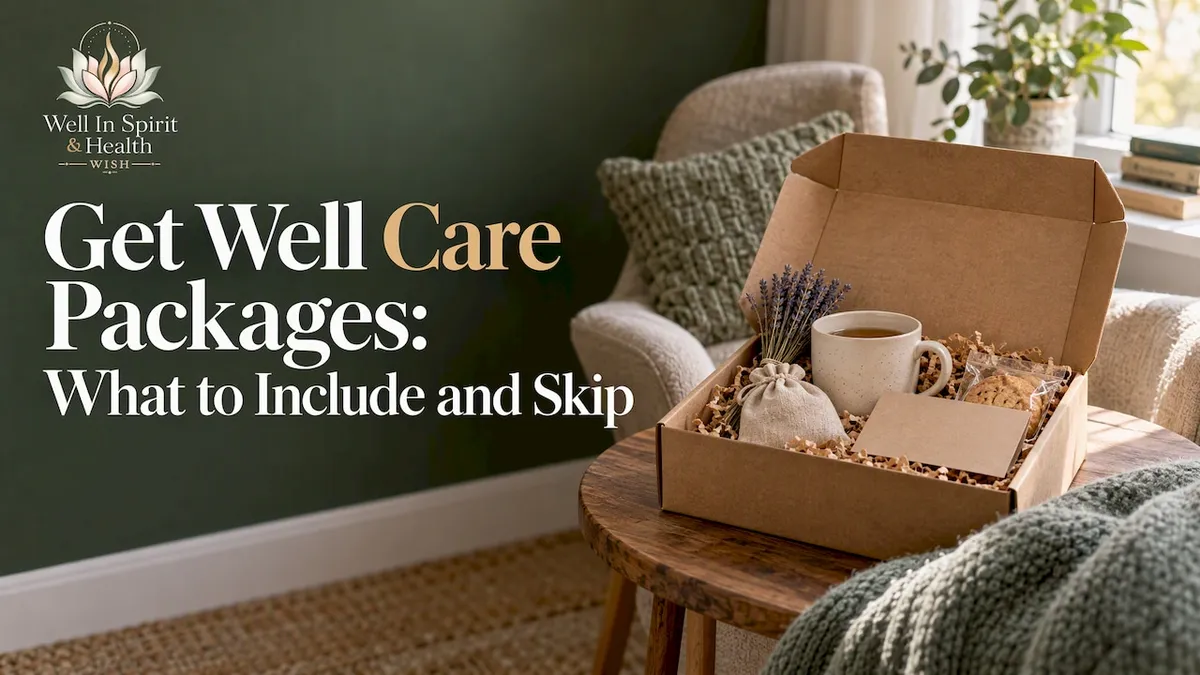
The best get well care package is small, easy to use and matched to where the person is recovering. At home, that means comfort, warmth and gentle ways to rest. In hospital, it means a few compact, sealed, practical items, and no flowers until you have checked with the ward. Below you will find what to put in a box, a fair comparison of ready-made options, and the safety points that most gift guides skip.
Key takeaways
- Start with where they are. Hospital gifts must be small and uncluttering; gifts for home can be as cosy and indulgent as you like.
- Many hospitals do not allow flowers on wards, so ask the ward staff before sending any.
- Choose comfort that asks nothing of the person: warmth, scent, something to sip, something gentle to read or listen to.
- Essential oils are a lovely touch but need care. Check with their clinical team if they are in hospital or being treated for a condition.
- A note, a call or an offer to do the shopping often matters more than the box itself.
Start with the person, not the box
Three questions shape every good care package.
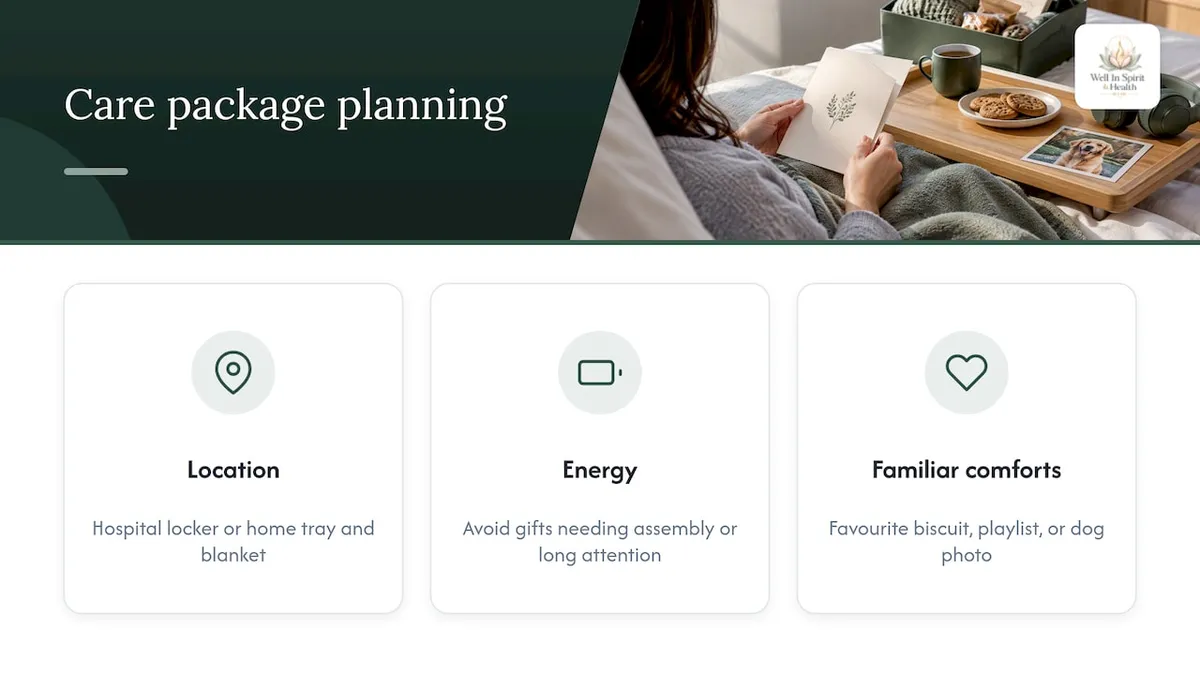
Where are they? A hospital bed has a locker and a small bed area. A sofa at home has room for a blanket, a tray and a candle.
How much energy do they have? After surgery or illness, energy rises and falls. Mind’s guidance on relaxation tips and exercises is a useful reminder that small, manageable ways to unwind tend to work better than anything complicated. A gift that needs assembling, learning or a long attention span can feel like a chore.
What do they already love? Mind also points to the value of familiar, personal comforts in its wellbeing tips. A favourite biscuit, a playlist, or a photo of the dog will often beat a generic gift.
What to put in a get well care package
Think in layers: something to wrap up in, something to sip, something to smell, something to occupy the mind, and something personal.
Warmth and comfort
- Soft socks or bed socks
- A lightweight throw for the sofa (hospital lockers rarely fit a big blanket)
- An eye mask, useful on a noisy ward or in a bright bedroom
- A lip balm and hand cream, as hospital air and frequent hand washing dry the skin out
Something to sip or nibble
- Herbal teas, a good mug and a little honey
- Sealed, shop-bought biscuits or sweets
For hospital patients, avoid homemade food. Some wards also restrict food because of dietary plans, so a quick message to the person or a relative saves a wasted gift.
Something to occupy the mind
- Puzzle books, magazines or a paperback
- A notebook and a pen that feels nice to write with
- Headphones and a playlist, or a guided meditation they can play without needing to focus on a screen
The NHS says that most hospitals welcome gifts such as fruit, books and magazines, as long as they do not clutter the bed area.
Something calming for the senses
Scent is the item people most often get wrong, because it is the one that can cause problems. We cover it properly below.
Something personal
A handwritten card, a printed photo, a list of things you will do for them when they are home. This is the part no shop can supply.
Hospital or home: what changes
| In hospital | Recovering at home | |
|---|---|---|
| Size | Small enough for a locker | Anything that fits a tray or sofa |
| Flowers and plants | Often not allowed; ask the ward first | Fine, if no allergies |
| Food | Sealed and shop-bought only | Homemade is welcome if you know their diet |
| Candles | Not suitable on a ward | Lovely, with the usual care |
| Scent | Only after checking with the care team | Light, familiar scents, used sparingly |
| Best extras | Puzzle books, toiletries, eye mask, headphones | Tea, blanket, bath products, meditation, a meal delivered |
The NHS guidance is clear that details vary from hospital to hospital, and visitor numbers are usually limited to two at a time. If you cannot visit, a parcel sent to a relative at home, or a box saved for the day of discharge, often works better than something delivered to the ward.
Care packages compared: ready-made options in the UK
If you would rather not build a box yourself, here is how the main routes compare. We have kept this honest: the right choice depends on the person and your budget.
| Option | Typical feel | Price signal | Best for |
|---|---|---|---|
| Box of Hugs Get Well Soon box | Treats, tea and cosy comforts in a keepsake box with a card | £39.50 at the time of writing | Sweet-toothed friends recovering at home |
| Not On Another Bunch Of Flowers letterbox gifts | Pamper and mindfulness boxes that post through the door | £24.00 to £26.00 on the listings Google shows | A quick, lower-cost gesture |
| Marks & Spencer get well gifts | Candles, hampers and gift cards | Varies by item | Convenience, and people who like a known name |
| Build your own | Fully personal | You set the budget | Anyone who knows the person well |
| Well In Spirit rituals and self-care gifts | A themed collection with a guided ritual, aimed at calm and rest | From £30.00 | Someone who needs to slow down and rest, at home |
Flower-led gifts are the classic choice, but they are the first thing a ward may turn away. A box of non-perishable comforts travels better and lasts longer.
Our approach: gifts that guide rest
Most get well boxes are collections of nice things. We think the difference is whether the person knows what to do with them when the parcel arrives, especially when energy is low.
Our self-care gifts, hampers and care packages are built around that idea. Our ritual collections pair carefully chosen products with a guided routine, so the recipient is not left to work out how to unwind. For someone recovering at home, that matters: a short, guided evening is easier than a pile of things to sort through.
A few places to start:
- The Forest Spirits Spa Ritual, from £30.00, and The Awakening Ritual, from £30.00, are gentle, home-based rituals for a quiet evening.
- Aromatherapy Candle - Be Chilled is a simple add-on for someone who is already home and well enough to enjoy a candle.
- Aromatherapy Massage and Bath Oil, Sleepy Lavender 300ml suits a person who has been sleeping badly. For aching limbs, we also stock a Muscle Ease and a Joint Ease version.
- Our calm corner kits, from £30, are a ready-to-give way to set up a small, restful space.
If you want to browse more widely, our wellness gifts for her collection has more options.
A word on bath oils: anyone with a wound, a dressing, a cast or fresh surgery should check with their nurse or GP before bathing in anything scented. For those people, a candle, a tea or a meditation is the safer gift.
Using aromatherapy in a care package, safely
Essential oils are popular in get well gifts, and used well they can be soothing. Used carelessly, they can cause harm.
NHS trusts do use aromatherapy. Guy’s and St Thomas’ describes aroma sticks as pocket inhalers used in cancer care in the UK, to help with symptoms like anxiety, nausea, tiredness and sleep problems. But that use is supervised and tailored to the patient. It is not a reason to drop a bottle of oil in a hospital gift bag.
A few ground rules:
- Ask first. Healthcare professionals stress that wellness tools are meant to complement treatment, not replace it. Anyone in hospital or recovering from illness should talk to their clinical team before starting a new wellness practice.
- Know the conditions that matter. NHS leaflets list epilepsy, heart problems and asthma, along with blood-thinning medication and diabetes treatment, among the reasons to speak to a clinician before using essential oils. That leaflet is written for pregnancy and labour, but the principle applies more widely.
- Never swallow them. Essential oils are never taken internally, and they should be diluted before they touch the skin.
- Avoid oxygen equipment. Do not use oils or candles near oxygen at home or in hospital.
- Keep it light. A strong scent in a small room can be tiring for someone who is unwell. Gentle and familiar is best.
If you would like to understand oils before you buy, our guide to aromatherapy oils to start with is a good place to begin. For a gift that already has the basics, our Aromatherapy Essential Oil Set, Starter Pack is one to consider for a recipient who already enjoys oils and is well enough to use them.
Care packages for recovery at home
Once someone is home, the gift list widens. Think about the practical side of the day as well as the comfort side.
- A tray-friendly set-up: a mug, tea, a small snack and a book within reach of the sofa.
- A restful evening: a candle, a bath or foot soak if their care team agrees, and a guided meditation for sleep.
- Movement-friendly comforts: for people with limited mobility, the layout of the home matters as much as the gift. This mobility recovery setup at home guide shows how to make the house easier to live in, and it is worth reading before you decide what to send.
- Practical help tucked in the box: a voucher for a grocery delivery, a home-cooked meal in a freezer-safe tub, or an offer to do a school run.
Mind describes the most useful recovery routines as small, manageable steps, such as breathing exercises or short periods of gentle activity, and not big projects. A box that includes one simple, guided thing to do each evening fits that well.
Care packages for hospital patients
Hospital gifts need discipline.
Do bring or send:
- Puzzle books, magazines, a paperback
- Toiletries in small sizes, such as lip balm, hand cream, a face wipe
- Sealed biscuits or sweets
- An eye mask and earplugs
- A long phone charging cable, if they use a phone
- A card and a few photos
Check before you bring or send:
- Flowers and plants, which many wards refuse
- Anything homemade
- Strongly scented products
- Anything large, since the bed area has to stay clear for staff
The NHS advises that infection control rules vary by ward, so a quick call to the ward is worth it. Bradford Teaching Hospitals also reminds visitors that patients tire quickly, so keep visits short and the gift simple.
When the gift should be your time
A box lasts a week. Being cared for lasts longer. Royal Voluntary Service, which supports people in hospital and after they go home, exists because the return home can be a lonely, difficult stretch.
So put a card in the box that offers something specific: “I will bring dinner on Thursday”, “I can drive you to your appointment”, “I will ring you on Sunday evening”. It costs nothing and it is often the part they remember.
Budget ideas by price
These are our own suggestions, not quotes. Prices vary by shop.
- A few pounds: a handwritten card, a favourite tea bag in an envelope, a printed photo, a playlist.
- A modest budget: a paperback, hand cream, bed socks and a packet of biscuits tied together.
- A little more: a ready-made box or a guided ritual, which for us starts at £30.00.
- When you want to give a lot: a ritual plus a promise of practical help, such as meals or lifts.
A thoughtful £10 parcel that fits the person will beat an expensive box that does not.
Our perspective: comfort should be easy to receive
We sell ritual collections, and we have spent a lot of time thinking about what makes a gift feel kind rather than demanding. When someone is unwell, the worst gift is one that quietly asks something of them: a complicated kit, a long to-do list, a pile of products with no instructions.
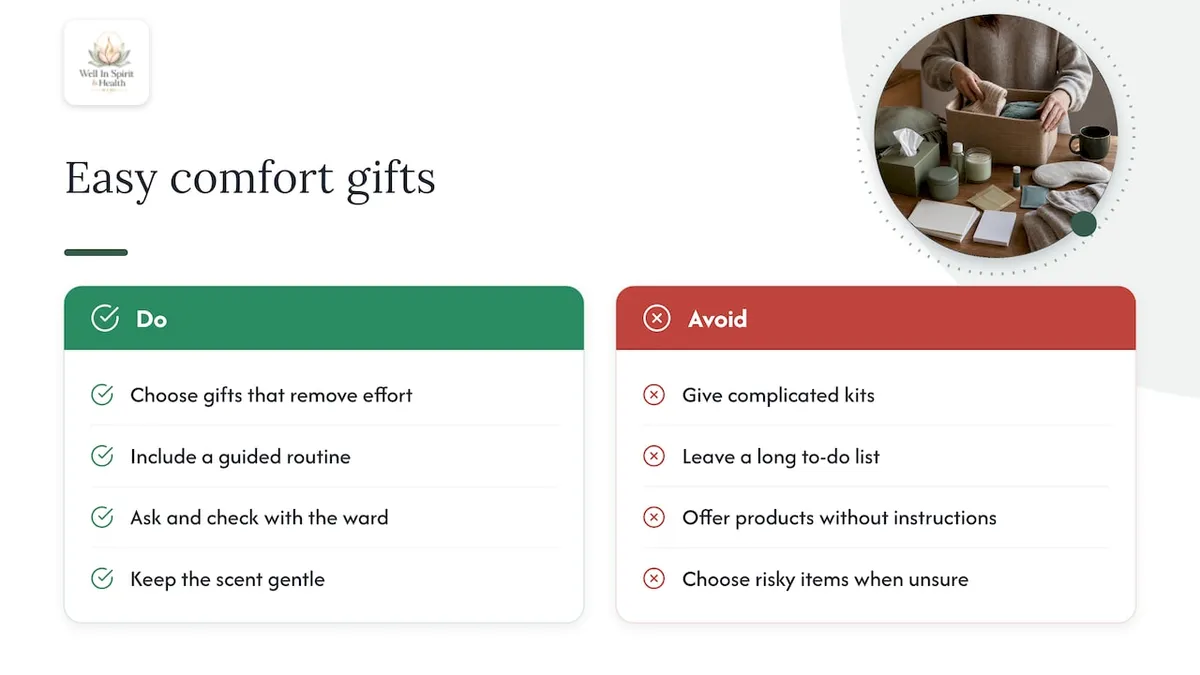
The best gifts remove effort. That is why our collections come with a guided routine, and why we favour calm, simple moments over elaborate self-improvement. A short evening with a candle, a warm drink and a recording to listen to is enough.
We also think restraint is a sign of care. Not every person can use every product, and a good gift giver asks, checks with the ward, and keeps the scent gentle. If in doubt, choose the item with the fewest risks, and add a note.
— Rob
A simple way to build the box
- Decide the setting: hospital, home, or either.
- Ask a relative about allergies, diet, scent sensitivity and any restrictions.
- Pick one item from each layer: warmth, something to sip, something calming, something to occupy the mind, something personal.
- Add one practical offer of help.
- Keep it compact. A small parcel that arrives is better than a large one that does not.
If you want a head start, our self-care gifts and care packages are put together with a guided ritual, and our ritual collections start from £30.00.
FAQ
What should I put in a get well care package?
Aim for a mix of warmth, something to sip, something calming and something to occupy the mind. Good starting points are bed socks, herbal tea, hand cream, an eye mask, a puzzle book and a handwritten card. Match it to the setting: smaller and sealed for hospital, cosier and more varied at home.
Can I send flowers to someone in hospital?
Often not. The NHS says many hospitals do not allow flowers on wards or in clinical areas, so check with the ward staff first. If they do not allow them, send flowers to the person’s home for when they are discharged, or choose a non-perishable gift instead.
Are essential oils a safe get well gift?
They can be, but not for everyone. NHS guidance lists conditions such as epilepsy, asthma and heart problems as reasons to talk to a clinician first, and oils should never be swallowed or used undiluted on skin. If the person is in hospital or being treated, ask their care team before you send anything scented.
What is a good get well gift if I can’t afford much?
A handwritten card, a printed photo, a tea bag or two and an offer of practical help cost very little and often mean the most. Add a book or a small hand cream if you can. Specific offers, such as bringing a meal, are worth more than a pricey box.
Sources
- Visiting someone in hospital, NHS
- Information for visitors, Bradford Teaching Hospitals NHS Foundation Trust
- Aroma sticks in cancer care, Guy’s and St Thomas’ NHS Foundation Trust
- Guy’s and St Thomas’ NHS Foundation Trust
- Safe use of aromatherapy during pregnancy and labour, Lancashire Teaching Hospitals
- Relaxation tips and exercises, Mind
- How to improve your mental wellbeing, Mind
- Support in hospitals, Royal Voluntary Service
- Get Well Soon Gift Box, Box of Hugs