How to Use Oracle Cards: A Simple Guide for Beginners
Learn how to use oracle cards with a simple beginner guide on deck choice, quiet setup, open questions, easy spreads and journalling.
On this page
To use oracle cards, shuffle the deck while holding a question or intention in mind, then draw one to three cards. Read each card by its image, its title and its message, and notice what it brings up for you. There are no strict rules, and you do not need any experience.
This guide covers choosing a deck, setting up a quiet space at home, asking a good question, three simple spreads, reading the cards and keeping notes. It is for beginners, and for anyone buying a deck as a gift who wants to know how it is really used.
TL;DR
- Pick a deck whose artwork and wording you genuinely like, because you will be looking at it often.
- Take two minutes to settle before you shuffle, with a candle, a cup of tea and your phone out of reach.
- Ask open questions that begin with "how" or "what", not yes or no questions.
- Start with a one-card or three-card draw and read the message in your own words.
- Write down each reading and come back to it later, treating the cards as a prompt for reflection rather than a prediction.
What oracle cards are for
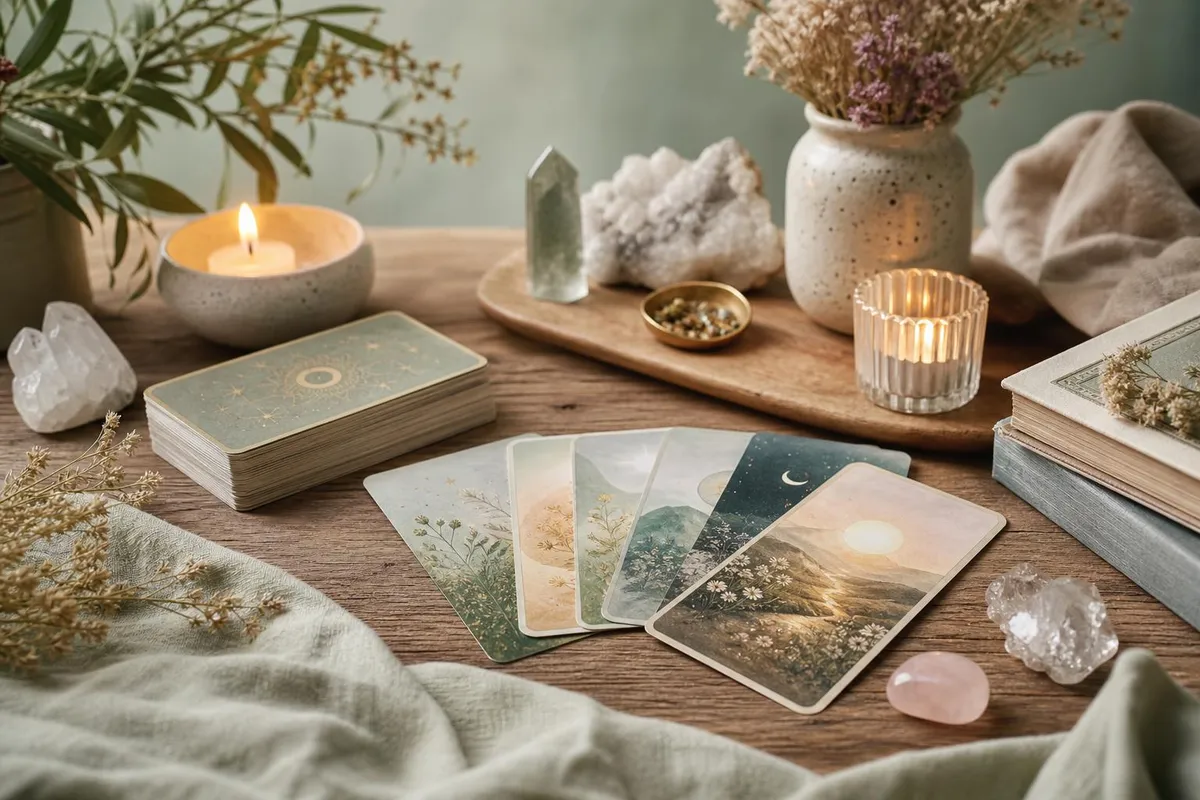
An oracle deck is a set of cards with images and short messages. Unlike tarot, it has no fixed structure of suits and numbered cards. Each deck sets its own themes, such as moon phases, plants, animals or gentle affirmations.
That freedom is why beginners often find oracle cards easier. You do not need to memorise a set of traditional meanings. You look at the card, read the words and see what it stirs up.
Think of them as a prompt for reflection, in the same way a good journalling question works. The cards do not know your future. What they do is give you something to respond to when your own thoughts feel tangled.
If you want the fuller background first, our plain UK guide to what oracle cards are covers the differences from tarot and how decks are put together.
Choose a deck that suits you
The best first deck is the one you want to pick up. Look at the artwork before the theme. If the images feel jarring, you will not reach for the cards on a tired Tuesday evening.
Then check the wording. Some decks use soft, encouraging language. Others are blunter and ask harder questions. Neither is better, but one will feel more like you.
What to look for
- Size. Smaller cards are easier to shuffle. Larger ones show more detail.
- A guidebook. Useful when you start, because it gives a short message for each card.
- Card stock. A matte, sturdy finish tends to last longer and shuffle smoothly.
- Theme. Choose something that already interests you, whether that is the moon, woodland or simple daily affirmations.
If you are buying for someone else, pick a theme that matches the way they like to unwind. A deck about rest suits a person who loves a bath and a book. A deck about the seasons suits someone who walks outside every weekend.
Set the scene before you shuffle
You do not need an altar or a special cloth. You need a few quiet minutes. A short pause before you start helps you arrive, and small habits like this fit with the everyday wellbeing ideas on NHS Every Mind Matters.
Try this simple set-up:
- Put your phone on silent and out of reach.
- Light a candle or switch on a lamp with a warm bulb. Never leave a lit candle unattended.
- Sit somewhere comfortable, at a table or on the sofa with a tray.
- Take three slow breaths, breathing out for longer than you breathe in.
- Hold the deck in both hands for a moment before you begin.
Some people like a little incense or a cup of herbal tea beside them. These are comforts, not requirements. The point is to make the moment feel set apart from the rest of the evening.
Pro Tip: Keep your deck, a notebook and a pen together in a small bag or box. When the pieces live in one place, a reading takes thirty seconds to start rather than ten minutes of looking around.
Ask a good question
The question shapes the reading. A vague or yes-or-no question tends to give a flat answer. An open question gives you room to think.
Compare these:
- Instead of "Will I get the job?", try "What would help me feel steady before the interview?"
- Instead of "Should I end this friendship?", try "What do I need to understand about how I feel?"
- Instead of "Will this week be good?", try "What can I lean on this week?"
Questions starting with "what" or "how" point you toward things you can act on. They keep the focus on your choices and your next small step, not on a fixed outcome.
If you have no particular question, that is fine. Ask "What do I need to hear today?" or simply draw a card for the day. Setting an intention can sit alongside this, and our five-minute intention setting ritual pairs well with a morning draw.
Three simple spreads to start with
A spread is just a layout. Begin small. Too many cards at once can feel like noise.
One card: the daily draw
Shuffle, draw one card and read it. Ask how its message might show up in your day. This takes two minutes and suits mornings.
Three cards: past, present, future
Lay out three cards left to right. The first is what is behind you, the second is where you are now, and the third is what you could move towards. Treat the third card as a direction to consider, not a forecast.
Three cards: mind, body, heart
This one works well for an evening check-in. The first card speaks to your thoughts, the second to how your body feels, and the third to your emotions. It can be a gentle way to notice what you have been carrying.
Pro Tip: Stay with one spread for a fortnight before trying another. You will learn far more from drawing the same layout ten times than from trying a new one every night.
How to read what you draw
Look before you read. Spend a few seconds with the image. Notice the colours, the shapes and the first feeling that comes up, before you look at the guidebook.
Then read the title and the message on the card. Ask yourself three questions:
- What stands out most, in the picture or the words?
- Where in my life does this feel true right now?
- What is one small thing I could do with it today?
If a card feels uncomfortable, stay curious. Often it points to something you already half know. It does not mean something bad will happen.
If a card seems to make no sense, that is fine too. Put it aside, or draw a second card to add to it. Your own response matters more than the guidebook. If a reading ever leaves you anxious or low, step away, and remember that Mind offers practical information on looking after yourself day to day.
Write it down and follow up
A reading you forget teaches you little. A reading you write down becomes useful. Note the date, your question, the cards and a line or two about what they brought to mind.
After a week or a month, read your notes back. You may spot patterns, such as the same theme returning, that you missed in the moment. This is where the cards earn their place, as a way of listening to yourself.
Writing also pairs well with goal-setting. If a card raises something you would like to work towards, our simple manifestation journaling guide shows how to turn it into a few clear lines on the page.
You might also finish with one small action. Send the message, tidy the desk, book the walk. Reflection feels better when it leads to something you can actually do.
Make it a regular, gentle habit
Small rituals work best when they are easy to repeat. Choose a regular moment, such as Sunday evening or the first cup of tea in the morning, and keep it short. Ten minutes is plenty.
Some readers like to link the cards to the moon. A reading at the start of a lunar cycle can be a lovely way to set a theme for the weeks ahead, and our 10 minute new moon ritual shows one way to do it.
An evening reading can also be part of winding down. If sleep is something you are working on, the advice from The Sleep Charity and the NHS on a calm, regular bedtime routine is a good place to start. Keep the reading gentle and finish it well before lights out.
Cards are a comfort and a prompt, nothing more. They are not a substitute for professional support. If low mood, worry or poor sleep carries on, speak to your GP, and see the Mental Health Foundation for further information.
In our experience, the people who enjoy oracle cards most are the ones who stop worrying about doing it properly. They draw one card with a cup of tea, say what it makes them think of, and move on with their evening. The cards that get used are rarely the fanciest. They are the ones kept somewhere easy to reach, next to a notebook and a candle.
- The Well In Spirit team
About Well In Spirit
If you would like to try oracle cards, our shop stocks tarot and oracle decks alongside candles, incense and crystals, so you can build a small reading corner. Our ritual boxes, such as The Sunday Reset and The Better Sleep Ritual, suit a quiet evening in, and they make a thoughtful present for someone who deserves a slower night. You can browse them all on our gifts page. Members also get a library of guided meditations, which can be a gentle way to settle before a reading. Take only what feels useful.
Frequently asked questions
Do I need to be intuitive to use oracle cards?
No. You only need to be willing to look at a card and notice your response. Start by saying what you see, what the message says and how it feels. That is all a reading is, and it gets easier with practice.
How often should I draw oracle cards?
As often as you enjoy it. Many people draw one card in the morning or a few cards once a week. A short, regular habit usually feels better than long sessions. If you notice yourself drawing over and over to get a different answer, take a break.
Can I draw a card for someone else?
Yes, if they would like it. Ask them for a question or theme, let them shuffle if they wish, and share what you see as a prompt rather than a prediction. Keep it light and kind, and let them decide what feels true for them.
Do oracle cards need to be cleansed or kept in a special place?
No, though some people like to. A simple way is to tap the deck or leave it on a windowsill in the moonlight. Others skip this entirely. If you use incense, keep the deck well away from any flame. Do whatever feels pleasant, and keep the deck somewhere dry and easy to reach.
Sources
- Every Mind Matters, NHS
- Tips for everyday living, Mind
- The Sleep Charity, The Sleep Charity
- Sleep and tiredness, NHS
- Mental Health Foundation, Mental Health Foundation